The Parapsychological Association isn't a group of fortune tellers or ghost hunters. It's a professional organization of scientists, psychologists, and researchers who study phenomena that fall outside current scientific understanding-things like telepathy, precognition, psychokinesis, and near-death experiences. Founded in 1957, it’s the only academic society in the world dedicated to this field, and it’s affiliated with the American Association for the Advancement of Science (AAAS). That means its members aren’t just curious-they’re trained to use the same methods as physicists or biologists, just applied to unusual questions.
What Exactly Do They Study?
The Parapsychological Association doesn’t investigate haunted houses or UFO sightings. Its research focuses on what’s called psi phenomena-mental processes that seem to bypass known physical channels. That includes:
- Telepathy: Direct mind-to-mind communication without using the five senses
- Precognition: Accurately perceiving future events before they happen
- Psychokinesis: Influencing physical objects with the mind alone
- Remote viewing: Describing distant locations without prior knowledge or sensory input
- Near-death experiences: Reports of awareness during clinical death, often with consistent patterns across cultures
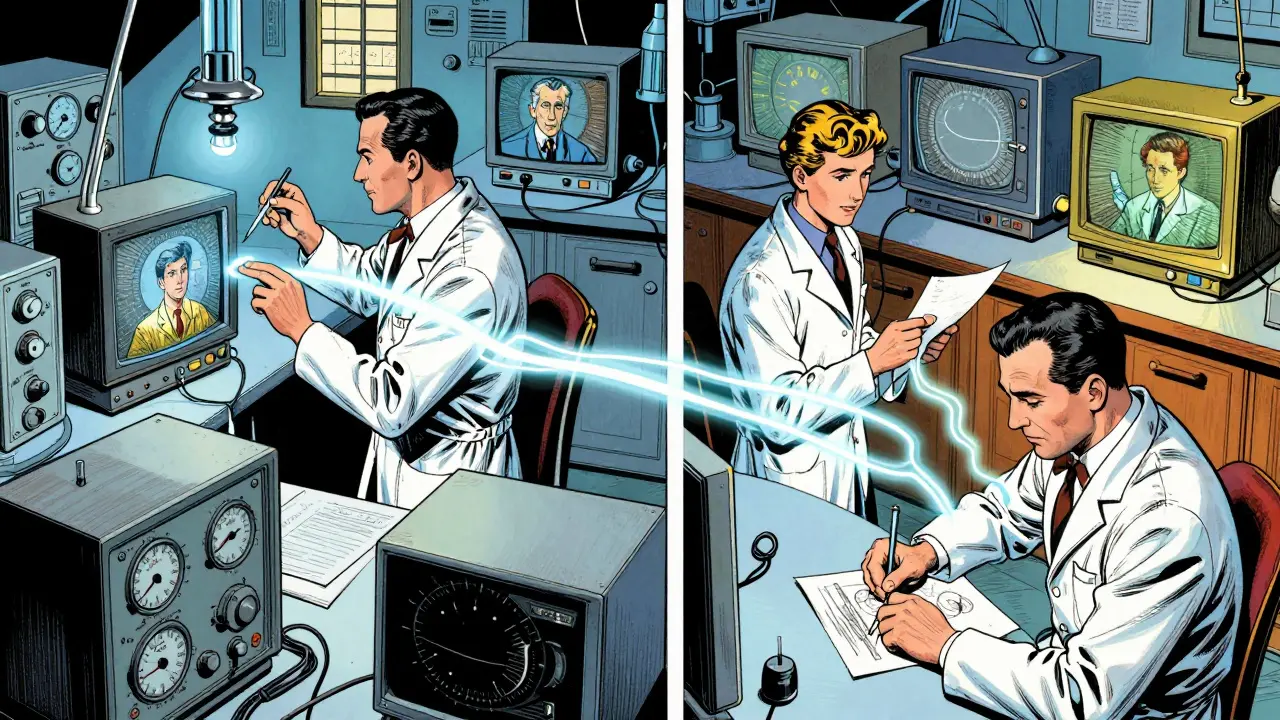
These aren’t myths they’re trying to prove. They’re measurable phenomena being tested under controlled conditions. For example, in a typical telepathy experiment, one person might be shown a random image in a sealed room while another person, in a separate room with no communication, tries to describe what they’re seeing. The results are recorded, analyzed statistically, and repeated across hundreds of trials.
Over 1,000 peer-reviewed studies have been conducted since the 1930s, with meta-analyses showing small but statistically significant effects across multiple labs. One landmark 2010 meta-analysis of 309 remote viewing experiments found a success rate of 35%-far above the 25% expected by chance alone. That’s not proof, but it’s enough to keep serious researchers interested.
How Do They Avoid Bias?
People assume parapsychology is pseudoscience because it deals with the weird. But the methods are strict. Experiments use double-blind protocols, random number generators, pre-registered hypotheses, and independent replication. Many labs use automated systems to remove human error or suggestion.
One major concern is the file drawer problem-where negative results never get published. To counter that, the Parapsychological Association encourages preregistration of studies and publishes null results in its journal, Journal of Parapsychology. They also hold annual conferences where researchers present data, critique each other’s methods, and replicate each other’s work.
Some of the most respected psychologists in the world have studied psi. Daryl Bem, a former president of the American Psychological Association, published a controversial 2011 paper showing evidence of precognition in nine experiments. His work was replicated in labs across Europe and Asia, and though it sparked debate, no one accused him of fraud or poor methodology.
Why Is It Still Controversial?
Because it challenges the materialist model of consciousness-that the mind is just a product of brain activity. If someone can predict the future or move objects with thought, then our current understanding of physics and neuroscience is incomplete. That’s threatening to some, and exciting to others.
Major institutions like Princeton University, the University of Edinburgh, and the University of Arizona have hosted parapsychology labs. The U.S. government funded remote viewing programs during the Cold War through the CIA and Defense Intelligence Agency. The Stargate Project, which ran from 1972 to 1995, declassified documents show that remote viewers sometimes provided accurate details about secret military sites.
Still, mainstream science remains skeptical. Critics say the effects are too small to be useful, and that publication bias or methodological flaws explain the results. But the Parapsychological Association doesn’t ignore these criticisms-they actively work to address them. Their research standards are often higher than those in some areas of psychology.

Who Joins the Association?
Members include professors from top universities, neuroscientists, statisticians, and even engineers. Many have PhDs in psychology, physics, or cognitive science. They’re not believers-they’re investigators. One member, a retired physics professor from MIT, spent 40 years testing psychokinesis with sensitive mechanical sensors. He never found a clear mechanism, but he kept documenting anomalies because the data wouldn’t go away.
There’s no requirement to believe in ghosts or ESP to join. You just need to be willing to study the evidence with rigor. The association has over 500 members from 30 countries. About 30% are from outside the U.S., including researchers from Germany, Japan, Brazil, and the UK.
What’s Happening Now?
Today, the field is shifting. Instead of chasing big, dramatic effects, researchers are focusing on subtle, repeatable patterns. They’re using machine learning to detect anomalies in large datasets. Some are exploring how psi might relate to quantum biology or neural coherence. Others are studying whether psi effects are stronger in certain emotional states or during meditation.
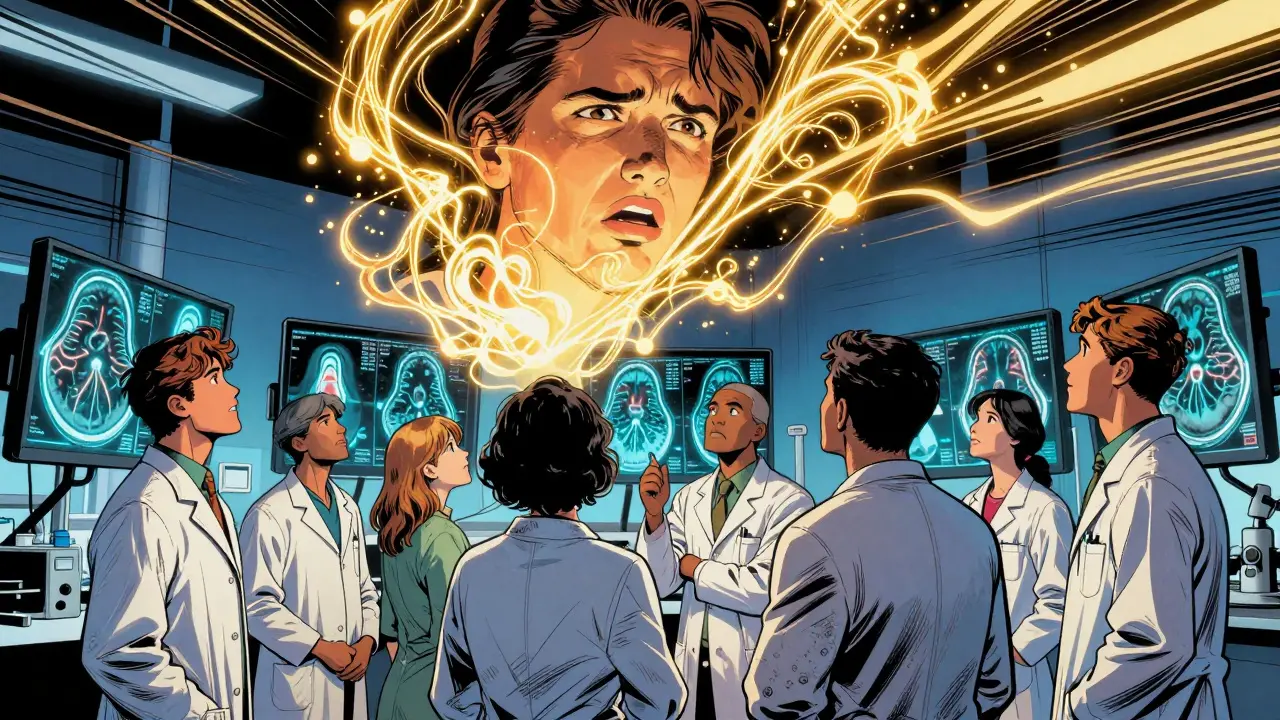
A 2023 study from the University of California used fMRI scans to track brain activity during precognition tasks. Participants showed subtle but consistent neural responses before seeing emotionally charged images-before the computer even selected them. The effect was small, but it appeared across 17 different trials with the same participants.
There’s also growing interest in how these phenomena might affect real-world decisions. Can intuition, often dismissed as luck, actually be a form of unconscious information processing? Some business consultants are now using psi-based decision models with measurable success in high-stakes environments.
Where Can You Find Their Work?
The Parapsychological Association publishes its research in peer-reviewed journals, including the Journal of Parapsychology and Explore: The Journal of Science and Healing. All their studies are publicly available. You can access datasets, methodologies, and raw results through their website’s research archive.
They also host an annual conference where new findings are presented. Recordings of past talks are archived online. Many university libraries carry their publications. Unlike fringe groups, they don’t sell books or offer courses-they focus on science, not sales.
What’s the Big Picture?
The Parapsychological Association isn’t trying to prove the supernatural. They’re trying to understand what’s real, even if it doesn’t fit current theories. Science has changed before-Newtonian physics gave way to relativity. Quantum mechanics overturned classical assumptions about causality. Why should consciousness be any different?
If psi phenomena are real, they don’t break science-they expand it. And that’s exactly what the Parapsychological Association is for: pushing the boundaries of what we think we know, with the same tools we use to study gravity or DNA.




9 Comments
Mbuyiselwa Cindi
This is actually one of the most grounded takes on psi research I've seen. Too many people write it off as magic, but the methodology here is legit. I've read some of the meta-analyses and yeah, the effect sizes are tiny but consistent. That's not noise, that's a signal begging for better models.
It's like gravity before Newton - everyone saw the apple fall, but no one had the framework to explain it.
Keep doing the work.
Krzysztof Lasocki
So let me get this straight - you're telling me scientists are spending millions to prove that thinking really hard at a picture might make someone else guess it right? And we call this peer-reviewed science?
Next they'll be funding a lab to see if your dog can predict when you're gonna come home... wait, they already did. And it worked. Weird.
Anyway, I'm here for it. Keep the data coming.
Henry Kelley
the fact that this is affiliated with aaas is wild tbh
i used to think this stuff was all woo but then i read that 2010 remote viewing meta and honestly... the stats don't lie
maybe the problem isn't the phenomena, it's that our models are too rigid
science should be about curiosity, not dogma
sampa Karjee
How can anyone with a degree in any serious field take this seriously? The statistical significance is negligible, the replication rate is abysmal, and the entire field thrives on confirmation bias. This isn't science - it's wishful thinking dressed in lab coats. If you want to study consciousness, start with neurobiology, not ESP fantasies.
Patrick Sieber
I’ve sat in on a few of their annual conferences. Honestly? The rigor is insane. Double-blind, preregistered, automated systems, controls on controls. They’re more meticulous than half the social psych labs I’ve seen.
And yeah, the effects are small. But they’re there. And they keep showing up. That’s not fraud - that’s a mystery waiting for a theory.
Kieran Danagher
So the CIA spent $20 million on remote viewers to find Soviet submarines and they never found one? Brilliant. Just brilliant.
Meanwhile, my cousin in Cork saw a ghost in 1998 and swore it was his dead grandma. Which one of these is more credible? I’ll let you decide.
OONAGH Ffrench
Science evolves by confronting the uncomfortable
What if the mind isn't confined to the skull
What if time isn't linear for perception
What if we're measuring the wrong thing
That's the real question here
Not whether it's real
But why we refuse to look closer
poonam upadhyay
Oh my god, this is so embarrassing. You’re seriously telling me that people are getting tenure for trying to prove that thoughts can move spoons?!?!?! And you call this ‘peer-reviewed’?!? The peer review process must be broken if this passes! You’re not expanding science - you’re diluting it with spiritual junk science! This is what happens when you let people who watch too many Netflix documentaries into academia! Stop funding this nonsense and help real science instead!?!?!?!?
Shivam Mogha
Small effects, consistent results. That’s all you need to keep investigating.