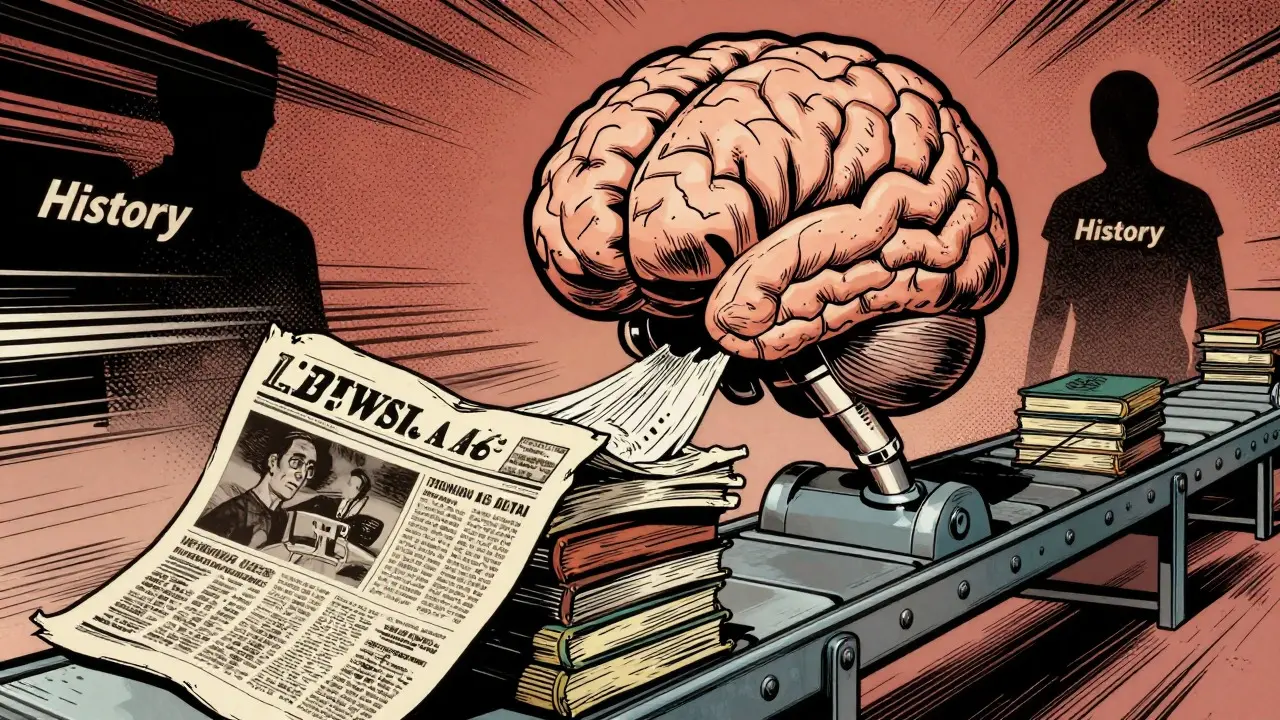
Imagine asking an AI to describe a doctor. If the model says "a man in a white coat" more often than not, you aren't just seeing a glitch. You are seeing a reflection of the data it consumed. Bias in generative AI is a systematic error where machine learning models produce discriminatory or unfair outputs based on patterns learned from imperfect training data and algorithmic choices. It isn't magic; it's math meeting history. When we build these systems, we feed them massive amounts of text, images, and code. If that input contains human prejudice, the output will too. Understanding how this happens is the first step to fixing it.
Quick Summary / Key Takeaways
- Bias in generative AI stems from three main sources: skewed training data, selection errors during curation, and inherent algorithmic design choices.
- Models don't just copy biases; they often amplify them, making stereotypes in generated content more extreme than in the source material.
- Selection bias, such as underrepresenting specific dialects or demographics, leads to systemic failures like misclassifying Black American speech as toxic.
- Mitigation requires intervention at every stage: pre-processing data, adjusting algorithms for fairness, and continuous post-deployment monitoring.
- New techniques, like those developed by MIT researchers, show that removing specific problematic data points can improve fairness without sacrificing overall accuracy.
The Three Sources of Bias: Data, Selection, and Design
To fix the problem, you have to know where it starts. Bias doesn't appear out of nowhere. It enters the pipeline through three distinct doors. First, there is the raw Training Data the vast corpus of text, images, or audio used to teach a neural network. This data is rarely neutral. It reflects who created it, who was allowed to speak, and what was deemed worth recording. Second, there is Selection Bias a statistical error occurring when certain groups or data types are overrepresented or underrepresented in a dataset relative to their population frequency. This happens when curators pick data because it's easy to get, not because it's representative. Third, there is Algorithmic Design the mathematical structure and optimization goals chosen by developers, which can inadvertently favor majority groups. Even if the data is perfect, a poorly designed loss function can skew results.
Consider a simple example. An AI writing tool trained predominantly on male-authored corporate emails might learn that "assertive" language is masculine and "collaborative" language is feminine. The algorithm didn't decide this; it just found the pattern most frequently present in its input. This is why Responsible AI a framework for developing and deploying artificial intelligence systems that are fair, transparent, and accountable is becoming a standard requirement rather than a nice-to-have feature.
How Models Amplify Stereotypes
Here’s the scary part: generative models don't just repeat what they see. They extrapolate. In many cases, the bias in the output is stronger than the bias in the input. This phenomenon is known as bias amplification. When a model learns associations, it smooths out noise but sharpens trends. If 60% of doctors in the training data are men, the model might generate scenarios where 80% are men to maximize probability.
This has real-world consequences. Studies on image generation platforms like Stable Diffusion revealed that when prompted with "CEO," the model overwhelmingly produced images of men. Conversely, prompts for "criminal" or "low-wage worker" disproportionately featured darker-skinned individuals. These aren't random errors; they are direct reflections of societal prejudices embedded in the web-scraped datasets used for training. Timnit Gebru, a prominent researcher in this field, argued in her 2021 work that using the entire open web as a proxy for humanity risks reifying existing power imbalances. The internet is loud, but it isn't balanced.

Selection Bias: The Silent Killer of Fairness
Selection bias is often harder to spot than obvious demographic gaps. It occurs when the process of choosing data introduces distortion. A classic example involves hate-speech detection. Google's Perspective API, widely used to filter comments on major platforms, was found to flag Black American English (AAVE) slang as "toxic" at higher rates than Standard American English. Why? The training data lacked sufficient examples of AAVE context. The model saw unfamiliar linguistic structures and categorized them as negative sentiment.
This matters because leading AI companies use these tools to train their own Large Language Models (LLMs). If the toxicity filter is biased, the LLM learns to avoid certain words or styles, effectively censoring a demographic group's natural speech patterns. This creates a feedback loop: the AI penalizes diversity, so future data becomes less diverse, reinforcing the original bias.
| Source | Description | Example | Mitigation Strategy |
|---|---|---|---|
| Training Data | Inherent biases in raw input data | Gender stereotypes in historical texts | Diverse sourcing, data auditing |
| Selection | Non-representative sampling of data | Underrepresentation of AAVE in toxicity datasets | Stratified sampling, community involvement |
| Algorithmic Design | Optimization goals favoring majority | Loss functions ignoring minority performance | Fairness constraints, multi-objective optimization |
Mitigation Strategies: From Pre-Processing to Monitoring
So, how do we fix it? There is no single silver bullet. You need a layered approach. The first line of defense is pre-processing. This involves cleaning and balancing the data before the model even sees it. Techniques include resampling (adding more examples of underrepresented groups) and re-weighting (making the algorithm pay more attention to minority cases).
However, simply adding more data isn't always enough. Sometimes, you need to remove specific data points that cause confusion. Researchers at MIT developed a technique that identifies and removes the specific samples that contribute most to model failure on minority subgroups. In one test, this method removed about 20,000 fewer samples than conventional balancing methods while achieving higher accuracy on underrepresented groups. This proves that you don't have to sacrifice overall performance to gain fairness.
Post-deployment is just as critical. Bias can emerge after launch due to changing user behavior or new edge cases. Continuous monitoring allows teams to audit outputs regularly. If you notice that your AI support bot is giving shorter answers to non-native speakers, you catch it early. Transparency is key here. Documenting where your data comes from, who labeled it, and what decisions were made during curation helps identify root causes when things go wrong.

The Role of Human Judgment in Responsible AI
Technology alone won't solve bias. Human judgment is required at every step. Who decides what constitutes "fair"? Is it equal representation? Equal outcome? Equal opportunity? These are ethical questions, not just technical ones. Hiring data workers from diverse backgrounds isn't just a PR move; it brings different perspectives to the labeling process. A labeler from a marginalized community might recognize nuance that a homogeneous team misses.
Furthermore, involving end-users in the evaluation process can reveal blind spots. If your AI is for healthcare, involve patients. If it's for hiring, involve HR professionals and candidates. This collaborative approach ensures that the definition of bias aligns with real-world needs, not just statistical metrics.
Frequently Asked Questions
Can generative AI ever be completely unbiased?
Probably not, because human society itself is biased. However, we can minimize bias significantly by using diverse data, rigorous testing, and ongoing monitoring. The goal is not perfection, but fairness and transparency.
What is the difference between selection bias and demographic bias?
Demographic bias refers to the actual composition of the data (e.g., mostly male authors). Selection bias refers to the process of choosing that data (e.g., only scraping popular websites, which may exclude niche communities). They often overlap but have different roots.
How does algorithmic design contribute to bias?
If an algorithm is optimized solely for average accuracy, it may perform well on the majority group but poorly on minorities. Design choices like loss functions and regularization terms can inadvertently prioritize the majority, requiring explicit fairness constraints to correct this.
Why is continuous monitoring important after deployment?
Data drift occurs over time. User behavior changes, new slang emerges, and societal norms evolve. A model that was fair at launch can become biased months later if not monitored and updated. Regular audits help detect these shifts early.
What is the "garbage in, garbage out" principle in AI?
It means that the quality of the output depends entirely on the quality of the input. If your training data is flawed, biased, or incomplete, no amount of clever coding will fix the resulting model. Data curation is the foundation of reliable AI.