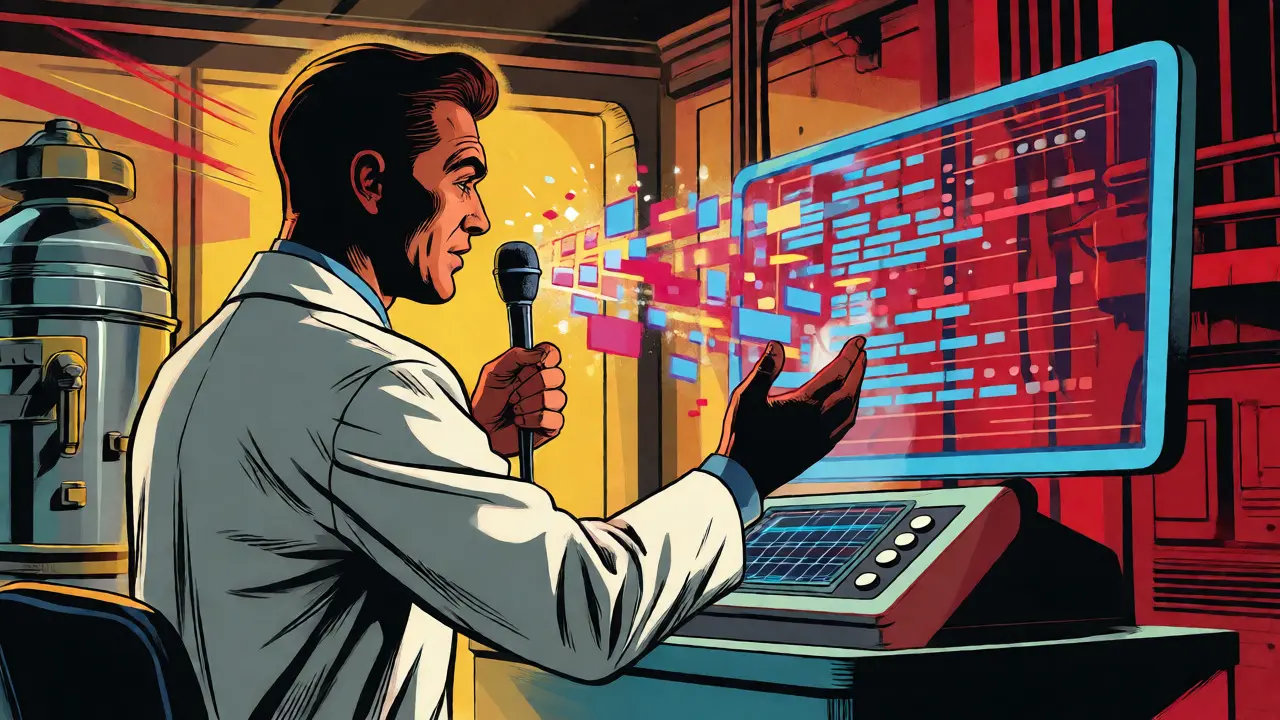
Imagine you’re a clinician or a researcher with a brilliant idea for a new digital health tool. You know exactly what it needs to do-maybe it’s a dashboard that flags early signs of sepsis or a mobile app that tracks medication adherence. But there’s a massive wall in your way: you don’t have the time or skills to write thousands of lines of code, and you certainly can’t risk exposing Protected Health Information (PHI) while testing your concept. This is where vibe coding changes the game. Coined by Andrej Karpathy in early 2025, this approach lets you describe what you want in plain English, and an AI generates the working software. The catch? You must do it without touching real patient data. Here’s how healthcare professionals are using vibe coding to build safe, fast prototypes while keeping HIPAA happy.
What Is Vibe Coding in Healthcare?
Vibe coding is an AI-driven development paradigm where natural language prompts generate functional code modules. Instead of writing Python or R scripts line by line, you tell the AI your intent. For example, you might say, "Load a sequencing dataset, remove low-quality reads, and run differential expression analysis." Within seconds, tools like OpenAI Windsurf, Meta’s Code Llama, or Anysphere Cursor produce syntactically valid code that reflects your request. Recent studies show these models achieve 78.3% accuracy on biomedical coding tasks, a huge leap from the 42.1% seen in earlier generations. But in healthcare, speed isn’t enough. Safety is paramount. Traditional AI code generators often hallucinated or created brittle scripts. Today’s systems are different. They operate within agentic frameworks that understand context. More importantly, they allow you to prototype without ever letting PHI into the development environment. This separation is critical because once PHI touches a public AI tool, you’ve potentially violated compliance rules before you’ve even written a single test case.
The Three-Tier Architecture for PHI Safety
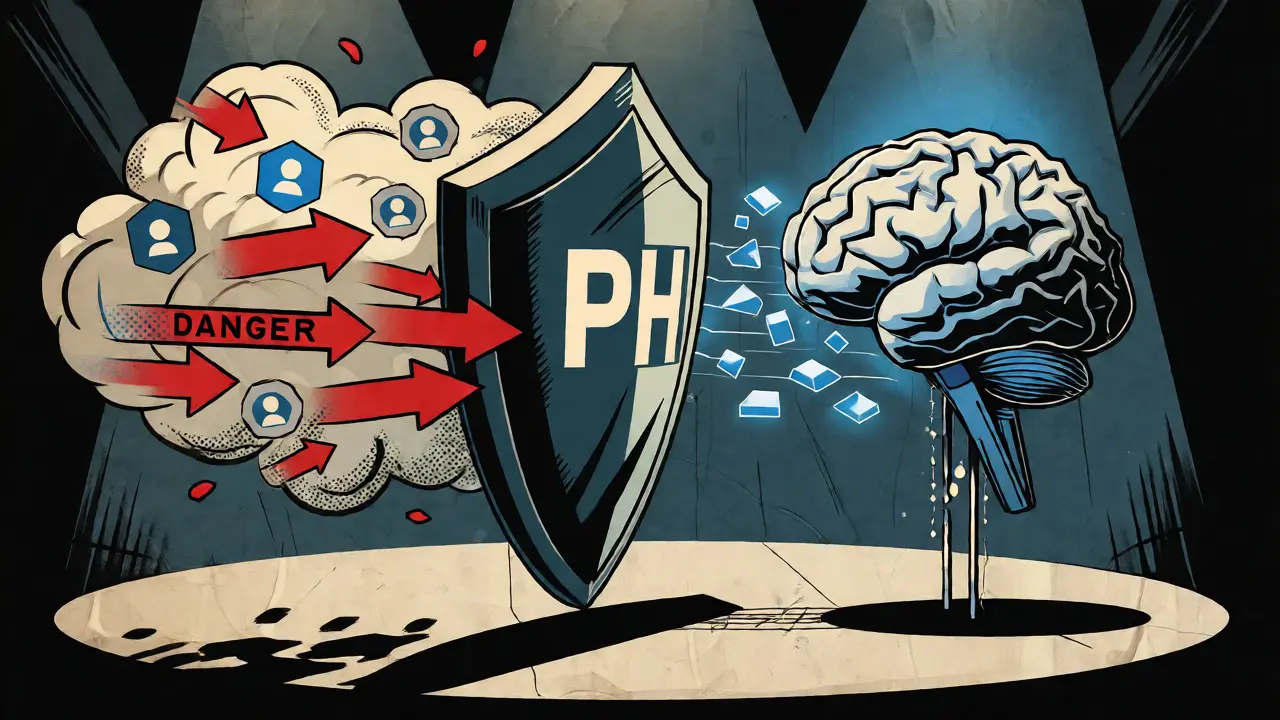
You can’t just paste patient records into ChatGPT and hope for the best. Compliant healthcare vibe coding platforms use a specific three-tier architecture designed to keep data clean. According to IBM’s technical documentation, this structure ensures that no sensitive information leaks during the coding process.
- Natural Language Interface Layer: This is where you type your prompt. It captures your intent, such as "create a module to calculate BMI from height and weight inputs."
- PHI Detection and Sanitization Layer: Before any code is generated, this layer scans your input. Modern implementations achieve 99.7% PHI detection accuracy, far surpassing the 82.4% rate of generic tools. If it spots something that looks like a name, date, or ID number, it redacts it automatically.
- Code Generation Layer: Only after sanitization does the AI generate the code. Crucially, this layer operates exclusively on de-identified or synthetic data, ensuring the output never contains real patient details.
Synthetic Data: Your Best Friend in Prototyping
If you can’t use real PHI, what do you use? Synthetic data. Tools like Synthea generate fake patient populations that mimic the statistical patterns of real-world demographics. These datasets look real to algorithms but contain no actual individuals. Using synthetic data allows you to test edge cases-like rare genetic markers or unusual comorbidities-without risking privacy breaches. For instance, if you’re building a diabetes management app, you don’t need John Doe’s actual glucose logs. You need a dataset that behaves like John Doe’s logs. Vibe coding tools integrate seamlessly with these synthetic generators. You can ask the AI to "simulate 1,000 patients with Type 2 diabetes and generate their monthly HbA1c trends," and it will produce both the data and the code to analyze it. This approach eliminates the lengthy legal reviews usually required before accessing live EHR data, cutting down initial development costs by up to 73.2%.
Where Vibe Coding Shines (and Where It Fails)
Vibe coding isn’t a silver bullet. It excels in specific scenarios but struggles in others. Knowing when to use it saves you from costly rewrites later.
| Scenario | Suitability | Reason |
|---|---|---|
| Clinical Trial Management Systems (CTMS) | High | Rapidly adapts to protocol changes using synthetic data. |
| Patient Engagement Apps | High | UI/UX prototyping doesn’t require real PHI. |
| Pharmacovigilance Analysis | Medium | Good for analyzing synthetic adverse event reports. |
| Live EHR Integration | Low | Requires direct PHI access; high risk of leakage. |
| Clinical Decision Support | Low | Needs real-time patient data; complex regulatory logic. |
Implementation Roadmap for Non-Coders
So, how do you actually start? You don’t need a computer science degree, but you do need a structured approach. Mindbowser’s implementation guide suggests that non-technical healthcare professionals need about 8-12 hours of training to become proficient. Here’s a practical roadmap:
- Set Up a Sandbox: Create a secure development environment. Use tools like Replit or GitHub Codespaces with strict network controls to prevent data exfiltration.
- Generate Synthetic Data: Use Synthea or similar tools to create a dataset that matches your target population. Ensure it includes the variables you care about, like age, gender, and condition codes.
- Iterate Prompts: Start simple. Ask for basic functions first. Expect to refine your prompts about 2.7 times per feature. Precision matters here. Instead of "make a graph," say "create a line chart showing blood pressure trends over six months for hypertensive patients."
- Review Generated Code: Even though AI writes the code, you must review it. Look for security flaws and logical errors. Remember the "80-90% rule": AI gets you most of the way, but human oversight is essential for the final stretch.
- Test with Clinicians: Share the prototype with doctors or nurses. Their feedback on usability is more valuable than perfect code at this stage.
The Regulatory Paradox
Here’s the tricky part: FDA regulations. While vibe coding accelerates innovation, it creates documentation headaches. Mark Reynolds, a healthcare compliance expert, calls this the "regulatory paradox." When AI generates code, tracking its provenance becomes difficult. In fact, 68.3% of early implementations failed to maintain sufficient code history for FDA submissions. To mitigate this, implement rigorous audit trails. Log every prompt, every generated snippet, and every manual edit. The FDA’s recent draft guidance encourages innovative development approaches, provided they maintain patient data protection. By using synthetic data and keeping PHI out of the loop, you align with these guidelines. However, be prepared for extra scrutiny. If your app eventually handles real PHI, you’ll need to prove that the AI-generated core logic is secure and reliable. Human-in-the-loop oversight isn’t just a best practice; it’s a regulatory requirement.
Real-World Successes and Failures
Let’s look at some concrete examples. Mayo Clinic’s Digital Health Innovation Lab used vibe coding to develop a diabetes management prototype in just three days. They achieved 92% usability scores in clinician testing, all without exposing any PHI. That’s a massive win for speed and safety. On the flip side, a Boston-based health system faced a four-month delay. Developers tried using public AI tools with de-identified data that still contained re-identifiable patterns. This triggered a HIPAA risk assessment, halting the project. The lesson? "De-identified" doesn’t always mean "safe." Synthetic data is safer because it’s fabricated, not just scrubbed. User reviews on G2 reflect this duality. Platforms average 4.2/5 stars, with users praising the dramatic reduction in prototyping time. Yet, 63% report challenges with production deployment. The gap between a working prototype and a deployable product remains significant, requiring skilled engineers to bridge it.
Can I use real patient data for vibe coding?
Generally, no. Public AI coding tools may store or train on your inputs, creating PHI exposure risks. It is best to use synthetic data or strictly sandboxed, compliant enterprise environments that guarantee data isolation.
How accurate is AI-generated healthcare code?
Current models achieve approximately 78.3% accuracy on biomedical coding tasks. However, this refers to syntactic and basic functional correctness. Complex regulatory logic and edge-case handling still require significant human review and correction.
Do I need to know how to code to use vibe coding?
No, but you need technical literacy. You should understand basic concepts like variables, functions, and data structures to effectively prompt the AI and debug issues. Training typically takes 8-12 hours for healthcare professionals.
What is the biggest risk of vibe coding in healthcare?
The biggest risk is inadvertent PHI exposure. Researchers might paste identifiable data into prompts, or synthetic data might retain re-identifiable patterns. Strict governance and the use of truly synthetic datasets are essential mitigations.
Is vibe coding ready for production deployment?
Not yet. Vibe coding is ideal for prototyping and proof-of-concept stages. Production deployment requires extensive security auditing, performance optimization, and integration testing by experienced engineers, as AI code often lacks the robustness needed for clinical environments.