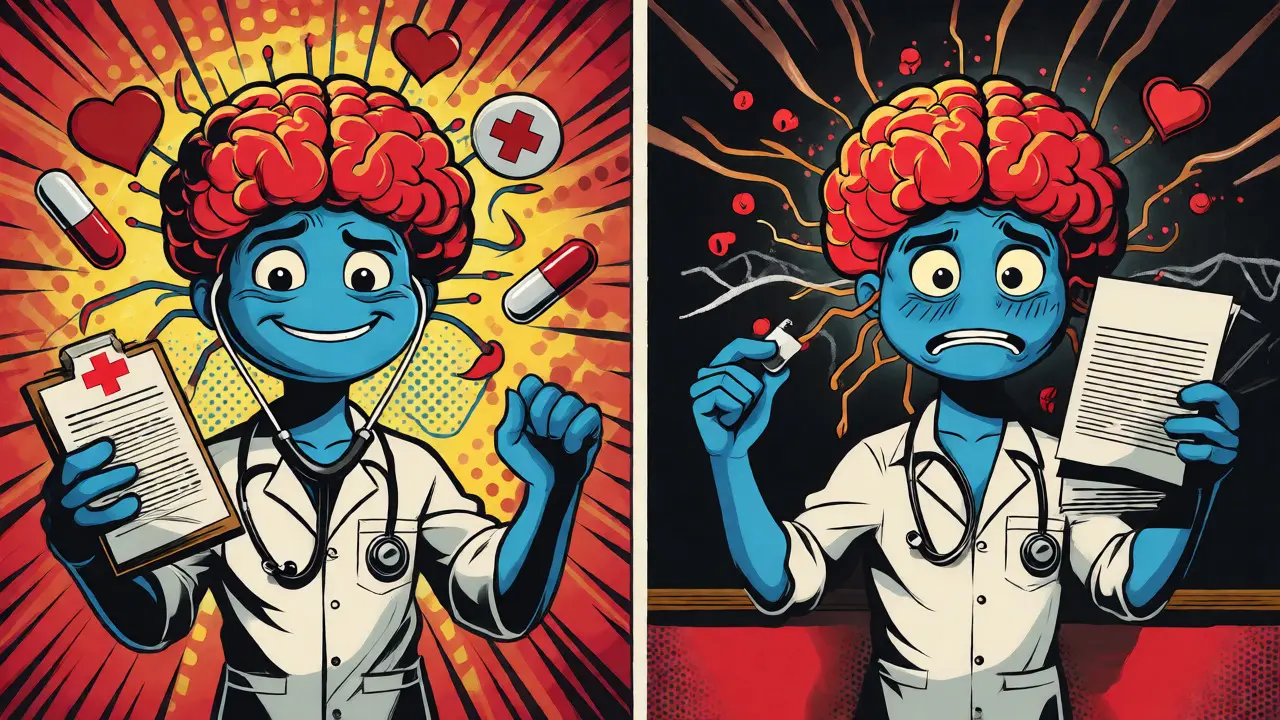
You train a Generative AI model on medical data. It becomes an expert at diagnosing rare diseases. Then you feed it legal contracts to teach it contract analysis. Suddenly, the model forgets how to diagnose anything. This isn't a bug; it's a feature of how neural networks work today. It’s called Catastrophic Forgetting, and it is the biggest headache for anyone trying to build AI that actually learns over time.
Humans don’t do this. You learn to drive, then you learn to cook, but you don’t forget how to steer the car while chopping onions. Our brains consolidate old knowledge before making room for the new. Current AI models? They overwrite their weights with every new batch of data. If you want your AI to adapt without losing its mind, you need Continual Learning. Let’s break down how it works, why it breaks, and what tech leaders are doing about it right now.
The Core Problem: Why AI Has Amnesia
When a neural network trains, it adjusts millions of parameters (weights) to minimize error. When you introduce new data, those same weights get adjusted again. In standard training, there’s no distinction between "old" important knowledge and "new" irrelevant noise. The model just optimizes for the current task. Research from McCloskey and Cohen back in 1989 first flagged this issue, noting that sequential training on disjoint datasets caused drastic memory loss. Fast forward to 2026, and despite massive compute power, we’re still fighting this battle.
Kartik Talamadupula, Director of AI Research at Symbl.ai, put it bluntly in Communications of the ACM: this is a significant problem for all machine learning systems. It prevents us from having truly adaptive intelligence. Instead of one smart model that grows smarter, we end up with static snapshots that need expensive retraining from scratch whenever the world changes. That costs money, time, and energy. And frankly, it’s inefficient.
How We Fight Back: Three Main Strategies
Engineers have developed three main categories of solutions to stop the bleeding. None are perfect, but each has its place depending on your budget and hardware constraints.
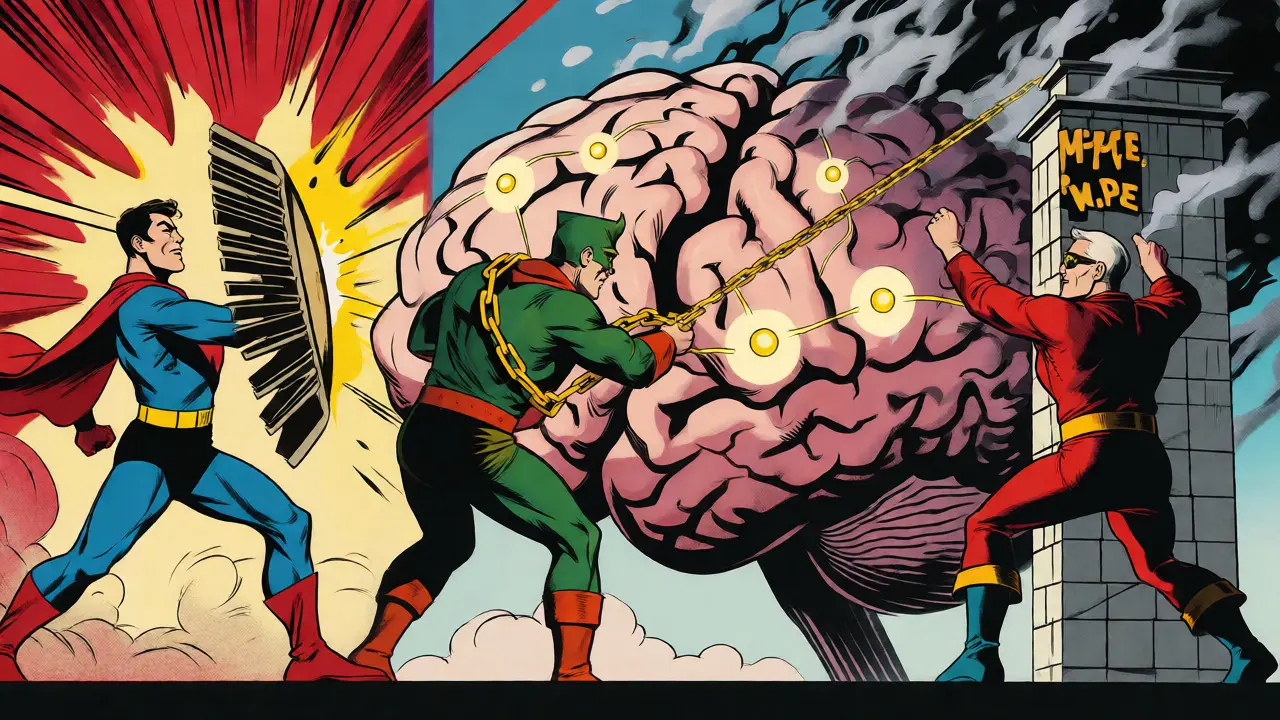
- Experience Replay: This is like flashcards for your AI. You store samples of old data in a buffer and mix them into new training batches. Chaudhry et al. showed this can improve accuracy on previous tasks by 15-25%. But here’s the catch: storing enough data to prevent forgetting requires massive memory. For large language models (LLMs), this often means keeping 20% of your entire training corpus in RAM, which gets pricey fast.
- Parameter Regularization: Think of this as putting a lock on important doors. Techniques like Elastic Weight Consolidation (EWC) identify which weights are critical for old tasks and penalize changes to them. Zenke et al. demonstrated a 30-40% reduction in forgetting using this method. It uses minimal extra memory (<5%), but it hits a wall after about 10 sequential tasks. Accuracy drops to around 60-65% because the locks become too rigid.
- Architectural Expansion: Instead of changing existing weights, you add new ones. Google’s Nested Learning paradigm, announced in early 2024, creates hierarchical parameter spaces. It isolates task-specific knowledge so new updates don’t trash old skills. Tests on PaLM-based systems showed it maintains 92% of previous performance with only 15% computational overhead. This is currently the most promising approach for enterprise-scale LLMs.
Real-World Performance: What Actually Works?
Let’s look at the numbers. Not all methods are created equal, and your choice depends heavily on whether you’re dealing with vision models or text generators. A recent comparison highlights the trade-offs clearly.
| Method | Retention Rate | Memory Cost | Best Use Case |
|---|---|---|---|
| Experience Replay | 75-85% | High (20% data) | Small vision models, limited tasks |
| Elastic Weight Consolidation (EWC) | 60-65% (after 10 tasks) | Low (<5%) | Edge devices, low-memory environments |
| Nested Learning | 92% | Moderate (15% compute) | Large Language Models, enterprise apps |
| Relevance Mapping | 88.7% | Moderate | Scenarios with clear task boundaries |
A team at Ohio State University discovered something fascinating: order matters. If you train on dissimilar tasks first and similar ones later, retention jumps to 82%. Do it the other way around, and you drop to 63%. So, curriculum design isn’t just a pedagogical trick for humans; it’s a technical requirement for AI.
Implementation Nightmares and Practical Tips
If you’re planning to deploy continual learning in production, brace yourself. It’s not plug-and-play. Developers report spending 40-60 hours just getting basic setups working. The documentation for academic implementations averages a mediocre 3.1/5 rating. Google’s framework is better (4.5/5), but most open-source tools require deep expertise in PyTorch or TensorFlow.
Here are some pitfalls to avoid based on community feedback from GitHub and Reddit:
- Buffer Sizing: Don’t guess. Start with 5-20% of your training data in the replay buffer. Too small, and you forget. Too big, and you run out of GPU memory.
- Task Boundaries: Most methods assume you know when one task ends and another begins. In real-world streaming data, you don’t. Kaushik et al.’s unsupervised task inference helps here, achieving 89% accuracy in detecting transitions, but it adds complexity.
- Hyperparameter Tuning: The regularization strength (lambda) needs careful balancing. Values between 0.1 and 10.0 are common, but they depend entirely on task similarity. There is no universal setting.
One user, 'ML_Engineer_2023', noted on GitHub that replay buffers worked great for GPT-2-small across three tasks but exploded in memory requirements when scaling to ten. This is the classic scalability trap. Always test on your specific architecture before committing resources.
The Future: Hybrid Systems and AGI Dreams
We are moving toward hybrid approaches. The January 2026 review in the Journal of Machine Learning Research predicts that successful systems will combine experience replay for immediate retention with synaptic consolidation for long-term preservation. Think of it as short-term memory plus long-term hardening.
Regulatory pressure is also driving adoption. The EU AI Act’s 2025 update requires mechanisms to document knowledge loss during updates for high-risk applications. Healthcare and customer service sectors are leading adoption (38% and 29% respectively) because they cannot afford to lose historical context. Gartner projects the continual learning market to hit $4.2 billion by 2027, up from $1.1 billion in 2023.
Rob Toews of Radical argues that solving this is critical for Artificial General Intelligence (AGI). Current methods still lag behind human efficiency by orders of magnitude, but the trajectory is clear. We aren’t building static tools anymore; we’re building evolving entities. If you ignore continual learning, your AI will always be outdated the moment you deploy it.
Frequently Asked Questions
What is catastrophic forgetting in simple terms?
It is when a neural network loses previously learned information after being trained on new data. Imagine learning a new language and suddenly forgetting your native tongue because your brain overwrote the old connections. In AI, this happens because the model optimizes weights for the newest task, ignoring the importance of past tasks unless specifically protected.
Is experience replay suitable for Large Language Models?
Generally, no, not in its pure form. Experience replay requires storing significant amounts of past data. For LLMs trained on trillions of tokens, storing even a small fraction of that data in memory buffers becomes prohibitively expensive and slow. It works well for smaller vision models or narrow-domain chatbots but struggles with general-purpose LLMs due to memory constraints.
How does task ordering affect continual learning?
Research from Ohio State University shows that training on dissimilar tasks first and similar tasks later significantly reduces forgetting. This strategy allows the model to establish distinct feature spaces for different domains early on. Training on similar tasks first causes interference, leading to lower retention rates (around 63% vs. 82%).
What is Elastic Weight Consolidation (EWC)?
EWC is a parameter regularization technique that protects important weights. It calculates the importance of each weight for previous tasks and adds a penalty term to the loss function if those weights change too much during new training. It is memory-efficient but tends to become less effective after many sequential tasks (more than 10).
Why is continual learning important for enterprises?
Enterprises generate new data constantly. Retraining a full model from scratch every week is costly and slow. Continual learning allows models to incorporate new trends, regulations, or customer behaviors incrementally. This is crucial for sectors like healthcare and finance where regulatory compliance and up-to-date knowledge are mandatory.