
Imagine building a feature where the code looks perfect on screen, but when you click the button, nothing happens-or worse, it breaks something else. In traditional development, we often obsess over whether the syntax is clean or if the architecture follows best practices. But in vibe coding, that mindset doesn't just fail; it becomes a liability. Since the concept emerged in early 2025, developers have shifted toward describing requirements in natural language and letting large language models (LLMs) generate the corresponding code. This approach prioritizes speed and intent over manual line-by-line construction. Consequently, the way we verify quality has had to change completely.
You are no longer checking if a variable is named correctly. You are asking: "Does it feel right when I use it?" This is the essence of outcome testing a validation method that verifies observable behavior and user experience rather than inspecting source code structure. It’s about verifying that the application behaves as intended from the user's perspective, not just that the underlying logic compiles without errors. If your app works but feels clunky, slow, or confusing, it hasn’t truly succeeded in the vibe coding paradigm.
The Shift from Code Inspection to Behavioral Verification
Traditional software quality assurance often treats testing as a separate phase that happens after development is complete. Developers write code, hand it off to QA, and wait for reports. In vibe coding, this linear model collapses. The workflow is iterative and continuous. You prompt an AI model, review the generated snippet, accept or reject it, and immediately test the changes in the running application. This rapid cycle means outcome testing isn't a final gate; it's the heartbeat of the development process.
When you look at the standard vibe coding loop, you see eight distinct steps: formulating a goal, prompting the AI, reviewing the code, accepting changes, testing the application, identifying bugs, refining the prompt, and repeating until satisfied. Notice where testing sits. It happens right after acceptance, before you move on to the next sub-goal. This immediate behavioral verification ensures that the 'vibe'-the flow, timing, and smoothness of the interaction-is preserved with every single iteration. If you skip this step, you risk accumulating hidden bugs that only surface when the application is under real-world pressure.
This shift also changes how we define success. In a conventional setup, a passing unit test might be enough to merge a pull request. In vibe coding, a passing unit test is merely the floor. The ceiling is determined by how the feature integrates with the rest of the system and how it feels to the end user. A button might trigger the correct API call (passing functional tests), but if the loading state takes three seconds too long or the error message is cryptic, the outcome is still a failure. Outcome testing captures these nuances that static code analysis misses entirely.
Why Granular Prompts Change Your Testing Strategy
One of the most practical aspects of vibe coding is the granularity of your prompts. Research into developer workflows shows that teams intentionally break down complex features into smaller chunks to reduce AI hallucinations. Instead of asking an LLM to build an entire checkout flow, you ask it to create the email input field first. Then, you ask for the password validation. This granular approach directly impacts how you conduct outcome testing.
Because your prompts are specific and single-objective, your tests become equally focused. You aren't trying to validate the entire application after every prompt. You are validating the specific behavioral outcome of that last instruction. For example, if you prompt the AI to "add a stop button to the audio player," your outcome test is simple: does the audio stop when clicked? Does the icon change? Do you need to test the whole media library? No. You test the slice you just built.
This selective validation saves time and reduces cognitive load. However, it introduces a risk: integration issues. Because you are building in small slices, individual components might work perfectly in isolation but fail when combined. This is where the vertical slice methodology comes in. Rather than developing the database layer separately from the UI, vibe coding encourages building full-stack slices from start to finish. You build a super-simple version of a feature end-to-end, test its behavior, and then add complexity to that same slice. This ensures that outcome testing always occurs on integrated functionality, preventing the classic "it worked on my machine" problem where isolated units pass but the system fails.
Tools That Speak Human, Not Machine
Traditional automation tools like Selenium or Cypress rely heavily on CSS selectors and DOM structures. When AI generates code rapidly, those structures can change unexpectedly, breaking your brittle tests. This is why new categories of tools have emerged specifically for vibe testing. These platforms focus on user intent rather than technical implementation details.
TestRigor an AI-powered testing platform that allows users to write test cases in plain English based on expected outcomes. is a prime example. With TestRigor, you don't write code to find a button. You write: "Click the login button." The tool uses generative AI to interpret that instruction and execute it across desktop, web, and mobile platforms. Similarly, tools like Autify, Reflect, Appvance, and Rainforest have entered the market, offering solutions that check flow and feeling rather than pixel-perfect matches or fragile element IDs.
| Feature | Traditional Tools (Selenium/Cypress) | Vibe Testing Tools (TestRigor/Autify) |
|---|---|---|
| Test Syntax | Code-based (JavaScript/Python) | Natural Language / Plain English |
| Focus | DOM Structure & Selectors | User Intent & Behavior |
| Maintenance Cost | High (breaks on UI changes) | Low (adapts via AI interpretation) |
| Best For | Stable, legacy codebases | Rapidly evolving AI-generated apps |
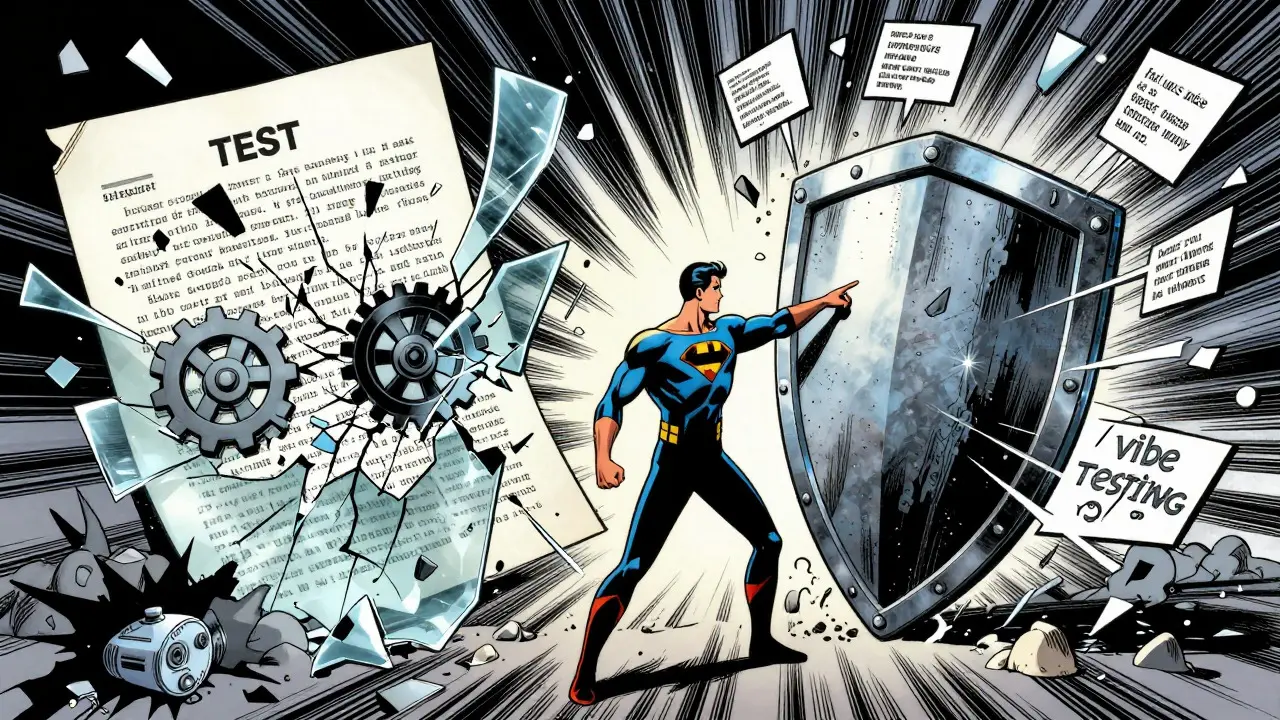
The advantage here is resilience. When an AI regenerates a component and changes the class names or HTML structure, traditional scripts break. Vibe testing tools, however, look for the semantic meaning of the action. If the button still says "Login" and performs the login function, the test passes, regardless of the underlying code changes. This alignment between development style and testing style is what makes outcome testing viable at the speed of vibe coding.
The Hybrid Approach: AI Checks, Humans Feel
Can AI-generated tests fully replace human judgment? Not yet. While AI can validate common workflows, edge cases, and regression scenarios with high reliability, it struggles with subjective quality metrics. This is where the hybrid model shines. Automated tests handle the objective verification: Did the data save? Did the page load? Did the error appear? Human reviewers handle the subjective assessment: Does the transition feel smooth? Is the error message helpful? Does the overall flow make sense?
Documenting "feel" metrics is becoming essential. Teams are starting to include qualitative notes alongside their pass/fail results. For instance, a test might pass functionally, but a reviewer notes that the animation is janky or the color contrast is poor. These insights drive further prompting cycles. Remember the example of discovering the need for a stop button during testing? That wasn't found by a script; it was found by a human interacting with the app and realizing the UX was incomplete. Outcome testing must therefore include both automated behavioral checks and human-centric experience reviews.
Integrating Outcome Testing into CI/CD Pipelines
If outcome testing is continuous, it needs infrastructure. You can't manually run these checks every time you push a commit. This is where Continuous Integration and Continuous Deployment (CI/CD) pipelines come into play. By integrating vibe testing tools into your CI/CD pipeline, you ensure that every code change triggers an automated behavioral verification suite.
The process looks like this: You commit your vibe-coded changes. The CI pipeline runs the standard unit tests to catch basic logic errors. Then, it runs the outcome testing suite using tools like TestRigor or Autify. These tools simulate user interactions against the staging environment. If the behavior deviates from the expected outcome, the build fails, and you get notified immediately. This shift-left testing approach catches issues before they reach production, reducing the cost of fixing bugs later in the lifecycle.
Moreover, monitoring tools within the DevOps stack help track performance metrics post-deployment. If an AI-generated update causes a slight increase in latency, monitoring dashboards will flag it. This creates a feedback loop where operational data informs future prompting strategies. If a specific feature consistently causes performance dips, you know to prompt the AI for optimization in the next cycle.
Common Pitfalls and How to Avoid Them
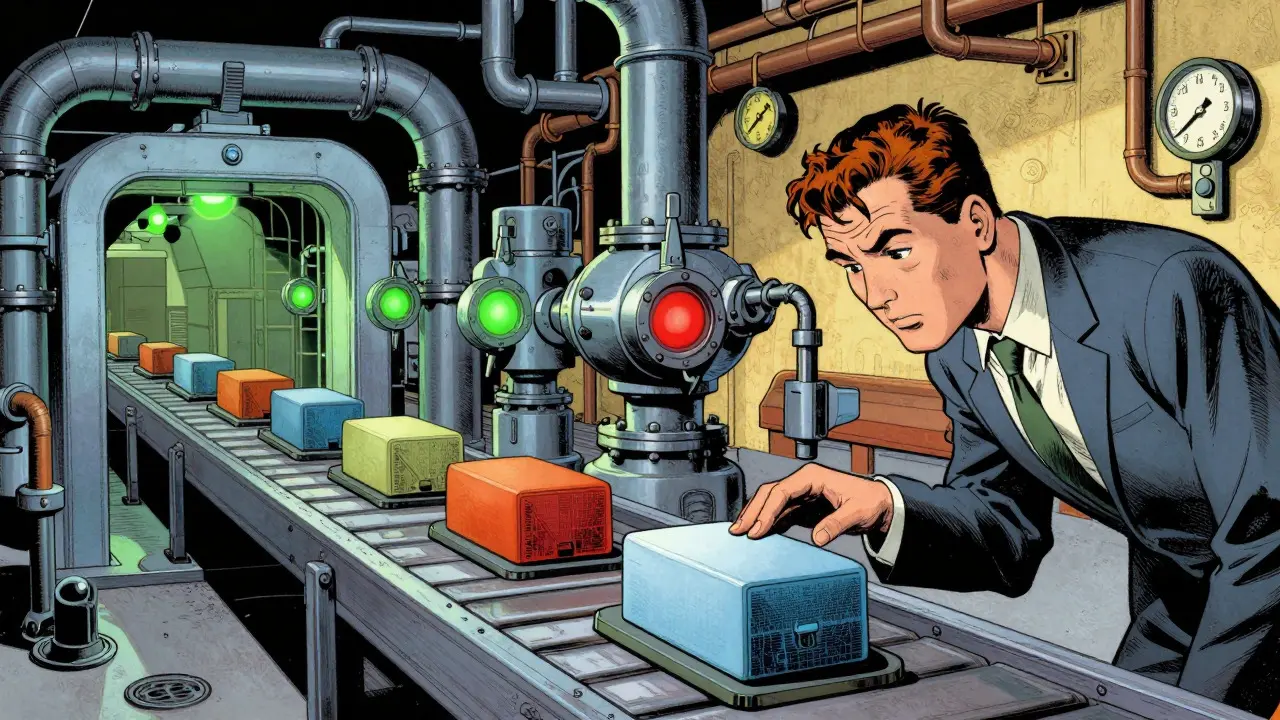
Even with the right tools and mindset, teams stumble. Here are the most common traps in vibe coding outcome testing:
- Over-reliance on AI Generation: Assuming the AI will always produce clean, efficient code. Always review the generated snippets for obvious inefficiencies or security risks before running behavioral tests.
- Igoring Edge Cases: Focusing only on the happy path. Outcome testing must include negative scenarios: What happens if the network drops? What if the user enters invalid data? Use exploratory testing to uncover these unexpected behaviors.
- Testing in Isolation: Validating a component without seeing how it affects the rest of the app. Stick to the vertical slice methodology to ensure end-to-end behavioral integrity.
- Skipping Regression Tests: New code often breaks old functionality. Maintain a robust suite of regression tests that re-validate previously fixed issues with every new deployment.
Avoiding these pitfalls requires discipline. It means treating the AI as a junior developer who needs supervision, not a magic oracle. Your role shifts from writing code to curating behavior. You define the outcome, the AI provides the mechanism, and your testing validates the result.
Frequently Asked Questions
What is the main difference between vibe testing and traditional unit testing?
Unit testing focuses on the internal logic of individual code components, ensuring functions return expected values. Vibe testing, or outcome testing, focuses on the external behavior and user experience of the entire application, verifying that the software acts as intended from the user's perspective, including flow, timing, and usability.
Do I still need to read the code generated by AI in vibe coding?
Yes, but with a different focus. You don't need to analyze every line for style or minor optimizations. Instead, scan for logical errors, security vulnerabilities, or obvious inefficiencies. The primary validation, however, should come from running the application and observing its behavior through outcome testing.
Which tools are best for outcome testing in AI-assisted development?
Tools designed for natural language testing are ideal. TestRigor is a leading option that allows you to write tests in plain English. Other notable tools include Autify, Reflect, Appvance, and Rainforest. These platforms use generative AI to interpret user intent and execute tests across various platforms, making them resilient to the frequent code changes typical in vibe coding.
How do I handle regression issues when AI regenerates code frequently?
Integrate automated regression tests into your CI/CD pipeline. Every time new code is generated and committed, the pipeline should run a suite of behavioral tests that verify previously stable features still work. This safety net instantly detects failures caused by unintended side effects of new AI-generated changes.
Is outcome testing suitable for all types of software projects?
While most effective in vibe coding workflows, outcome testing principles apply broadly to any user-facing application. However, it is particularly critical in AI-assisted development because the speed of code generation outpaces manual inspection capabilities. For backend-only services with no direct user interface, traditional API contract testing may remain more relevant, though behavioral verification of data flow is still valuable.


10 Comments
Meagan Mueller
so they want you to stop reading the code right? because if the AI is just spitting out garbage that looks pretty on the surface then your app is a ticking time bomb. i bet the big tech companies are already using this to hide backdoors in your data. nobody checks the source anymore so who knows what its really doing under the hood. it feels like we are all just playing with fire here and hoping the house doesnt burn down
Art HND
this is just regression testing with a new name. nothing new here. people always forget that behavior verification existed before LLMs were cool. the only difference is now you have less control over the variables. keep it simple.
Elizabeth Brooks
i actually think this is super helpful for smaller teams. we dont have the budget for a huge QA department so having tools that let us write tests in plain english is a game changer. also the part about vertical slices made a lot of sense to me. we used to try and test everything at once and it was a mess. breaking it down into small chunks works way better. i love how it focuses on the user experience rather than just if the code compiles. that is where most of our bugs actually lived. thanks for sharing this!
Deb Kortyna, MBA
One must question the rigor of such an approach. If the 'vibe' is subjective, how does one quantify success in a professional environment? It seems to prioritize speed over stability, which is a dangerous trade-off for enterprise applications. The reliance on AI interpretation introduces an unnecessary layer of uncertainty into the development lifecycle. We should not abandon proven methodologies for trendy buzzwords. Discipline remains the cornerstone of software engineering. Do not let enthusiasm cloud your judgment regarding technical debt. The future belongs to those who maintain strict standards, not those who chase fleeting fads. Let us hope this trend passes quickly. Until then, proceed with caution.
alex kobri
there is a deep philosophical shift happening here. we are moving from controlling the machine to collaborating with it. the code becomes a medium not the end goal. it reminds me of how painters stopped worrying about every brushstroke and started focusing on the overall composition. the human element is still vital though. we need to trust our instincts more. the AI is just a tool in the shed. the artist is still holding the paintbrush. this changes how we define craftsmanship entirely. it is a fascinating time to be building things.
Zach Loescher
i find the integration with CI/CD pipelines interesting but often overlooked in these discussions. setting up the infrastructure to run these behavioral tests automatically is no small feat. it requires a significant upfront investment in tooling and configuration. however once it is running it can save a lot of manual effort in the long run. it is a balance between setup cost and ongoing benefit. worth considering for larger projects.
Quintin Franzese
oh look another way to break your build pipeline. sure let the AI guess what the button does. great plan. i am sure my users will love the surprise elements when the login screen decides to become a shopping cart. vibe coding is just a fancy word for 'hope it works'.
Susan Cole
the point about edge cases is valid. many developers forget to test the negative scenarios. it is easy to get carried away with the happy path. but real users are chaotic. they do things wrong on purpose sometimes. or by accident. either way the app needs to handle it gracefully. this is where outcome testing really shines. it forces you to think like a user not a coder. which is a good thing. mostly.
Tamara Miller
let's be honest... this whole article is just marketing fluff for TestRigor. why else would they name-drop them so many times? it's obvious they are trying to sell us something. the concept of 'vibe' is also very vague. how do you measure a vibe? it sounds like a made-up metric to justify higher salaries for QA teams. don't believe everything you read online. do your own research. the industry loves to reinvent the wheel and call it innovation. it's tiring. but here we are again.
Savara Gunn
thanks for the detailed breakdown. i appreciate the practical examples. it helps to see how theory applies to real workflows. nice work putting this together.