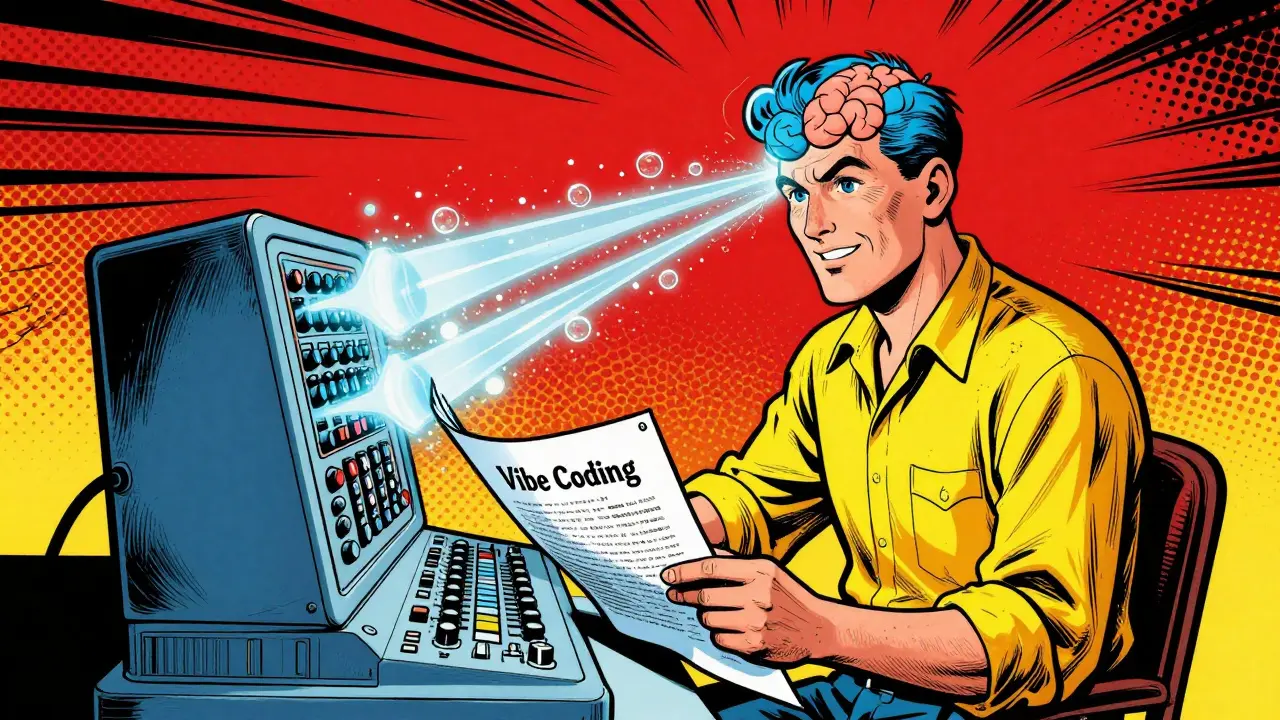
Imagine telling your computer to build a feature using plain English, watching it write the code in seconds, and then stepping back to review the result. This is vibe coding, defined as a transformative approach to software development where developers interact with AI systems through natural language instructions rather than traditional code writing. It sounds like magic, but for engineering leaders, it’s a massive operational shift. The days of measuring productivity by lines of code are over. Now, you’re managing a team of directors who guide artificial intelligence.
The challenge isn’t technical; it’s cultural. If you just drop AI tools into your workflow without a plan, you get chaos. You get inconsistent code, security holes, and frustrated developers who don’t know how to steer the AI effectively. Successful adoption requires a structured change management strategy that focuses on three pillars: targeted training, the right tooling ecosystem, and incentive structures that reward quality over speed.
Redefining the Developer Role Through Training
The biggest hurdle in adopting vibe coding is the mental model shift. Developers have spent years learning syntax, memory management, and specific library functions. In a vibe coding environment, those skills become secondary to architectural thinking and prompt engineering. Training programs need to reflect this reality immediately.
First, teams must learn to treat AI as a conversation partner, not a genie. According to best practices from platforms like Memberstack, the process starts with rigorous planning. Before any code is generated, developers create detailed project plans and break work into manageable user stories. This means training developers to write comprehensive markdown implementation files that outline acceptance criteria and scope. If you skip this step, the AI will guess, and its guesses are often wrong.
Second, training must cover the distinction between planning models and execution models. Not all AI is built for every task. For example, GPT-o3-mini might be used for high-level reasoning and creating Product Requirements Documents, while Claude 3.7 handles the actual coding implementation. Developers need to understand which tool to use when. This prevents them from wasting time asking a coding model to do strategic planning or vice versa.
Finally, version control training takes on new importance. When AI generates code, it can introduce subtle bugs or unexpected changes that break existing functionality. Teams must adopt a "test first, accept later" mindset. Instead of merging AI output immediately, developers should run tests, refine instructions based on results, and only then accept the changes. This rapid iteration cycle replaces the old perfectionist approach of getting it right the first time.
Building the Right Tooling Ecosystem
You cannot manage what you cannot measure, and you cannot vibe code effectively without the right infrastructure. The tools you choose dictate how well your team can collaborate and maintain code quality. A robust vibe coding stack goes beyond just an AI chat interface.
Specialized platforms like Refact.ai offer features designed specifically for this workflow, such as a 'Think' button for advanced reasoning during planning phases and Agent functionality for autonomous feedback loops. These tools help keep context windows efficient by encouraging modular code generation in separate files rather than single large scripts. This modularity is crucial because AI models struggle with massive context limits. Keeping files small and focused reduces errors and keeps the AI sharp.
Standard version control systems like Git and GitHub remain essential, but their usage changes. They serve as save points throughout development, allowing teams to revert quickly when AI introduces errors. Commit messages become more critical than ever-they need to document not just what changed, but why the AI made that change and what the human oversight looked like.
Documentation tools also play a central role. Developers should request that AI update README files after every significant change. This creates a living document of the project state, ensuring that the documentation doesn’t drift away from the code-a common problem in fast-moving AI-assisted projects. Additionally, maintaining personal prompt libraries and glossaries helps standardize terminology across the team, ensuring that everyone gets consistent results from the AI.
| Aspect | Traditional Development | Vibe Coding Workflow |
|---|---|---|
| Primary Skill | Syntax and Implementation | Prompt Engineering and Architecture |
| Planning Phase | Mental or Whiteboard | Markdown Specs and PRDs |
| Error Handling | Debugging Code | Refining Prompts and Context |
| Code Structure | Monolithic or Standard Modules | Modular Files for Context Efficiency |
| Review Focus | Logic and Syntax | Security, Edge Cases, and Intent |
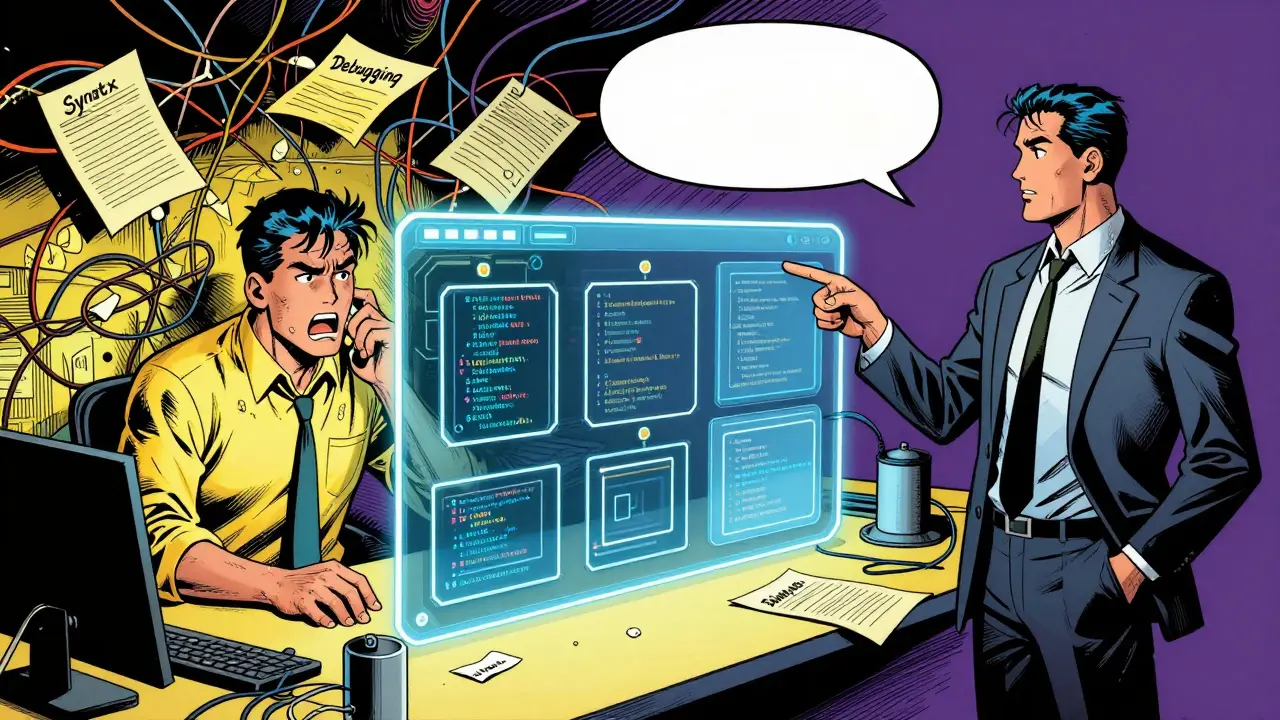
Restructuring Incentives for AI Collaboration
If you want your team to embrace vibe coding, you have to change how you reward them. Traditional metrics like "lines of code written" or "story points completed per sprint" are misleading in an AI-driven world. A developer might finish ten story points in an hour using AI, but if half of that code is brittle or insecure, you’ve lost money, not saved it.
Incentives should shift toward outcomes rather than outputs. Reward developers for effective AI collaboration, the quality of their code reviews, and successful iteration cycles. For instance, recognize teams that identify critical edge cases that the AI missed. This encourages a culture of skepticism and thoroughness, which is vital when working with generative tools.
Another key incentive is reduced cognitive load. Vibe coding allows developers to focus on higher-level problem-solving rather than repetitive typing. Highlight this benefit in your change management communications. Show developers how they can spend less time on boilerplate code and more time on architecture and innovation. This can reduce burnout and increase job satisfaction, making the transition feel like a professional upgrade rather than a threat.
Organizational agility is also a major selling point. By enabling rapid prototyping, companies can test market assumptions faster and pivot with less investment. Frame this as a competitive advantage for the entire company, not just the engineering department. When stakeholders see that ideas can go from concept to demo in days instead of weeks, support for the initiative grows naturally.
Navigating Adoption Challenges at Scale
Scaling vibe coding from individual experiments to an enterprise-wide practice brings unique challenges. One of the biggest is context management. AI models have token limits, and hitting those limits can cause confusion or infinite loops. Organizations need processes for starting new sessions, managing project scope, and splitting large projects across multiple AI interactions. Without these guardrails, teams will waste hours trying to force the AI to remember too much.
Standardization is another hurdle. As more teams adopt vibe coding, you need global guidelines for AI interactions. This includes documented coding standards, architectural patterns, and security protocols that all AI-generated code must follow. Memberstack emphasizes establishing clear project rules upfront. If Team A uses one prompting style and Team B uses another, maintenance becomes a nightmare. Create a shared library of approved prompts and patterns to ensure consistency.
Finally, address the psychological resistance. Some senior developers may feel threatened by AI, fearing their expertise is being devalued. Counter this by emphasizing that vibe coding raises the bar for architectural knowledge. The AI can write the code, but it can’t yet design complex system integrations or make nuanced business decisions. Position AI as a powerful assistant that amplifies human expertise, not replaces it.
Measuring Success and ROI
How do you know if your vibe coding initiative is working? Look at lead time for changes and defect rates. If you’re shipping faster but breaking things more often, you haven’t succeeded. Track the ratio of AI-generated code to human-reviewed code. A healthy balance suggests that humans are adding value through oversight and direction.
Also, monitor developer sentiment. Are they feeling more empowered or more anxious? Regular surveys and retrospectives can provide insights into whether the training and tools are meeting their needs. Adjust your strategy based on this feedback. Change management is iterative, just like vibe coding itself.
What is vibe coding exactly?
Vibe coding is a software development methodology where developers use natural language prompts to instruct AI models to write code. Instead of typing syntax manually, developers act as architects and reviewers, guiding the AI through conversations to build applications rapidly.
Do I still need to know how to code if I use vibe coding?
Yes, absolutely. While you write less code manually, you need strong coding knowledge to review AI output, debug issues, understand architectural implications, and craft effective prompts. Without this foundation, you risk accepting flawed or insecure code.
Which AI models are best for vibe coding?
Different models excel at different tasks. GPT-o3-mini is often used for planning and reasoning due to its advanced logic capabilities, while Claude 3.7 is popular for actual code implementation. Using a combination of both allows for better separation of concerns between design and execution.
How do we prevent AI from introducing bugs?
Implement strict testing protocols. Never merge AI-generated code without running automated tests. Use version control like Git to create checkpoints. Encourage developers to refine prompts based on test failures and to seek second opinions on complex implementations.
What are the main risks of adopting vibe coding?
Risks include security vulnerabilities if AI writes unsafe code, loss of institutional knowledge if code isn’t properly documented, and over-reliance on AI leading to skill atrophy. Mitigate these with strong review processes, mandatory documentation updates, and continuous training.
How should we incentivize developers during this transition?
Shift incentives from quantity (lines of code) to quality (successful iterations, bug-free releases). Reward effective prompt engineering, thorough code reviews, and innovative architectural solutions. Recognize teams that leverage AI to solve complex problems efficiently.


9 Comments
Yashwanth Gouravajjula
Great breakdown of the workflow shift.
Amanda Ablan
I really appreciate how this post emphasizes the cultural aspect over just the technical tools. It's so easy to get lost in the hype of AI writing code, but you're right that without a plan, it's just chaos. The point about treating AI as a conversation partner rather than a genie is spot on. We need to stop expecting magic and start building better processes for interaction. It feels like we are finally moving towards a more collaborative model where humans provide the direction and intent, which is actually quite empowering if done correctly.
Kevin Hagerty
another day another article telling us our jobs are changing again lol. vibe coding sounds like a buzzword made up by marketing teams who dont write code. i guess now we just type english and hope the ai doesnt brick the whole system. great advice though, definitely going to ignore the security risks mentioned here because why not
Kendall Storey
Look, the tooling stack matters immensely here. You can't just throw a chat interface at a team and expect them to handle context window limits efficiently. The mention of Refact.ai and modular file generation is critical because LLMs degrade in performance when the context gets too noisy. We need to enforce strict boundaries on what goes into the prompt library. If your devs are dumping entire monolithic files into the context, they're wasting compute and getting hallucinated outputs. Keep the modules small, keep the prompts specific, and use version control as your safety net. That's the only way to scale this without burning out the engineering team.
Meredith Howard
i find the distinction between planning models and execution models particularly interesting. it seems intuitive that different cognitive tasks require different architectural approaches yet many teams try to use one model for everything. the idea of using GPT-o3-mini for high-level reasoning while letting Claude 3.7 handle implementation makes sense from an efficiency standpoint. however i wonder how difficult it will be to standardize this across larger organizations where resistance to change is often significant. the psychological aspect cannot be underestimated either as senior developers may feel their expertise is being undermined rather than amplified
Janiss McCamish
The part about incentives is key. If you reward speed, you get bugs. If you reward quality and review depth, you get stability. Simple as that.
Dylan Rodriquez
This raises a profound question about the nature of craftsmanship in software development. When we delegate the syntax to machines, do we lose the tactile understanding of the codebase? I believe the role of the developer is evolving from a builder to an architect, which requires a deeper philosophical engagement with system design. We must ensure that this transition doesn't lead to a loss of institutional knowledge. The human element remains crucial in guiding the ethical and functional direction of these systems. It is a delicate balance between leveraging automation and maintaining human oversight, ensuring that technology serves humanity rather than dictating its limitations.
Richard H
We need to stop outsourcing our core competencies to foreign tech giants. This vibe coding nonsense is just another way to make American engineers dependent on black box algorithms we don't understand. Real engineering happens when you write the code yourself, line by line, knowing exactly what every function does. These AI tools are a threat to national security and economic independence. We should be focusing on strengthening domestic software infrastructure, not playing games with prompt engineering. It's time to take back control of our digital sovereignty before it's too late.
Ashton Strong
I thoroughly agree with the emphasis on structured training programs. The transition to AI-assisted development is indeed a significant operational shift that requires careful management. It is encouraging to see such a comprehensive approach to change management, focusing not only on tools but also on mindset and incentives. By rewarding quality over quantity, organizations can foster a culture of excellence and continuous improvement. This strategy ensures that developers remain engaged and motivated while adapting to new technologies. Ultimately, the success of such initiatives depends on clear communication and consistent support from leadership.