
Imagine walking into a new job and needing to find a specific compliance policy. You don't know where it lives. You ask a colleague, who sends you a link to a folder that doesn't open. You spend two hours digging through old emails and broken SharePoint links. By 2026, this scenario is becoming less common, but it still costs companies billions in lost productivity. The solution isn't just better filing cabinets; it's a fundamental shift in how we talk to our data.
Enter Large Language Models (LLMs), which are advanced AI systems capable of understanding and generating human-like text based on vast amounts of training data. When applied to Enterprise Knowledge Management, which is the systematic process of creating, capturing, and distributing knowledge within an organization), these models turn static document repositories into dynamic, conversational interfaces. Instead of searching for keywords, employees ask questions in plain English and get synthesized answers with citations. This isn't science fiction anymore; it's the standard for modern IT infrastructure.
How LLM-Powered Q&A Actually Works
Many people assume these systems memorize your entire company database. That's not how it works, and understanding the difference is critical for security. Most enterprise implementations use a technique called Retrieval-Augmented Generation (RAG), which is an architecture that combines a retrieval system to fetch relevant data with a generative model to produce answers. Here is the flow: when you ask a question, the system first searches your internal documents for relevant chunks of text. It then sends those chunks, along with your question, to the LLM. The model reads the provided context and writes an answer based *only* on that information.
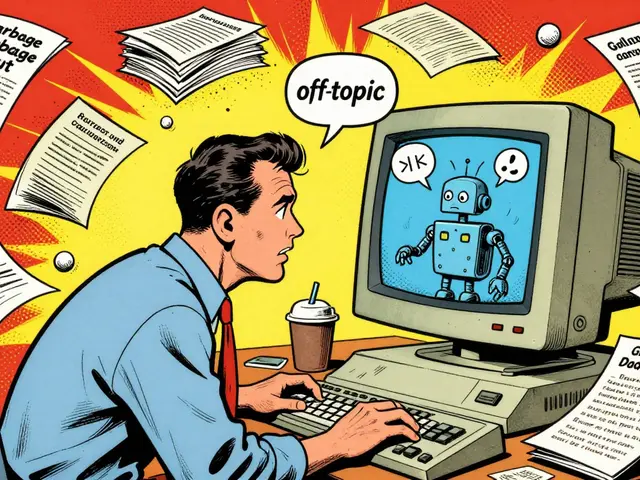
This architecture solves a major problem known as hallucination, where an AI makes things up. By grounding the response in retrieved documents, you reduce the risk significantly. However, the quality of the answer depends entirely on the quality of the retrieval. If the system can't find the right document chunk, the answer will be weak. This is why Vector Databases, which are specialized databases designed to store and search high-dimensional vectors representing semantic meaning, are essential. Tools like Pinecone or Weaviate allow the system to understand the *meaning* of a query rather than just matching keywords. If you ask about "customer refund policy," it finds documents mentioning "returns" or "reimbursements" even if the exact phrase isn't there.
Under the hood, this process requires significant computing power. In 2024, benchmarks showed that production deployments often required NVIDIA A100 GPUs, which are high-performance graphics processing units designed for AI training and inference to handle real-time inference. By 2026, while hardware has improved, the need for GPU acceleration remains for sub-second response times. A typical query takes 1.2 to 3.5 seconds to process. That might sound fast, but in a high-volume support environment, latency adds up. Companies optimizing for speed often pre-process documents into embeddings during off-hours to ensure the search index is ready for immediate access.
Why Traditional Systems Fall Short
For years, companies relied on platforms like SharePoint, which is a web-based collaborative platform developed by Microsoft that integrates with the Microsoft Office suite or Confluence, which is a wiki-style collaboration tool developed by Atlassian for team knowledge sharing. These tools are great for storage but terrible for discovery. They rely on metadata and folder structures that often decay over time. A study by Workativ in 2024 found that 63% of employee queries were resolved faster with LLM systems compared to traditional search. The difference is contextual understanding.
Traditional search returns a list of links. You have to click through, read, and synthesize the information yourself. An LLM system does the synthesis for you. It can pull information from a PDF policy, a Slack channel transcript, and a wiki page to give you a single, cohesive answer. This capability is particularly valuable for complex questions like, "How do we handle GDPR compliance for customer data in the European region?" Instead of searching twelve different policy documents, the system synthesizes the relevant clauses into a direct response. This shift from "search and read" to "ask and get" changes the workflow entirely.
| Feature | Traditional Search (SharePoint/Confluence) | LLM-Powered Q&A |
|---|---|---|
| Query Type | Keyword matching | Natural language questions |
| Result Format | List of document links | Synthesized answer with citations |
| Context Awareness | Low (requires exact terms) | High (understands synonyms and intent) |
| Implementation Time | Weeks to months | 3-6 weeks for medium enterprises |
| Accuracy Rate | Dependent on metadata quality | 85-92% with proper RAG setup |

The Security and Accuracy Blind Spots
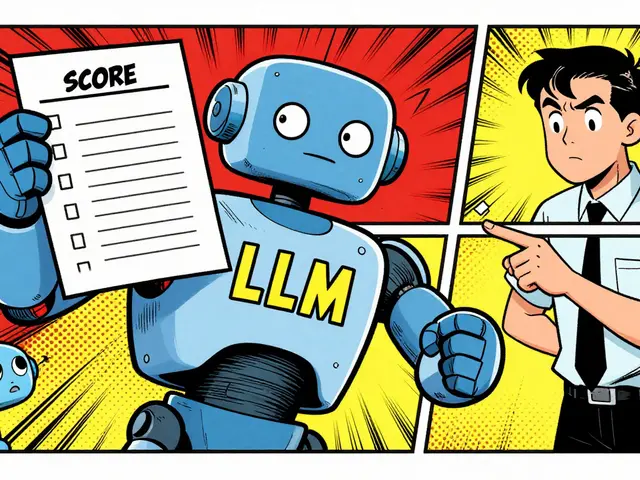
While the technology is powerful, it is not magic. A major concern in 2024 was the "dangerous blind spot" regarding knowledge accuracy. Unverified implementations were producing incorrect answers in 18-25% of complex queries. This happens when the retrieval system fetches irrelevant documents, or when the LLM tries to guess an answer because the context is insufficient. To mitigate this, successful deployments implement strict access controls. This ensures that an employee in HR cannot query sensitive financial data, even if the AI knows about it.
Security configuration is the single most critical success factor. In 2024, 94% of successful deployments reported implementing strict access controls as essential. This means the retrieval system must respect the same permission structures as your existing document management system. If a file is locked to managers only, the AI should not be able to retrieve it for a junior employee. Furthermore, human-in-the-loop validation is necessary for critical responses. Users should be able to flag incorrect answers, which feeds back into the system to improve future accuracy.
Another challenge is document versioning. If you update a policy, the old version shouldn't be retrieved. Solutions often use timestamped embeddings to track changes. Knowledge decay is also a real issue; documents become outdated over time. About 48% of systems address this through automated recency scoring, prioritizing newer documents in the search results. Without these mechanisms, your AI knowledge base becomes a source of outdated information, which is worse than having no AI at all.
Cost, ROI, and Implementation Reality
Adopting this technology isn't free. A 2024 Stanford study calculated that maintaining enterprise-scale LLM knowledge systems costs between $18,500 and $42,000 monthly per 10,000 employees in inference computing alone. This doesn't include the cost of the software licenses or the engineering team required to build and maintain the pipeline. However, the return on investment is often clear. Companies like Salesforce and Adobe reported reducing employee onboarding time by 35-50% through instant access to institutional knowledge. If you have a large workforce, the time saved on repetitive questions to IT help desks can offset the costs quickly.
Implementation typically takes 3-6 weeks for medium enterprises. This includes converting diverse formats like PDFs, DOCX files, and internal wikis into processable text with metadata preservation. The learning curve involves mastering prompt engineering techniques and vector database configuration. Teams usually require 40-60 hours of training to become proficient. Documentation quality varies significantly by vendor. Open-source frameworks like LangChain, which is a framework for developing applications powered by language models have extensive community documentation but require substantial technical expertise. Enterprise solutions provide guided setup but may limit customization.
Market analysis shows rapid growth, with the enterprise knowledge management market projected to reach $1.87 billion by 2027. Adoption is strongest in technology, financial services, and healthcare sectors. Regulatory considerations are increasingly important. The EU AI Act's transparency requirements have prompted 58% of European enterprises to implement knowledge provenance tracking in their LLM systems. This means every answer generated must be traceable back to its source document, ensuring accountability.

Future Trends: From Search to Copilots
By 2026, the landscape is shifting from universal enterprise search to specialized knowledge copilots. Gartner predicted that by 2026, 60% of large enterprises would deploy function-specific knowledge assistants rather than centralized systems. Instead of one giant bot for everything, you might have a specialized assistant for legal compliance, another for engineering documentation, and one for HR policies. This specialization improves accuracy because the models are fine-tuned on specific domain data.
Current developments include multimodal capabilities allowing analysis of charts and diagrams within documents. About 31% of new deployments as of Q1 2024 implemented this feature. This allows the AI to explain a graph in a financial report, not just read the text around it. Tighter integration with collaboration tools like Slack and Microsoft Teams is also standard, where 67% of enterprise queries now originate. The future points toward autonomous knowledge maintenance, where AI agents automatically update knowledge bases by monitoring internal communications and document changes. However, long-term viability concerns persist regarding computational costs and the need for human oversight.
Frequently Asked Questions
Can LLMs replace human knowledge managers?
Not entirely. While LLMs automate retrieval and synthesis, human curation is still needed to validate accuracy and manage sensitive data. Seth Earley of Enterprise Knowledge notes that successful implementations require a hybrid AI approach combining LLM capabilities with structured knowledge graphs.
How do I prevent the AI from leaking confidential information?
Implement strict access controls that mirror your existing document permissions. The retrieval system must check user permissions before fetching any document chunk. Additionally, avoid sending sensitive data to public cloud models; use private instances or on-premise deployments for high-security environments.
What is the typical accuracy rate for these systems?
Properly implemented systems achieve 85-92% accuracy in retrieving correct information from internal documents. Accuracy drops if the retrieval system fails to find relevant context or if the source documents are outdated or contradictory.
Do I need to fine-tune the LLM for my company?
Fine-tuning is not always necessary. RAG architectures often perform well with zero-shot approaches. However, Dr. Andrew Ng's analysis showed that fine-tuning on domain-specific data can improve accuracy by 31-47% for complex queries, though it requires careful prompt engineering.
How long does it take to set up an enterprise Q&A system?
Document ingestion pipelines typically take 3-6 weeks for medium enterprises. This includes converting diverse formats into processable text, configuring vector databases, and setting up access controls. Teams also need 40-60 hours of training to become proficient.



7 Comments
ravi kumar
This shift in how we access internal data is exactly what we needed to stop wasting time on dead links.
Zoe Hill
Totally agree with you on the dead links part it is so frustrating when you just want to find a policy and end up clicking through nothing but broken files instead of getting a direct answer from the system we need to stop fighting the old tools and start using the new ones because they actually save us time and energy in the long run and honestly im so excited to see the changes coming soon nowdays
Albert Navat
Look the RAG pipeline is solid but you gotta check your embedding dimensions or the cosine similarity scores are gonna tank hard in production environments especially when you are scaling past the initial proof of concept phase without proper indexing strategies in place for the vector store backend
LeVar Trotter
You make a valid point regarding the embedding dimensions and we should definitely consider the indexing strategies before we scale too far into production environments because the latency issues can become quite problematic if the vector store backend is not optimized correctly for the specific workload requirements we are seeing today
Tyler Durden
YES!! Exactly what I was thinking about the latency issues man you hit the nail on the head regarding the optimization part and we need to keep pushing forward with the backend improvements to ensure everything runs smoothly for the team
King Medoo
It is truly a moral imperative that we consider the human cost of these systems 🤔. We cannot simply automate everything without thinking about the impact on our colleagues. Technology should serve us and not the other way around in our daily workflows. Many companies are rushing into this without proper ethical guidelines in place. We must ensure that the data being used is clean and accurate for everyone. If the system gives wrong advice it could lead to serious compliance issues for the firm. We have a responsibility to validate the outputs before we trust them blindly. The security blind spots mentioned in the article are very concerning for privacy 🔒. Employees deserve to know how their information is being processed by these models. Transparency is key to maintaining trust within the organization during this transition. We should not sacrifice our values for the sake of efficiency gains alone. The cost of implementation is high but the cost of failure is even higher. We need to prioritize the well-being of our workforce over the speed of deployment. It is better to move slowly and correctly than to rush and make mistakes. Let us all commit to building systems that respect human dignity and intelligence 🙏.
Rae Blackburn
they want us to think we need this but its just another way to track what we read and say inside the company walls we are being watched by the machines now and soon they will replace the managers entirely with code that knows everything about us