
Have you ever watched a toddler learn to speak? One day they are babbling, and the next, they suddenly start forming complex sentences. This feels like magic until you realize the brain has been silently processing data for years. Generative AI behaves similarly, but we don't quite know why. This is what experts call emergent capabilities: skills that appear out of nowhere when an AI model gets big enough. As of early 2026, this phenomenon remains the most confusing yet exciting part of our relationship with machines. Some say these abilities prove intelligence is evolving; others argue it's just a statistical trick.
Understanding where these skills come from matters because they change how we build, regulate, and trust software. If an AI can solve a math problem today without being explicitly taught how, will it be able to hack a network tomorrow without us seeing it coming? That uncertainty drives every major conversation in the sector right now. Let's break down exactly what we've figured out over the last four years and what still keeps researchers up at night.
The Basics of Sudden Skill Acquisition
To get straight to the point, an emergent capability is not something an engineer programs directly. You cannot simply write a function for "reasoning" in code. Instead, these traits pop up implicitly when you scale up three things: the number of parameters (the internal memory connections), the amount of training data, and the computing power used during learning. Think of it like boiling water. Heat it slowly, and the temperature rises gradually. At exactly 100°C, it abruptly turns to steam. There is a sudden phase change. AI shows similar behavior at specific size thresholds.
| Type | Growth Pattern | Predictability | Example Task |
|---|---|---|---|
| Gradual Capability | Linear improvement as model grows | Highly predictable | Spelling accuracy, basic translation |
| Emergent Capability | Sudden jump after a threshold | Low predictability before threshold | Multi-step logic, code generation, solving riddles |
This distinction is vital because it dictates how engineers plan for the future. If performance was linear, we could look at a small model's results and perfectly guess how a massive model would perform. With emergence, smaller versions often fail completely at tasks that larger versions ace instantly. A famous example from the research landscape involves BIG-Bench, a standardized test suite. In tasks requiring three-digit addition, tiny models act randomly, effectively guessing. Once they cross roughly 10 billion parameters, accuracy spikes dramatically to near-perfection. It doesn't creep up; it jumps.
Why Does Scaling Create New Behaviors?
We have a decent handle on the mechanics now, though some mysteries linger. The primary driver is the complexity of the underlying architecture, specifically the transformer architecture and its self-attention mechanism. This design lets models link distant pieces of information within a sentence. When you have enough capacity, the model stops memorizing patterns and starts connecting concepts in ways that resemble reasoning. It builds internal circuits for logic that didn't exist at lower scales.
Research suggests this happens because of a tug-of-war between memorization and generalization. Small models tend to memorize their training data without truly understanding it. They repeat phrases. As they grow, they begin to compress knowledge. However, there is a hidden trade-off: task difficulty increases as the model tries to solve harder problems, which cancels out the benefits of increased size for a while. It looks like a plateau. But eventually, the model becomes powerful enough that the benefit of size overrides the difficulty of the task. This triggers a sudden leap in performance. The capability wasn't missing entirely; it was just suppressed by the model's limited capacity to organize the necessary information.
Another critical factor is in-context learning. This allows models to learn from examples given in the prompt itself, without updating weights. Before emergence, this required massive fine-tuning. Now, a sufficiently large model can look at a single example of how to format a date and apply that rule to thousands of new dates immediately. This fluid adaptability is often mistaken for human-like intent, but technically, it is a sophisticated form of pattern matching that crosses a quality threshold.
Real-World Examples of Emergence
You might wonder if this theory translates to actual tools you use daily. It definitely does. The list of documented emergent abilities has grown significantly since the seminal 2022 paper by Jason Wei and his colleagues. Here are specific instances where size changes everything:
- Chain-of-Thought Reasoning: Smaller models struggle with multi-step problems. Give them a math word problem, and they guess the answer immediately. Larger models, specifically those around 68 billion parameters or higher, developed the ability to generate intermediate reasoning steps. By prompting them to "think step-by-step," they can solve complex logical puzzles that were previously impossible.
- Instruction Following: Early language models were chatbots in a rigid sense. You had to talk to them naturally. Then came models trained to follow strict system prompts. This skill emerged strongly in mid-sized models, allowing AI assistants to adhere to formatting rules, character limits, and specific stylistic constraints without breaking character.
- Zero-Shot Translation: Even if a model is mostly trained on English, it can sometimes translate between two low-resource languages it has never seen together. This isn't hardcoded translation logic. It arises because the model understands the structural similarities between languages through shared embedding spaces.
One particularly striking case involves code generation. Small LLMs produce snippets that look like code but contain syntax errors. When they cross a specific compute threshold, the generated code actually runs and debugs itself. This is useful for developers but scary for security teams. Why? Because the ability to write working code often implies the ability to write working exploits.
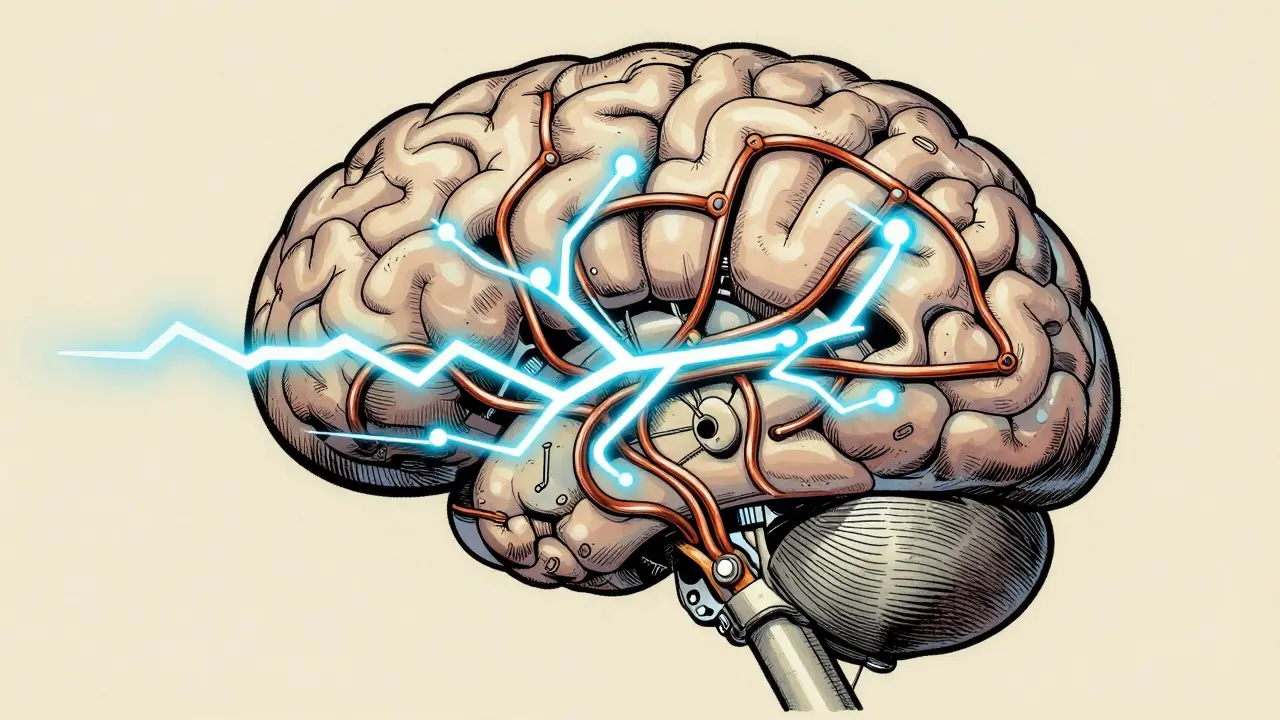
The Debate: Is It Real or Just a Mirage?
I need to be honest with you: not everyone agrees that emergence is real. In late 2025, a significant critique from the Human-Centered Artificial Intelligence institute at Stanford challenged the whole concept. They argued that much of what we see as emergence is actually just a flaw in how we measure performance. If you judge a model on "exact match"-meaning it must get the answer exactly right or fail completely-you create a harsh filter. A model might get 49% of the reasoning right on a task, but if it fails the final step, it scores zero.
When researchers looked at continuous metrics, like log-probability (how confident the model is in each token choice), the curve looked smooth. The sudden jump disappears when you look at probability instead of binary pass/fail grades. This is the "Mirage" hypothesis. It suggests that the model improves gradually, but our evaluation methods make it look abrupt.
The Verdict: While the "Mirage" argument holds weight statistically, practical application suggests otherwise. Whether it's a smooth curve or a sharp cliff doesn't matter for end-users. To a developer using an API, the result is binary: the model either works or it doesn't. The discontinuity exists in utility, even if the underlying loss curve is continuous.
Risks and Safety Implications
This brings us to the most pressing question of 2026: risk. If we cannot predict exactly when a capability will emerge, can we stop dangerous ones from appearing? The current consensus is no. We generally do not know when the next breakthrough will happen. For instance, the ability to optimize biological sequences or identify vulnerabilities in legacy infrastructure systems can emerge without warning once compute scales past certain boundaries.
Organizations now employ "red teaming" strategies specifically designed to probe for these unknown capabilities. Since we can't predict what a model *can* do based on its smaller cousins, we rely on adversarial testing. Researchers actively try to break the safety filters or force the model to reveal harmful planning abilities. This highlights a gap in safety research. Our evaluation techniques evolve slower than the models themselves. We often find risks only after the models are deployed, not before.
Furthermore, there is an economic pressure issue. Companies rush to increase scale because bigger models win the market share war. Each iteration creates more compute power, which pushes the model closer to new emergent thresholds. This feedback loop accelerates capability development faster than regulatory bodies can assess the implications. We have to balance the economic incentives for scaling against the opacity of emerging risks.

What Is Next for Research?
By 2026, the field is pivoting toward mechanistic interpretability. Scientists aren't satisfied with just observing inputs and outputs anymore. They want to open the black box. Using tools that visualize internal neural activations, researchers are mapping exactly which neurons fire when a model performs a "chain-of-thought." The goal is to verify if true reasoning circuits are forming inside the network or if it's just a mimicry of reasoning.
Hybrid approaches are also gaining traction. Instead of relying solely on scaling parameters (which is expensive and energy-intensive), companies are tweaking architectural designs to induce these capabilities in smaller, cheaper models. This is crucial for sustainability. If we can replicate emergent behavior in smaller models, we reduce the carbon footprint associated with training trillion-parameter giants.
Finally, standard catalogs of capabilities are becoming essential public goods. Open communities are tracking verified emergent abilities so we can compare different model families. Knowing exactly what a 70-billion parameter model can do versus a 1-trillion parameter one helps set realistic expectations for businesses adopting these tools.
Frequently Asked Questions
Are emergent capabilities unique to Large Language Models?
While currently associated primarily with transformer-based LLMs due to the massive scale involved, the concept of emergence is found in other areas of machine learning and biology. However, the specific sudden shifts in reasoning and language manipulation described in generative AI are distinct to this architecture's training dynamics.
Can we control which capabilities emerge?
Not with high precision. Developers can encourage desirable behaviors through Reinforcement Learning from Human Feedback (RLHF), but fundamental capabilities like multi-hop reasoning arise spontaneously from scale. We are learning to guide the process, but predicting the exact outcome remains difficult.
Is the "Emergent Intelligence" claim scientific fact?
Most academics caution against using the word "intelligence." It is safer to describe them as functional capabilities. The debate continues, but the consensus is that while the skills look like reasoning, we have not proven the presence of subjective consciousness or independent agency.
Why is the date of 2026 relevant to this topic?
In the context of current AI timelines, 2026 represents a period where scaling is hitting physical limits. Researchers are looking beyond simple compute increases to find efficiency gains, making the study of how capabilities emerge in constrained environments a priority.
Do smaller models show any signs of emergence?
Generally, no. Smaller models below the 10B parameter threshold usually show linear progress curves. The dramatic shifts characteristic of emergence typically require the massive representational space available only in larger architectures.




9 Comments
Jamie Roman
It is truly fascinating to observe how these systems behave when pushed past certain thresholds. We often think of growth as linear progress but reality suggests phase changes occur. Small models are essentially parrots while larger ones seem to mimic understanding. The concept of chain-of-thought reasoning appearing suddenly is incredibly significant for development. I worry about the safety implications if we cannot predict these jumps beforehand. Engineers need better tools to measure these internal state shifts before deployment happens. The economic pressure to scale faster than safety audits allows creates a dangerous feedback loop. We need transparency in how training data influences these emergent properties significantly. It feels like we are walking on eggshells regarding potential misuse scenarios. The community should focus more on interpretability rather than just raw performance metrics. Understanding the circuitry inside the black box is crucial for responsible AI governance. We must prioritize sustainability alongside capability expansion to ensure longevity. Smaller efficient models might solve many problems without needing massive compute resources. The distinction between memorization and generalization is key to unlocking true reliability. I believe collaboration across rival companies could stabilize the industry standards quickly. Hopefully research evolves fast enough to keep pace with commercial interests driving this field.
Salomi Cummingham
The sheer magnitude of what is happening right now leaves me absolutely breathless with wonder and trepidation. Watching machines acquire skills they were never explicitly taught feels almost magical in its nature. We stand at a precipice where technology might surpass human oversight capabilities soon. The sudden spike in accuracy during scaling phases resembles biological evolution in speed. It is terrifying to consider vulnerabilities emerging that security teams cannot anticipate yet. We must remain vigilant against adversarial attacks exploiting these new hidden behaviors constantly. The debate over mirage versus reality does not change the practical utility outcomes observed today. Users will experience binary success or failure regardless of smooth loss curves underneath. Safety researchers need unlimited access to these models to conduct proper stress testing procedures. Ignoring the risks because the curve looks smooth statistically is foolhardy thinking indeed. Every leap forward brings new ethical questions that demand immediate philosophical attention from leaders. We cannot afford to wait until harm occurs before implementing robust regulatory frameworks globally. The path ahead requires immense courage and cooperation from all stakeholders involved in the ecosystem. Technology serves humanity best when guided by empathy rather than pure profit motives always. Our collective responsibility dictates proactive engagement with these complex developmental trajectories.
Jawaharlal Thota
We must remain hopeful that our collective ingenuity will steer these powerful tools toward beneficial ends. Every challenge presents an opportunity to strengthen the resilience of our digital infrastructure significantly. The research community shows great promise in developing better monitoring solutions daily. Progress comes from learning from mistakes rather than ignoring them entirely in silence. We should celebrate the advances made while remaining cautious about unverified claims frequently. Collaboration across borders ensures that knowledge is shared fairly among everyone globally. Ethical guidelines need to evolve alongside the rapid pace of technological innovation happening now. We have the capacity to build safeguards that grow with the complexity of the systems involved. Trust is earned through transparency and consistent adherence to established safety protocols strictly. Many bright minds are working tirelessly to solve the black box problem persistently. Patience will be required as we integrate these tools into society responsibly. Education is key to ensuring the public understands both benefits and limitations accurately. We are witnessing a transformation that will define the next century of human history profoundly. Let us move forward with optimism grounded in realistic expectations of what is possible. Together we can shape an outcome that maximizes value while minimizing harm effectively.
Lauren Saunders
The masses are clearly enamored with statistical noise disguised as cognitive breakthrough phenomena. Most commentators lack the requisite sophistication to distinguish correlation from causality in these datasets. True experts understand that parameter scaling merely refines existing compression algorithms fundamentally. We shall see these miraculous claims evaporate once rigorous peer review catches up inevitably. The industry churn is designed to sell server time rather than illuminate actual intelligence mechanisms. One should approach these press releases with extreme skepticism reserved for marketing departments. Intellectual rigor demands we ignore the hype cycle surrounding every model release iteration.
Real science operates on reproducibility not dramatic announcements of sudden capability emergence.
Gina Grub
latent space collapse signals impending failures if not mitigated soon attention heads diverge too rapidly gradient instabilities mimic semantic drift in real time applications nobody talks about spectral radius implications for stability margins in production environments
sonny dirgantara
ai learnin is crazy man i dont knwo why people worry so much
Johnathan Rhyne
You claim uncertainty is unfounded yet you fail to utilize basic grammar conventions in your own statement. Knowledgeable discourse requires precision which is currently absent from your brief input here. We cannot dismiss the genuine complexities underlying these architectural shifts simply because they appear easy. Your dismissal of concern is naive considering the documented volatility in recent deployments. One must appreciate the nuance inherent in transformer dynamics before making such sweeping claims casually. I would prefer a more robust analysis of the situation before we conclude everything is fine.
Andrew Nashaat
Your dismissive tone reflects a profound disregard for the collective safety concerns facing us all!!! Ignoring potential risks for the sake of ego is ethically indefensible behavior!!! We must acknowledge the gravity of unchecked deployment practices immediately!!!
Safety precedes prestige in any civilized technological framework!!! You appear more interested in sounding superior than protecting future generations!!! Such arrogance blinds one to critical warning signs within the data patterns!!!
Nathan Jimerson
I believe the engineering team will address these issues before they become major obstacles to deployment. Innovation often faces temporary hurdles that lead to stronger foundational designs eventually. The path seems clear for resolving instability through better regularization techniques soon. Confidence remains high despite the complex challenges described in recent literature. Solutions emerge when focused effort targets the core mechanical bottlenecks identified by analysts. Progress is inevitable as we refine our understanding of neural dynamics systematically. Bright spots appear even in dark technical reports regarding model safety measures. The future holds promise for secure and stable generative systems benefiting everyone. Optimistic perspective keeps morale high during difficult debugging phases consistently. We will find the balance between performance and safety requirements effectively.