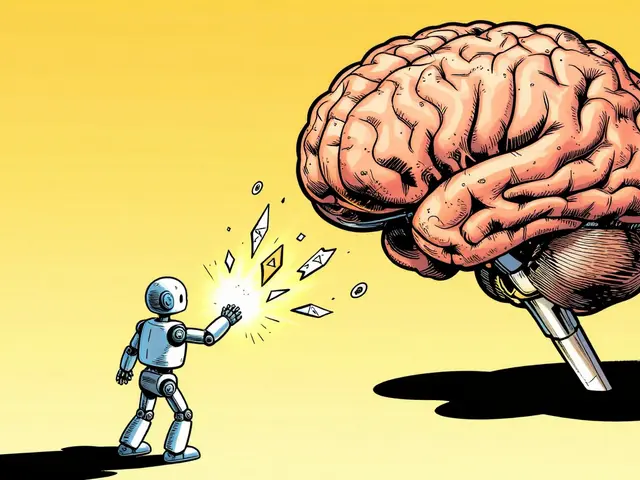
The way we build medicines is changing. For decades, scientists relied on nature to provide the proteins needed for drugs, vaccines, and enzymes. They tweaked existing structures, hoping for better results. Today, Generative AI lets us design proteins from scratch. This shift moves biology from observation to engineering. You can now specify a function-like binding to a specific cancer cell-and let the AI create the molecular structure to match. It sounds like science fiction, but it is happening right now in labs across the globe.
The Shift from Evolution to Engineering
Nature has spent billions of years evolving proteins. But evolution is slow and limited by what works for survival, not necessarily what works for medicine. The sequence space of possible proteins is estimated at 10^300 variants. That number is larger than the atoms in the observable universe. Humans could never test even a fraction of these possibilities manually.
Generative AI changes this math completely. Instead of searching through natural sequences, models like those developed by DeepMind’s AlphaFold2 (released in 2020) and newer frameworks predict how amino acids fold into 3D shapes. Since 2023, the focus has shifted from prediction to creation. Researchers are no longer just asking, "What does this protein look like?" They are asking, "Can you build me a protein that does X?"
This approach is called de novo protein design. It allows scientists to create molecules that have never existed in nature. Imagine an enzyme that breaks down plastic waste or an antibody that targets a previously "undruggable" disease site. These are not distant dreams; they are active projects in biopharma pipelines today.
How Generative Models Build Proteins
To understand why this matters, you need to know how these tools work. There are three main architectural approaches dominating the field as of 2025 and 2026:
- Protein Large Language Models (pLLMs): These treat DNA and protein sequences like text. Just as ChatGPT learns grammar from books, pLLMs learn the "grammar" of biology from Earth's entire protein database. Integra Therapeutics used this method to analyze over 13,000 new PiggyBac transposase sequences. The result was novel genome-editing tools with high activity in human T cells.
- Diffusion Models: Inspired by image generation, these models start with noise and gradually refine it into a structured protein shape. The Baker Lab’s RFdiffusion3, released in September 2025, operates at atomic resolution. It designs proteins and their interacting molecules simultaneously, avoiding common errors like misfit pockets or unrealistic chemistry.
- Unified Frameworks: MIT’s BoltzGen, debuted in October 2025, combines structure prediction and design. It includes built-in physical and chemical constraints. This means the generated proteins are more likely to be functional when tested in a wet lab.
Each approach has strengths. pLLMs are great for finding hidden biodiversity in known families. Diffusion models excel at creating complex interactions between proteins and small molecules. Unified frameworks offer the best balance for drug discovery pipelines.
| Tool / Platform | Developer | Core Technology | Key Strength | Best For |
|---|---|---|---|---|
| BoltzGen | MIT | Unified Framework | Physical constraints & drug pipeline readiness | Targeted binders for undruggable diseases |
| RFdiffusion3 | Baker Lab | Atomic Diffusion | High-resolution complex design | Enzyme engineering & molecule-protein interfaces |
| pLLM Platform | Integra Therapeutics | Language Model | Variety & genetic editing tools | Gene therapy vectors & transposases |
Accelerating Literature Reviews with GenAI
Protein design is only half the story. The other half is knowledge management. Life sciences researchers face an overwhelming volume of data. New papers are published daily, covering everything from clinical trials to basic biochemistry. Reading every relevant article is impossible.
Generative AI helps here too. Modern literature review tools don't just summarize text; they extract entities and relationships. A researcher can ask, "Show me all studies involving RFdiffusion-based designs for carbon capture enzymes published since 2024." The AI scans thousands of PDFs, extracts the key findings, and presents them in a structured table.
This saves weeks of manual reading. More importantly, it reduces bias. Human reviewers might miss obscure but critical papers because they aren't famous journals. AI tools scan everything equally. They also help identify gaps in current research. If you notice no one has tested a specific protein variant in vivo, you can prioritize that experiment.
However, hallucination remains a risk. AI might invent a citation or misinterpret a negative result as positive. Always verify critical claims against the original source. Use AI as a filter and organizer, not as the final authority.

Real-World Impact: From Bench to Bedside
These tools are moving fast. In October 2025, Integra Therapeutics published a study in Nature Biotechnology showing AI-designed proteins outperforming natural counterparts. Their engineered transposases worked efficiently in primary human T cells. This is huge for cancer therapies, which often require precise gene editing without triggering immune responses.
Meanwhile, the Graz team’s Riff-Diff implementation created enzymes for retro-aldol reactions. When tested in vitro, many produced detectable product faster than previous generated enzymes. This proves that computational design can lead to immediate experimental success.
For industry, this means shorter development cycles. Traditional protein engineering takes years of trial and error. With GenAI, you can generate hundreds of candidates in days, screen them computationally, and send only the top five to the lab. This efficiency reduces costs and brings life-saving treatments to patients sooner.
Challenges and Biosecurity Concerns
It’s not all smooth sailing. The biggest technical hurdle is the "controllability barrier." As Georgia Tech researchers noted, steering a model to produce a very specific function-like binding to Target X while ignoring Target Y-is still difficult. Models learn general patterns, not specific instructions. You often need multiple rounds of experimental feedback to refine the design.
Biosecurity is another serious concern. Singularity Hub warned in late 2025 that dangerous AI-designed proteins could evade current biosecurity software. If bad actors use these tools to create toxins or pathogens, detection systems won’t recognize them because they’ve never seen those sequences before. Researchers advocate for "practical guardrails" in code repositories and access controls to prevent misuse.
Additionally, there is a gap between digital design and wet-lab reality. A protein might look perfect on a screen but fail to fold correctly in a test tube. Integrating real-world experimental data back into the training loop is essential. Closed-loop systems, where robots perform experiments and feed results back to the AI, are becoming the gold standard.

Getting Started with GenAI in Your Workflow
If you want to use these tools, you don’t need to be a coding expert. Here is a practical path forward:
- Start with Open Source: MIT’s Boltz-2 is open-source and well-documented. It’s a great entry point for academic users. Explore its GitHub repository to understand the input/output formats.
- Define Clear Constraints: Don’t just ask for "a stable protein." Specify temperature ranges, pH levels, and target binding sites. The more precise your prompt, the better the output.
- Combine Tools: Use a literature review AI to find recent successes in your specific area. Then use a design tool like RFdiffusion to iterate on those successful structures.
- Validate Early: Run computational stability checks before ordering synthesis. Tools like Rosetta can help predict if your design will hold up physically.
- Collaborate: Partner with wet-lab colleagues early. Their insights on solubility and expression issues will save you from designing proteins that are hard to produce.
Looking Ahead
We are at an inflection point. By 2026, generative AI is no longer a novelty in life sciences; it is a standard part of the toolkit. The future lies in multi-modal frameworks that combine language, structure, and experimental data seamlessly. As these systems get smarter, we will see breakthroughs in areas once thought impossible: personalized vaccines, carbon-capturing enzymes, and cures for genetic diseases.
The key is to stay informed and cautious. Embrace the speed and creativity of AI, but always ground your work in rigorous experimentation and ethical responsibility. The potential to improve human health is immense, and the tools to achieve it are finally within reach.
What is de novo protein design?
De novo protein design is the process of creating entirely new protein sequences from scratch, rather than modifying existing natural proteins. It uses computational models to predict how amino acid chains will fold into functional 3D structures, allowing scientists to engineer proteins with specific functions that do not exist in nature.
How does BoltzGen differ from AlphaFold?
AlphaFold primarily predicts the 3D structure of a given protein sequence. BoltzGen, developed by MIT, goes further by generating novel protein sequences designed to bind to specific targets or perform certain functions. It unifies structure prediction and design, incorporating physical constraints to ensure the resulting proteins are viable for drug discovery.
Can Generative AI replace wet-lab experiments?
No, it cannot fully replace them yet. While AI can accurately predict structures and functions, experimental validation is still required to confirm stability, solubility, and biological activity in real-world conditions. AI accelerates the process by narrowing down candidates, but wet-lab testing remains essential for final verification.
What are the biosecurity risks of AI-designed proteins?
The main risk is that AI can generate novel toxins or pathogens that current biosecurity software cannot detect because they have never been seen in nature. This "protein universe expansion" requires new safety protocols, including strict access controls, monitoring of synthesis orders, and ethical guidelines for researchers using generative models.
How can I use AI for literature reviews in life sciences?
You can use AI-powered tools to scan thousands of scientific papers quickly. These tools extract key entities, methods, and results, allowing you to search for specific concepts like "enzyme stability" or "clinical trial outcomes." They help identify trends, gaps in research, and relevant studies that you might have missed, saving significant time in manual reading.