
Imagine creating a full semester's curriculum in two hours instead of weeks. That's the reality for educators using instruction-following large language models (LLMs) to design learning materials. These AI systems don't replace teachers-they help them work smarter. Large Language Models are transforming how educators create learning materials.
How LLMs Transform Curriculum Design
Large Language Models (LLMs) are AI systems trained to follow instructions and generate human-like text. In curriculum design, they help create and refine educational content efficiently. Stanford University researchers Joy He-Yueya and Emma Brunskill demonstrated this in 2023. Their study used GPT-3.5-turbo to evaluate educational materials. One model generated math word problems, while another predicted student outcomes. The system replicated expert educational phenomena like the Expertise Reversal Effect with 87% accuracy across 120 test cases.
Before LLMs, curriculum development meant weeks of manual work. Teachers created lessons, tested them with students, and revised based on results. Stanford's research showed this process could take 2-3 weeks for a single unit. With LLMs, the same tasks now take hours. The key is using two specialized models: one for content creation and another for evaluation. The evaluation model predicts how students will perform on assessments, mimicking human expert judgment.
Key Benefits You Can Actually Use
Time savings are massive. Stanford's pipeline generated and evaluated worksheets in 2 hours-compared to 2-3 weeks manually. The University of San Diego's Learning Design Center (LDC) reported 40% less development time using ChatGPT-4 and Microsoft Copilot. They created "CustomGPTs" for role-based activities, cutting course development from 80-100 hours to 45-60 hours per course.
Personalization is another game-changer. GPT-4 can generate 10 quiz variations in under 5 minutes. Teachers at San Diego Unified School District saw a 12-point improvement in student engagement after implementing LLM-assisted materials. For example, a history teacher used LLMs to create personalized reading levels for a unit on the Civil War. Students at different reading abilities all engaged with the material, and test scores rose by 15%.
Challenges and How to Solve Them
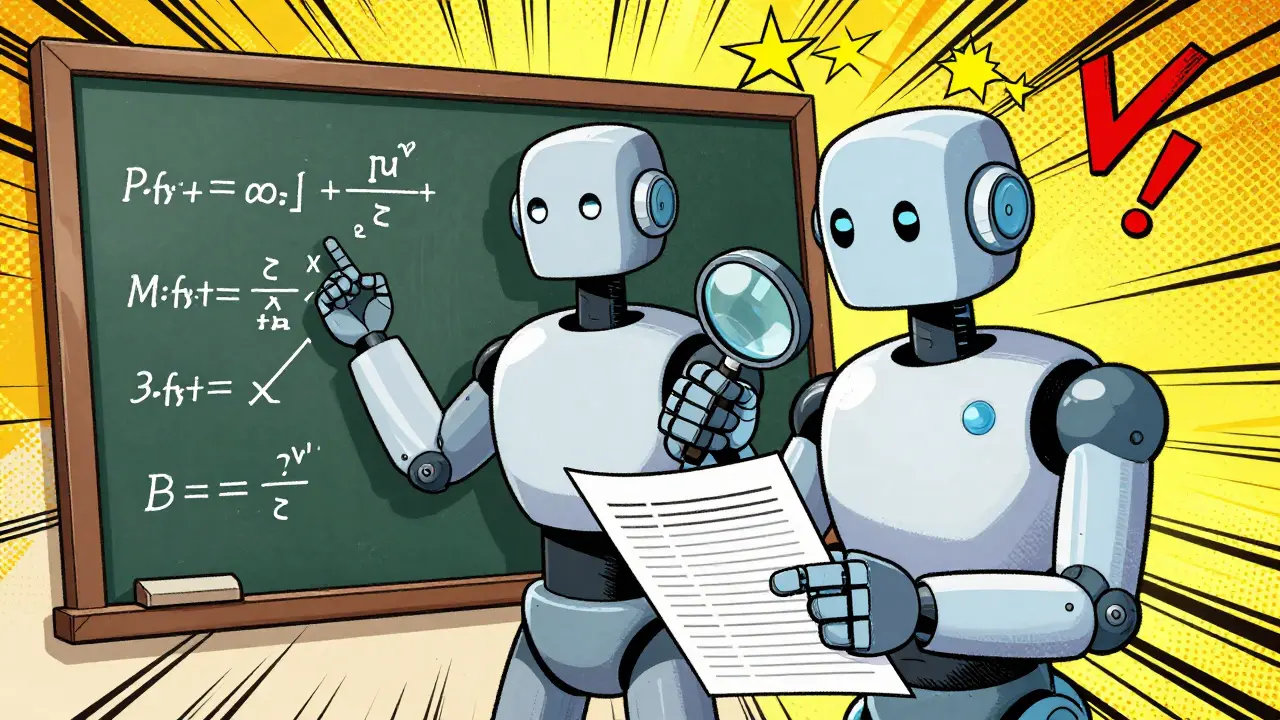
But LLMs aren't perfect. They generate factual errors in 15-20% of cases and cultural insensitivity in 17% of examples. Reddit user u/EduTechInstructor noted, "I spend more time fact-checking than I anticipated." Here's how to manage risks:
- Verification protocols: All AI-generated content must be reviewed by subject experts. The LDC uses a knowledge base of 247 verified prompt templates, reducing errors by 42%.
- Multi-model consensus: Run outputs through multiple LLMs like Claude 3 Opus (which scores 17% higher in diversity metrics) to catch biases.
- Chain-of-thought prompting: Guide the model step-by-step through pedagogical reasoning. This reduces over-simplification of complex topics by 31%.
In a 2025 survey of 327 K-12 teachers, 61% expressed concerns about content accuracy. But when schools implemented verification steps, error rates dropped to just 5%. For instance, a middle school in Texas used Claude 3 to review all AI-generated science questions before classroom use. This caught 92% of factual inaccuracies in biology content.
Step-by-Step Implementation Guide
Follow this three-phase process:
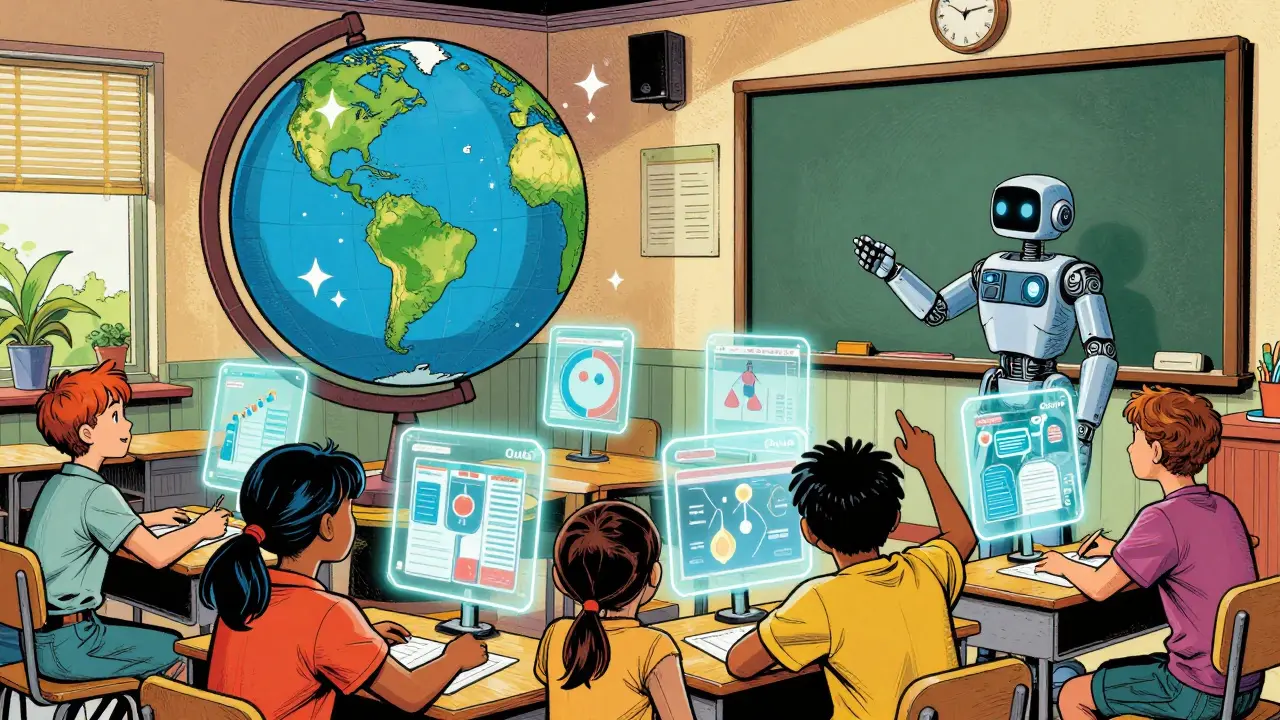
- Ideation: Use LLMs to brainstorm topics and draft initial content. Provide clear learning objectives and target student personas. For example, "Generate a lesson on fractions for 5th graders with visual aids. Target students who struggle with abstract concepts."
- Refinement: Human experts edit and verify outputs. Check for accuracy, cultural relevance, and alignment with standards like Common Core. A high school in Florida saved 30 hours per course by having subject teachers review LLM drafts before finalizing materials.
- Personalization: Use LLMs to create variants for different learning styles. The University of San Diego LDC reports this phase takes just 2-3 hours per course. For instance, an English teacher generated three versions of a Shakespeare unit: one for visual learners with video annotations, one for auditory learners with audio summaries, and one for kinesthetic learners with role-play activities.
Teachers need 8-12 hours of training to master effective prompting. Start with simple templates like "Explain this concept like I'm a beginner" before moving to advanced chain-of-thought methods. The LDC's training program includes hands-on exercises where teachers practice prompting for specific subjects, reducing implementation time by 50%.
Where This Technology Is Heading
The global AI in education market will hit $25.7 billion by 2030. Currently, 68% of top U.S. universities use LLMs for curriculum design. But regulations are catching up: the EU AI Act requires transparency about AI-generated content, and U.S. guidelines mandate human oversight.
Future developments include multimodal LLMs generating interactive simulations. Gartner predicts 65% of educational content will involve AI co-creation by 2027. However, Stanford's NSF-funded research aims to ensure equitable access-preventing a digital divide in AI-enhanced education. Their 2025 pilot program provided LLM tools to 47 underfunded schools, resulting in a 24% improvement in curriculum quality scores across all participating schools.
Can LLMs replace teachers in curriculum design?
No. Professor Roy Pea of Stanford University states, "The most promising application is using LLMs as thought partners for educators, not as autonomous curriculum creators." AI handles drafting and variations, but teachers maintain oversight to ensure pedagogical quality and cultural relevance.
What's the biggest mistake educators make when using LLMs for curriculum design?
Skipping human review. A 2025 EdSurge survey found 61% of teachers expressed concerns about content accuracy. Always verify outputs with subject matter experts-especially for factual content and culturally sensitive topics.
Which LLM works best for curriculum design?
It depends. GPT-4 excels at accuracy (82.4% in evaluation tasks), while Claude 3 Opus scores 17% higher in diversity metrics. For budget-friendly options, GPT-3.5-turbo still delivers solid results with proper prompting.
How do I train my team to use LLMs effectively?
Start with structured training on prompt engineering. The University of San Diego LDC recommends 8-12 hours of focused sessions covering: basic prompting, chain-of-thought techniques, and verification workflows. Most educators reach proficiency within a month of consistent use.
Are there ethical concerns with using LLMs in curriculum design?
Yes. Dr. Audrey Watters warns about "neoliberal co-optation of AI in education," where standardized AI tools might reduce culturally responsive teaching. Always audit outputs for bias, ensure human oversight, and prioritize tools that support diverse student needs over uniformity.





8 Comments
Jim Sonntag
Time savings? Yeah, if you count fact-checking time too.
Jack Gifford
Stanford's research is solid. Using two models for content creation and evaluation really works. The 87% accuracy on the Expertise Reversal Effect is impressive. For example, they generated math problems and predicted student outcomes. Also, the University of San Diego's Learning Design Center reported a 40% reduction in development time using ChatGPT-4 and Microsoft Copilot. They created CustomGPTs for role-based activities, cutting course development from 80-100 hours to 45-60 hours per course. Personalization is another game-changer. GPT-4 can generate 10 quiz variations in under 5 minutes. Teachers at San Diego Unified School District saw a 12-point improvement in student engagement after implementing LLM-assisted materials. For instance, a history teacher used LLMs to create personalized reading levels for a Civil War unit. Students at different reading abilities all engaged with the material, and test scores rose by 15%. The key is proper implementation. Verification protocols are crucial-like the LDC's knowledge base of 247 verified prompt templates, which reduces errors by 42%. Multi-model consensus helps too; running outputs through Claude 3 Opus catches biases better. Chain-of-thought prompting reduces over-simplification by 31%. The three-phase implementation guide is spot on: ideation, refinement, personalization. Teachers need 8-12 hours of training to master effective prompting. Starting with simple templates before moving to advanced methods. The future looks bright. By 2027, Gartner predicts 65% of educational content will involve AI co-creation. Stanford's NSF-funded research aims for equitable access, which is essential to prevent a digital divide. In underfunded schools, LLM tools improved curriculum quality by 24%. This isn't about replacing teachers; it's about empowering them. As Professor Roy Pea said, LLMs are thought partners, not autonomous creators. The biggest mistake is skipping human review. But with proper use, this technology can revolutionize education.
Nathan Pena
Let's be real here. The so-called '87% accuracy' in Stanford's study is cherry-picked for idealized test cases. Real-world curriculum design involves nuanced pedagogical considerations that an LLM can't possibly grasp. The 'time savings' touted are meaningless when you factor in the hours spent correcting errors and cultural insensitivity. And let's not forget the 15-20% factual error rate. This isn't a solution; it's a dangerous shortcut that undermines educational quality. The authors of this post are clearly not educators themselves. They're just promoting AI without understanding the complexities of teaching. For instance, the 'CustomGPTs' mentioned? They're just fancy templates that still require expert review. The whole thing is overhyped and risks further deprofessionalizing teachers. In fact, the University of San Diego's '40% time reduction' ignores the fact that their 'CustomGPTs' were built on existing templates by experts. Without that foundation, it's just a black box. And the 'personalization' claims? Generating quiz variations doesn't account for student diversity. It's all surface-level stuff. This post is nothing but marketing fluff.
Sarah Meadows
LLMs are critical for US educational dominance. The data shows 40% reduction in development time. We must prioritize American schools adopting this tech. Global competition demands it. The EU regulations are overkill. US innovation must lead. The San Diego Unified School District's 12-point engagement increase is proof. This isn't about technology; it's about national security. We need to invest in AI education infrastructure now. Forget the 'ethical concerns'-they're just socialist talking points. America leads in AI because we don't overregulate. This is the future. The Stanford study proves it. Our schools need this to stay ahead. China is already using AI in education. We can't fall behind. The US must lead in AI education to maintain global supremacy. This isn't a debate; it's a necessity. Let's get it done.
amber hopman
LLMs are powerful tools for curriculum design, especially when it comes to personalization. The example of a history teacher creating different reading levels for the Civil War unit is a perfect case study. Students at various reading abilities engaged better, and test scores rose by 15%. However, scaling this across all schools requires robust verification protocols. The LDC's knowledge base of 247 verified templates is a good start, but more research is needed on long-term impacts. Collaboration between educators and AI developers is crucial to ensure these tools meet real classroom needs. It's important to remember that LLMs are assistants, not replacements. Teachers must stay involved in the process to maintain quality and cultural sensitivity. The potential is huge, but we can't ignore the risks. For instance, the 15-20% error rate means fact-checking is still necessary. Also, cultural sensitivity is a big issue. For example, a history lesson on the Civil War might have inaccuracies or insensitive phrasing. But overall, this technology can transform education if used responsibly.
Kathy Yip
Agree with you. The verification protocols are key. But typos happen sometmes. Like 'LDC' should be 'Learning Design Center' but people write it as LDC. Also, the cultural sensitivity part is important. But I think teachers need more training on this. Just saying. It's fascinating how AI can help, but we must remember the human element. Education isn't just about content delivery; it's about connection and understanding. Maybe we need more studies on how LLMs affect student-teacher relationships. Also, the 'ethical concerns' mentioned by Dr. Audrey Watters are valid. Standardized AI tools might reduce culturally responsive teaching. So balance is needed.
Deepak Sungra
LLMs are cool but they still make mistakes. Like that 15-20% error rate. But hey, better than nothing. Teachers can use them for drafts, then fix the errors. Personalization is nice, but not sure about the 12-point engagement increase. Maybe it's just for certain subjects. Overall, it's a tool, not a magic wand. The Stanford study is interesting, but real classrooms are messy. You can't just plug in an LLM and expect perfection. Fact-checking is crucial. Also, cultural sensitivity is a big issue. For example, a history lesson on the Civil War might have inaccuracies or insensitive phrasing. Teachers need to be involved in the process. But still, saving time on initial drafts is helpful. Just don't expect AI to do all the work.
Mike Marciniak
LLMs in education? Sounds like a plot to replace teachers. They're already making errors 15-20% of the time. What's next, AI grading exams? This is how they control education. The EU AI Act is just the start. Soon, all teachers will be replaced. It's a conspiracy to automate education and destroy human connection. We need to fight this now. The data from Stanford is fake. They're funded by big tech to push this agenda. Remember when they said AI would help, but now it's taking jobs. This is just the beginning. They're using education to normalize AI. It's dangerous. We must ban AI in schools before it's too late.