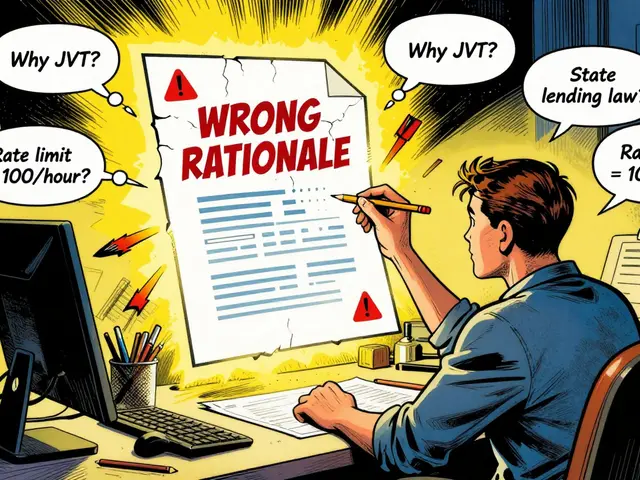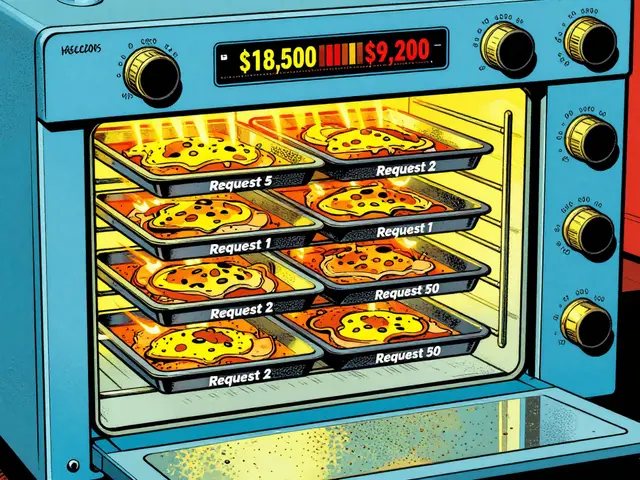
You built a Retrieval-Augmented Generation (RAG) system. It works beautifully in the demo. But three months later, users are complaining that your AI assistant is quoting outdated pricing or referencing policies that changed last week. Why? Because your LLM is frozen in time, relying on an index that has drifted away from reality. This isn't just a minor bug; it's a critical failure mode for production AI. Keeping your documents fresh and synchronized with your source of truth is the difference between a helpful tool and a confident liar.
Why Static Indexes Break Production AI
Large Language Models have a hard limit: their training cutoff date. If you ask an LLM about a policy update from yesterday, it either guesses or hallucinates. RAG solves this by fetching external documents at query time. But here’s the catch: if your vector database contains stale chunks, the LLM will confidently generate answers based on old facts. In fact, studies show that RAG models outperform parametric-only generators specifically because they ground responses in retrieved evidence. If that evidence is wrong, the output is wrong-often with high confidence scores that mask the error.
The core problem is simple but expensive to fix: data changes constantly. Documents get edited, deleted, or added. Your retrieval index needs to reflect these changes almost instantly. If you’re running a customer support bot, a five-minute delay in syncing a new refund policy might be acceptable. For a financial trading bot using news feeds, a five-second delay could mean lost revenue. Understanding the cost of staleness helps you choose the right synchronization strategy.
Three Strategies for Data Synchronization
There is no one-size-fits-all approach to keeping your RAG System up to date. You need to balance computational cost, latency, and consistency. Here are the three main architectural patterns used in production environments.
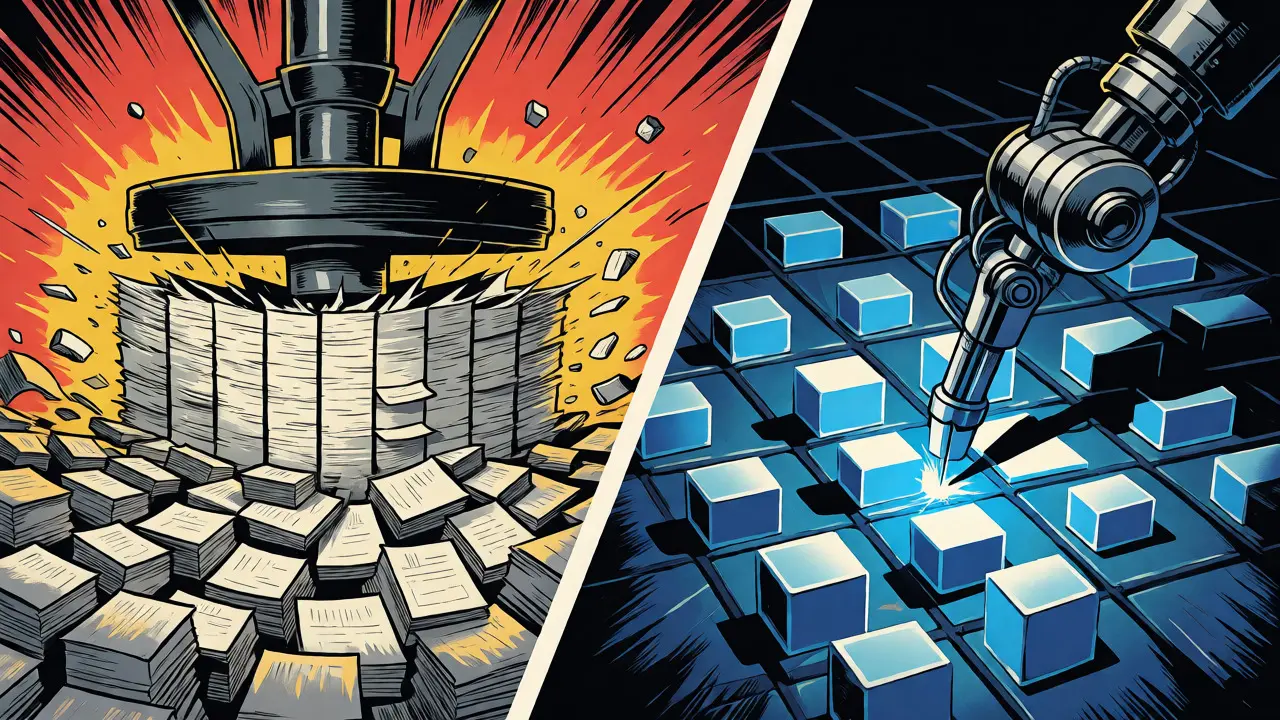
1. Full Re-indexing: The Nuclear Option
This is the simplest method. You wipe the entire vector store, re-fetch all documents from your source (like SharePoint, Confluence, or a SQL database), re-chunk them, re-embed them, and load them back into the index.
- Pros: Guaranteed consistency. No drift. Deletions are handled automatically because missing files simply don’t get indexed.
- Cons: Computationally expensive and slow. For a corpus of 1 million documents, this might take hours. During this time, your search quality degrades or goes offline.
- Best for: Small datasets (<10k docs) or systems where data changes rarely (e.g., legal archives).
2. Incremental Updates: The Surgical Strike
Instead of rebuilding everything, you only process what changed. This requires a mechanism to detect changes-usually via timestamps, version numbers, or Change Data Capture (CDC) logs.
- Additions: New documents are chunked, embedded, and inserted into the index.
- Updates: Modified documents are re-embedded and replace the old vectors using an "upsert" operation.
- Deletions: Removed documents are identified by ID and explicitly deleted from the vector store.
This method is far more efficient for large datasets. However, it introduces complexity. You must maintain stable unique identifiers (IDs) for every chunk. If your content management system generates new IDs every time a file is saved, your incremental updater will treat every edit as a new document, leaving orphaned vectors in your index.
3. Hybrid Approach: The Industry Standard
Most mature organizations use a hybrid model. They run frequent incremental updates (hourly or daily) to keep the index reasonably fresh. Then, they schedule a full re-index during off-peak hours (weekly or monthly). The full re-index acts as a cleanup crew, fixing any drift caused by failed incremental jobs, optimizing index structure, and ensuring perfect alignment with the source.
| Strategy | Freshness Latency | Computational Cost | Complexity | Handles Deletions? |
|---|---|---|---|---|
| Full Re-index | High (Hours) | Very High | Low | Yes (Implicit) |
| Incremental Update | Low (Minutes) | Low | High | Only if tracked |
| Hybrid | Medium (Real-time + Cleanup) | Moderate | Medium | Yes (Via cleanup) |
Detecting Changes: Polling vs. CDC
How do you know which documents changed? You can’t guess. You need a reliable detection mechanism. Two common approaches dominate the field.
Polling involves querying your source system periodically: "Give me all documents modified after [timestamp]." It’s easy to implement and works with most APIs. The downside? It’s inefficient. If you poll every minute, you hit the API 1,440 times a day. Worse, standard polling often misses deletions unless the API explicitly returns a list of current valid IDs. If a user deletes a file, polling won’t see it-it just won’t appear in the "modified" list, so your index keeps serving the old, ghost document.
Change Data Capture (CDC) is more robust. Instead of asking the database what changed, you listen to its transaction log. Tools like Debezium or native cloud services (AWS DMS, Azure CDC) stream changes in real-time. When a row is updated in PostgreSQL, the CDC pipeline catches it immediately. This allows for near-real-time synchronization. However, CDC is harder to set up and requires deeper integration with your infrastructure.
Technical Best Practices for Stable Sync
If you’re building this yourself, avoid these common pitfalls. First, never use content hashes as your primary key for indexing. If the text changes slightly, the hash changes. Your incremental updater will think it’s a new document, creating duplicates. Always use stable database primary keys or unique URIs provided by your CMS.
Second, store metadata alongside your vectors. Don’t just save the embedding. Save the `source_document_id`, `last_modified_timestamp`, and `version_number`. This allows you to debug why a specific answer was retrieved. Was it an old version? Did the timestamp fail to update? Metadata is your safety net.
Third, consider the impact of chunking strategies on freshness. If you split documents into small, semantic chunks, updating a single paragraph requires re-embedding only that chunk. If you use massive 5,000-token chunks, editing one sentence forces you to re-embed the whole block. Smaller, granular chunks generally make incremental updates cheaper and faster.

Monitoring: Are You Actually Fresh?
Silence is dangerous. Your sync job might crash, and no one notices until users complain. Implement monitoring that tracks two things: lag and coverage.
- Lag: Measure the time difference between when a document was modified in the source and when it became searchable in the vector DB. Set alerts if this exceeds your SLA (e.g., >15 minutes).
- Coverage: Periodically sample random documents from the source and verify they exist in the index with the correct content hash. This detects silent failures where the sync job ran but skipped records due to errors.
Use metrics like Mean Average Precision (MAP) over time. If MAP drops suddenly, it’s often a sign that the index is misaligned with the queries users are actually asking, possibly due to stale data.
Conclusion: Start Simple, Scale Smart
Don’t over-engineer from day one. If you have under 50,000 documents, start with nightly full re-indexing. It’s cheap, easy, and consistent. As your dataset grows and user expectations for real-time answers increase, migrate to incremental updates with a weekly cleanup. Remember, the goal isn’t just to have a RAG system; it’s to have a trustworthy one. And trust requires currency.
How often should I re-index my RAG system?
It depends on your data volatility. For static knowledge bases, weekly full re-indexing is fine. For dynamic content like news or support tickets, hourly incremental updates are necessary. Most production systems use a hybrid approach: frequent incremental updates for speed, and periodic full re-indexes for consistency.
What happens if I delete a document from the source but forget to delete it from the vector database?
Your RAG system will continue to retrieve the old document. Since the LLM trusts the retrieved context, it may generate answers based on information that no longer exists. This leads to "hallucinations" relative to the current state of the world. Regular full re-indexes or robust deletion tracking in incremental pipelines prevent this.
Can I use webhooks instead of polling for updates?
Yes, webhooks are ideal for low-latency requirements. When a document changes, the source system pushes a notification to your endpoint. This triggers an immediate update to the vector store. However, not all platforms support native webhooks, and managing webhook reliability (retries, ordering) adds complexity compared to simple polling.
Do I need to re-embed the entire document if only one paragraph changes?
No, if you use fine-grained chunking. You only need to re-embed the specific chunks that contain the changed text. This makes incremental updates much faster and cheaper than processing the whole document. Ensure your chunking strategy allows for independent identification of segments.
What is the biggest risk of using content hashes as document IDs?
Content hashes change whenever the text changes. If you use them as IDs, an update creates a new ID. Your system will add the new version but fail to remove the old one, leading to duplicate entries in your index. Always use stable, immutable identifiers like database primary keys or UUIDs.