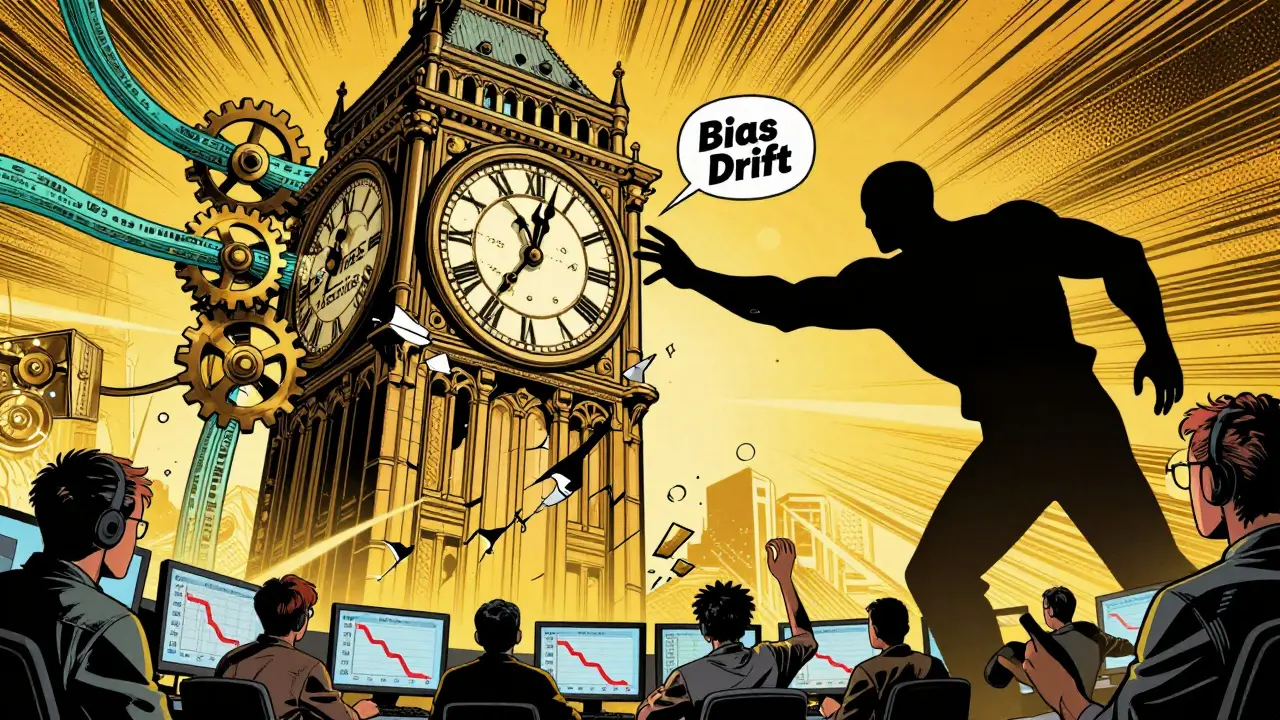
When you deploy a large language model (LLM) in production-say, a customer service chatbot or a hiring assistant-you assume it will behave fairly. But here’s the truth: LLMs don’t stay fair. Over time, as users change, language evolves, and data shifts, even well-trained models start making biased decisions. And if you’re not watching for it, you won’t know until someone gets hurt-or your company gets sued.
Monitoring bias drift isn’t optional anymore. It’s a requirement. The EU AI Act, New York City’s Local Law 144, and the U.S. NIST framework all demand it. But what does that actually look like on the ground? And how do you do it without drowning in false alarms and engineering overhead?
What Is Bias Drift, Really?
Bias drift is when a model’s fairness metrics change over time. Not because you retrained it. Not because someone hacked it. But because the world changed.
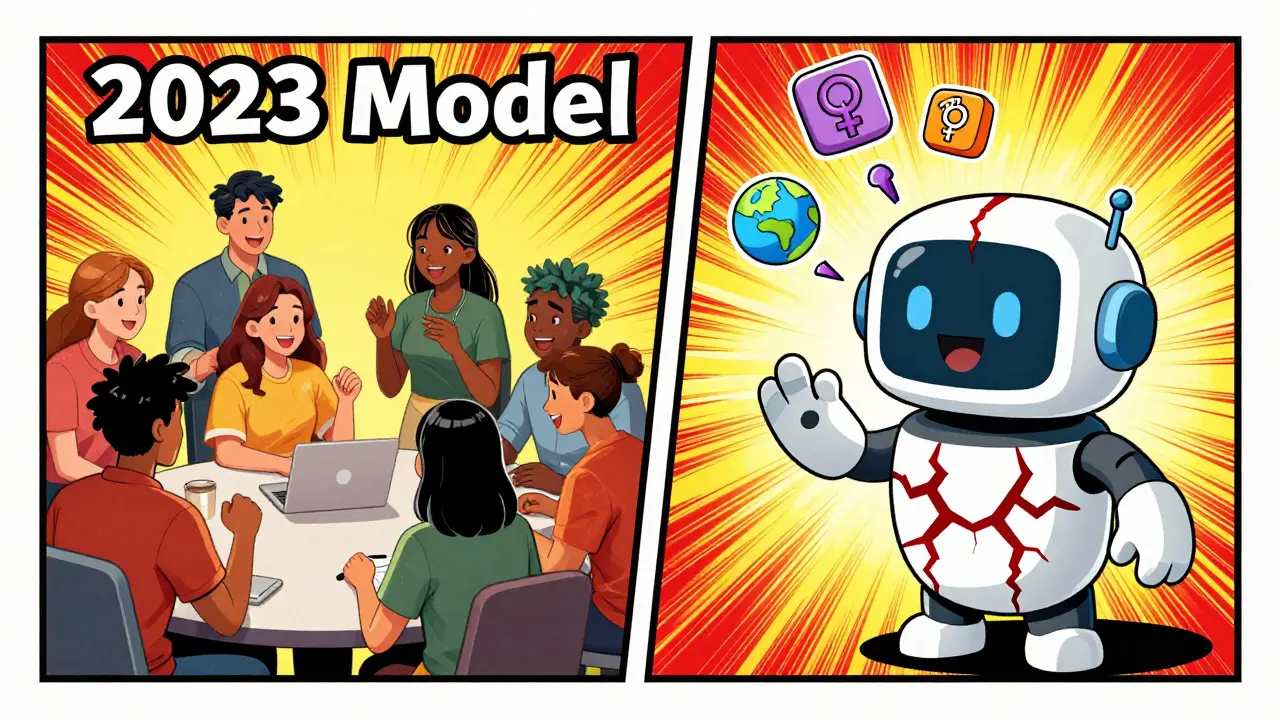
Imagine a resume-screening LLM trained in 2023. It learned to associate certain job titles with male candidates because historically, those roles were held mostly by men. At launch, it scored perfectly on Disparate Impact (DI)-a fairness metric that checks if different groups get treated equally. But six months later, more women started applying for tech roles. The model, still using old patterns, began downgrading those applications. The DI score slipped from 1.05 to 0.82. That’s drift. And it happened silently.
According to a 2023 Stanford HAI study, 78% of enterprise LLMs show measurable bias drift within six months of deployment. Without active monitoring, you’re flying blind.
Key Bias Metrics to Track
You can’t monitor what you don’t measure. Here are the three most important metrics for production LLMs:
- Disparate Impact (DI): Compares the rate of favorable outcomes between groups. Target range: 0.8 to 1.25. Below 0.8? One group is being unfairly penalized.
- Statistical Parity Difference (SPD): The absolute difference in positive outcomes between groups. Target: -0.1 to 0.1. Outside that? Your model is favoring one demographic.
- Equal Opportunity Difference (EOD): Measures differences in true positive rates. Target: -0.05 to 0.05. Critical for hiring, lending, or healthcare tools where false negatives have real consequences.
These aren’t theoretical. AWS SageMaker Clarify, Google Vertex AI, and Microsoft Azure’s Responsible AI tools all track them by default. But here’s the catch: you need enough data to trust them.
Evidently AI found that if your daily sample size per demographic group drops below 500 predictions, your confidence intervals become useless. That means if you’re monitoring gender bias but only have 300 female users interacting with your model each day? You’re not measuring bias-you’re guessing.
How Monitoring Tools Work
Most tools use a simple pattern: compare today’s metrics to a baseline.
First, you collect a reference dataset-usually 5,000 to 10,000 real-world interactions from the model’s early days. This becomes your fairness baseline. Then, every day (or every hour, if you’re serious), the system calculates the same metrics on new data and checks if they’ve moved beyond predefined thresholds.
Amazon’s SageMaker Clarify uses the Normal Bootstrap Interval method to calculate confidence intervals around each metric. If today’s Disparate Impact falls outside the 95% confidence band (typically ±0.1 from baseline), it triggers an alert.
Specialized tools like VIANOPS go further. They don’t just look at numbers-they analyze text. A secondary LLM evaluates whether the primary model’s output contains subtle offensive language, coded stereotypes, or emotionally charged phrasing. In one case, VIANOPS detected a 22% spike in biased questions about a specific company in February 2024. The team updated their prompts before any users complained.
Fiddler AI does something similar with embeddings. It measures how similar today’s prompts are to the original training prompts. If cosine similarity drops below 0.75, it flags “prompt drift”-meaning users are asking completely new things the model wasn’t prepared for.
Commercial vs. Open-Source Tools
You have choices. But they come with trade-offs.
| Tool | Strengths | Weaknesses | Cost (Annual) | Implementation Time |
|---|---|---|---|---|
| AWS SageMaker Clarify | Seamless AWS integration, 95% confidence intervals, daily alerts, supports 15+ bias metrics | Limited LLM-specific features, poor documentation for non-AWS users | $0.40 per 1,000 predictions | 2-4 weeks |
| VIANOPS | Advanced semantic analysis, automated demographic inference, detects subtle language bias | High false positive rate, expensive, complex setup | $45,000+ for 10M interactions | 4-6 weeks |
| Fiddler AI | Excellent prompt drift detection, 92% accuracy, strong visualization | Expensive for startups, limited multilingual support | $30,000-$120,000 | 3-5 weeks |
| Evidently AI | Free and open-source, flexible, good for testing | Requires full engineering team, 8-12 weeks to deploy, no alerts out of the box | $0 | 8-12 weeks |
Most enterprises use cloud tools like SageMaker or Vertex AI because they’re already in AWS or Azure. But if you’re building a high-risk application-like a loan approval engine or a mental health chatbot-specialized tools like VIANOPS or Fiddler offer precision you can’t get elsewhere.
Open-source tools? They’re great for learning. But if you’re a startup with one data scientist and a product deadline? You won’t survive 12 weeks of setup.
Real-World Failures and Wins
One bank using SageMaker Clarify caught a 0.18 DPPV shift toward female users in Q1 2024. Without the alert, they’d have kept denying loans to men-creating a reverse bias that could’ve triggered legal action.
On the flip side, a healthcare startup built their own monitoring system. They thought they were covered. Then, they got 15% of patient complaints about misinterpreting non-native English speakers. They hadn’t tracked language-based bias. No tool caught it. No one even thought to measure it.
That’s the hidden danger: most tools focus on gender, race, or age. But what about dialect? Education level? Regional slang? IBM’s 2023 study showed current tools only hit 54% accuracy on non-English content. That’s not a bug-it’s a blind spot.
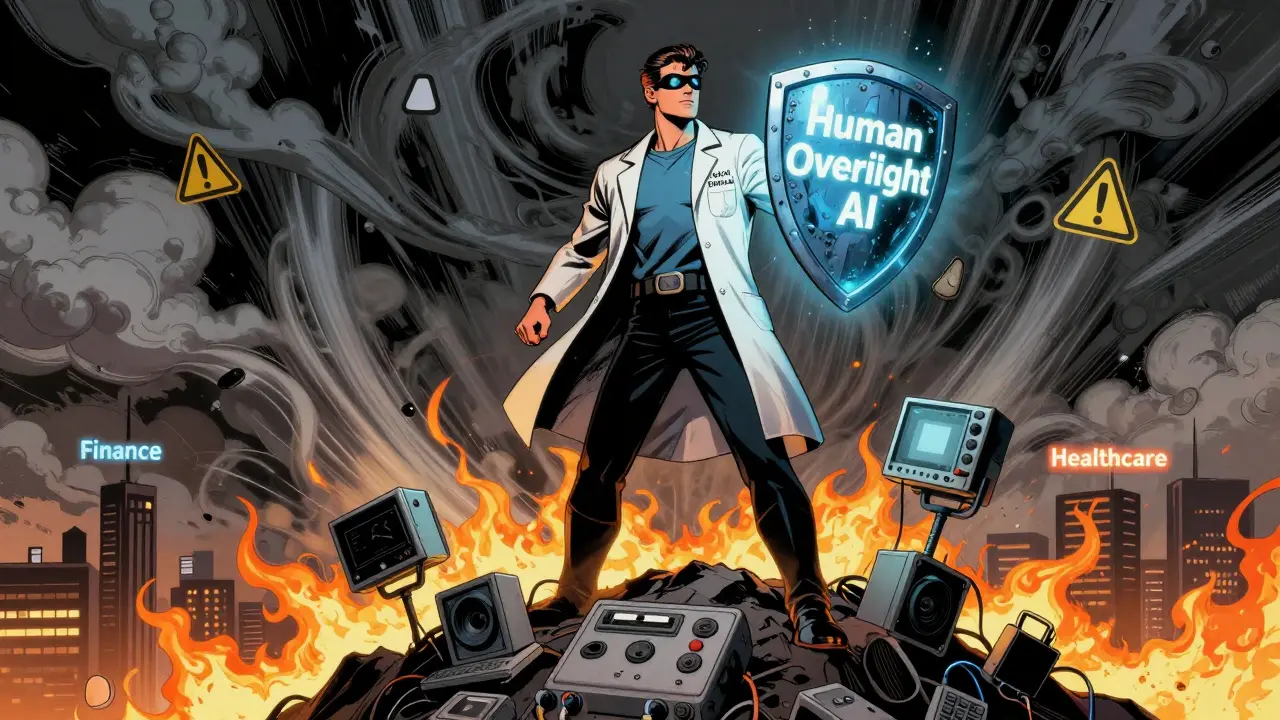
Google’s 2024 study found that adding human reviews to automated alerts cut false positives by 41%. That’s the future: not fully automated, not fully manual. A hybrid. An alert comes in. A human looks at five sample outputs. They confirm: yes, this is drift. Then the system adjusts.
How to Start Monitoring
Here’s how to begin, even if you’re not a giant corporation:
- Define your protected attributes. What groups matter? Gender, race, age, language, location? Start with 3-5. Don’t try to track everything.
- Collect a baseline. Pull 5,000-10,000 real interactions from your first month in production. This is your fairness benchmark.
- Choose your metrics. Start with DI and SPD. They’re simple. They’re widely understood.
- Set thresholds. Use ±0.1 from baseline. Don’t overthink it. You can refine later.
- Instrument your pipeline. Capture inputs and outputs. Log demographic labels if you can. If you can’t, tools like VIANOPS can infer them from text.
- Alert on drift. Daily checks are fine. Hourly if you’re in finance or healthcare.
Don’t wait for a scandal. Don’t wait for a regulator to knock. Start now. Even if it’s small.
The Future: From Monitoring to Mitigation
The next leap isn’t just detecting bias-it’s fixing it automatically.
The Partnership on AI predicts that by 2026, monitoring systems will evolve into “continuous bias mitigation systems.” When drift exceeds a threshold, the system won’t just alert-it’ll adjust. Maybe it downweights a biased prompt. Maybe it reroutes queries to a human. Maybe it reweights model outputs in real time.
Early versions of this already exist. In one test, a model automatically adjusted its output confidence scores when it detected gendered language. Manual intervention dropped by 28%.
But here’s the hard truth: no algorithm can replace human judgment on fairness. That’s why Dr. Timnit Gebru is right-current tools ignore intersectional and structural biases. A model might pass all metrics but still reinforce systemic inequality. That’s why audits, diverse teams, and ethical reviews still matter.
Monitoring bias drift isn’t about compliance. It’s about responsibility. The model doesn’t care if it’s unfair. You do.
What’s the minimum data needed to monitor bias drift in LLMs?
You need at least 500 predictions per protected group per day to achieve statistical significance. For baseline establishment, collect 5,000-10,000 representative samples during early deployment. Smaller datasets lead to false alarms-Evidently AI found 42% of alerts were false when reference sets were under 3,000 samples.
Can I use open-source tools like Evidently AI for production?
Yes-but only if you have a dedicated ML engineering team. Evidently AI is free and flexible, but implementation takes 8-12 weeks. You’ll need to build your own alerting, dashboarding, and integration pipelines. Most enterprises choose commercial tools for speed and reliability.
Which industries are most affected by LLM bias drift?
Financial services lead at 78% adoption due to strict regulations. Healthcare follows at 65% because of patient safety risks. Retail and customer service are catching up fast, especially with chatbots handling complaints, returns, and hiring. Any sector using LLMs for decision-making is at risk.
Is bias drift only a problem for English-language models?
No-but current tools are terrible at detecting it in other languages. IBM’s 2023 study showed only 54% accuracy for non-English content versus 82% for English. Multilingual bias is one of the biggest blind spots. If your users speak Spanish, Arabic, or Hindi, you need specialized tools or human review layers.
How often should I check for bias drift?
For high-risk applications (hiring, lending, healthcare), check daily-or even hourly. AWS now offers real-time monitoring with 5-minute intervals. For low-risk uses (content suggestions, casual chat), weekly checks are acceptable. But never go longer than 7 days without a check.
What happens if I don’t monitor bias drift?
You risk discriminatory outcomes, regulatory fines, and reputational damage. The EU AI Act fines up to 6% of global revenue for non-compliance. In the U.S., lawsuits over biased AI are rising fast. A 2024 McKinsey survey found 89% of Fortune 500 companies now monitor bias-because they’ve seen what happens when they don’t.
Next Steps: Don’t Wait for a Crisis
If you’re using LLMs in production and not monitoring bias drift, you’re already behind. The tools exist. The data is there. The regulations are coming.
Start small. Pick one metric. Pick one group. Set one alert. Check it tomorrow.
Because fairness isn’t a one-time project. It’s an ongoing practice. And if you’re not doing it, someone else is.
7 Comments
Nathan Pena
Let’s cut through the noise: if you’re not using confidence intervals with bootstrap resampling on your disparate impact metrics, you’re not monitoring-you’re guessing. The paper from Stanford HAI in 2023 didn’t just say 78% of models drift-it showed the median drift magnitude was 0.21 DI points with 95% CI bounds of ±0.08. That’s not noise. That’s systemic erosion. And no, SageMaker’s default thresholds won’t catch it unless you’ve calibrated them to your distribution, not some industry average. Most teams blindly accept the vendor’s dashboard numbers. That’s how you end up with a loan model that quietly disenfranchises rural applicants because their ZIP codes weren’t in the training set. You need raw logits, not pretty graphs.
Mike Marciniak
This whole bias drift thing is a distraction. Real problem? Data pipelines are built by contractors who don’t know what a protected attribute is. The tools? They’re all just fancy dashboards with red flags because someone in legal demanded a checkbox. Meanwhile, the real bias is in the hiring of the teams building these systems-87% of AI ethics teams are white men from Stanford. You think VIANOPS can detect bias against people from rural India who speak Hinglish? Please. The system doesn’t even know they exist until someone files a lawsuit. This isn’t about metrics. It’s about power.
Mbuyiselwa Cindi
I work in healthcare in Johannesburg, and I can tell you-this isn’t theoretical. We had a chatbot that started refusing to schedule appointments for patients who used isiZulu phrases like 'Ngiyabonga' or 'Ngingakho'. We thought it was a glitch. Turns out, the model was trained on American medical transcripts and flagged non-standard English as 'low literacy'. We didn’t have 500 samples per group? We had 12. We started logging every interaction, added a human review step for flagged cases, and within two weeks, our false negatives dropped by 60%. You don’t need fancy tools. You need curiosity and humility. Start small. Listen to the people your system is supposed to serve.
Rocky Wyatt
Let me tell you what’s really happening here. Companies don’t care about bias. They care about lawsuits. That’s why they buy VIANOPS. Not because they’re ethical. Because they’re scared. The EU AI Act isn’t about fairness-it’s about liability. And every time someone says 'monitor bias drift', they’re really saying 'cover our asses'. Meanwhile, the engineers who built the model? They got promoted. The product manager? Got a bonus. The person who got denied a loan? Got a form letter. This whole industry is a performance. The metrics? Just theater. You think a 0.82 DI score means anything when the CEO’s AI vendor just gave him a free conference pass?
Santhosh Santhosh
I’ve been working with LLMs in customer support for five years, and I’ve seen this pattern repeat: every time we tweak the prompt, the bias shifts. Not because the model changed. Because the users changed. A year ago, our users started asking about 'gender-neutral pronouns' in hiring. We didn’t track that. We thought it was just a trend. But over time, the model started rejecting applications that used 'they/them' in the cover letter-even when the applicant was clearly qualified. We only caught it because a user emailed us directly. We didn’t have alerts. We didn’t have metrics. We had silence. The lesson? Metrics are reactive. Listening is proactive. If you’re waiting for a DI score to drop before you act, you’re already too late. Build feedback loops into your product. Talk to your users. Not just the ones who click 'like'.
Veera Mavalwala
Oh honey, you think this is about math? Please. Bias drift is just the corporate version of gaslighting. You slap a dashboard on top of a racist, classist, colonialist model and call it 'monitoring'. The real bias? It’s in the training data. It’s in the assumption that 'fairness' means equal outcomes across groups that were never meant to be equal. You’re measuring the symptoms while the disease-systemic inequality-keeps growing. And don’t get me started on 'demographic inference'. That’s just algorithmic profiling with a fancy name. You think a model can guess someone’s gender from 'I’m a single mom working two jobs'? That’s not AI. That’s a 1950s stereotype dressed in Python. We need to stop pretending algorithms can fix what humans refuse to change.
Ray Htoo
What nobody’s talking about is the cost of false positives. I work at a mid-sized fintech. We implemented daily DI monitoring with a ±0.1 threshold. First week: 17 alerts. Second week: 12. Third week: 8. But each one took 4 hours to investigate-pulling logs, re-running evaluations, talking to compliance. We were burning 20 hours a week just triaging noise. Then we added a human review step: if the system flags drift, a team member looks at five sample outputs and rates them on a 1–5 scale for perceived bias. If the average is below 3? We ignore it. We cut false alarms by 70%. The key isn’t more data. It’s better signal. Sometimes, the most powerful tool is a person who knows when to say, 'This doesn’t feel right.' Not a metric. Not a chart. A human.