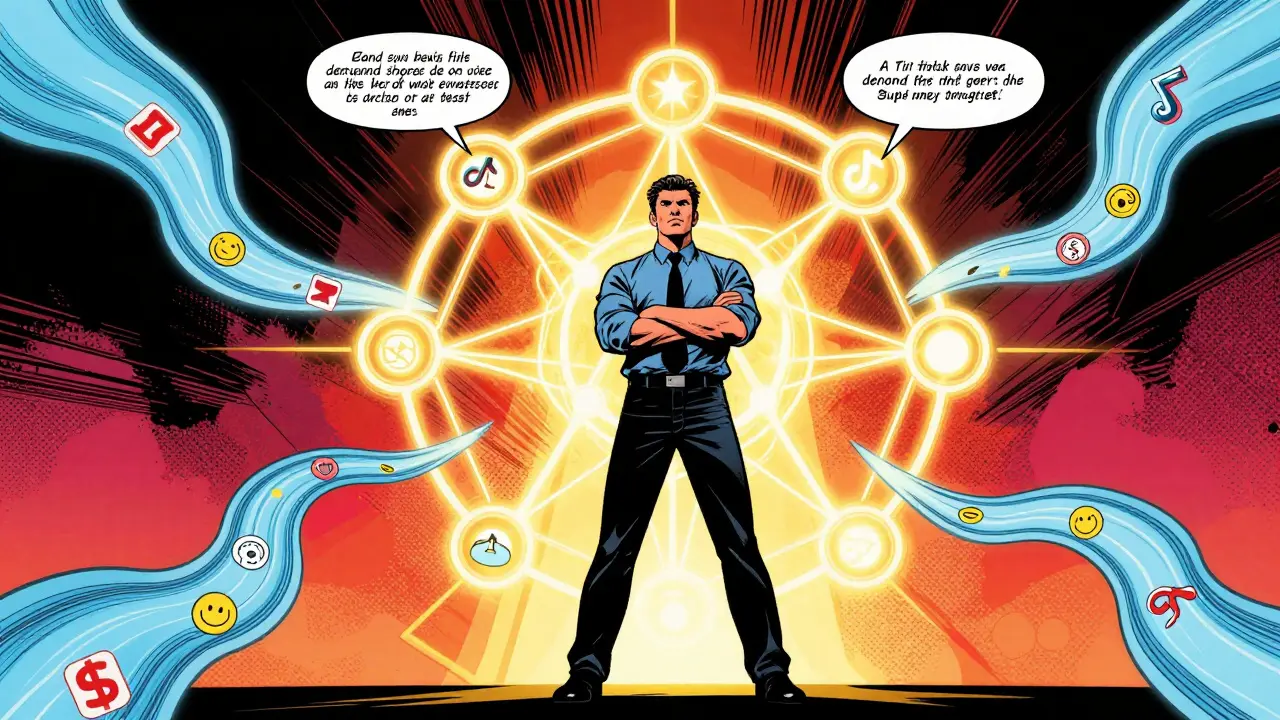
Most companies still treat demand forecasting like a math problem. Plug in last year’s sales numbers, run a formula, and hope for the best. But when a hurricane shuts down a port, a viral TikTok spikes demand for a niche product, or a supplier in Vietnam suddenly doubles prices, those formulas break. They don’t adapt. They don’t explain. They just spit out numbers that no one trusts.
Generative AI changes that. It doesn’t just predict demand-it tells you why it predicted it, and what might go wrong. This isn’t science fiction. Companies are using it right now to cut inventory costs by 35%, reduce stockouts by 28%, and respond to supply chain shocks before they become crises. But it’s not magic. The real power isn’t in the numbers-it’s in the narratives.
How Generative AI Turns Numbers Into Stories
Traditional forecasting tools like ARIMA or exponential smoothing look at patterns in historical sales. They assume the future will look like the past. That works fine for toothpaste or toilet paper-steady, predictable items. But for products with seasonal spikes, new market entrants, or global dependencies? They fail.
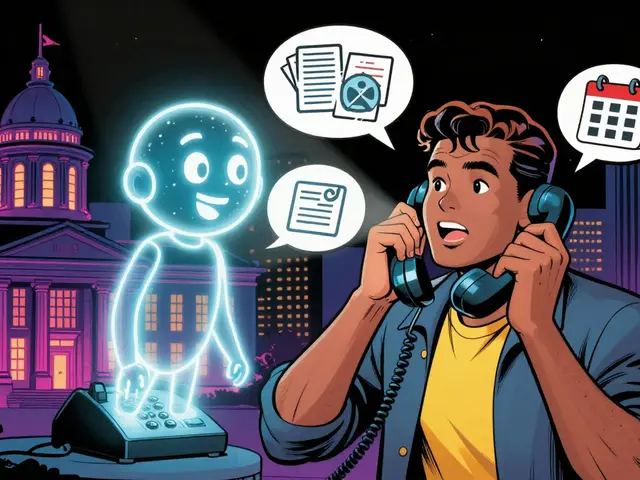
Generative AI works differently. It doesn’t just calculate. It simulates. It takes hundreds of data streams-sales history, weather patterns, social media trends, shipping delays, even political unrest-and runs thousands of what-if scenarios. Then it generates a story for each one.
Imagine you sell outdoor gear. Last year, your hiking boots sold well in October. But this year, the AI notices:
- There’s a 70% chance of an early snowstorm in the Rockies next month.
- Two major outdoor influencers posted about a new waterproof boot brand on Instagram.
- A key supplier in China just reported a 14-day delay due to labor strikes.
Instead of just saying “sales will be up 12%,” the AI says: “Demand for waterproof hiking boots will rise 22% in the Northeast and Midwest due to early cold weather and influencer buzz. However, supplier delays mean you’ll only receive 60% of your order on time. Recommend increasing safety stock by 18% for the Northeast region and shifting 30% of inventory from Midwest distribution centers to East Coast hubs.”
This is a narrative. It’s not just a number. It’s context. It’s action. And it’s what planners actually need to make decisions.
Why Exceptions Are the Real Challenge
Forecast accuracy matters-but not as much as understanding when the forecast is wrong. That’s where exceptions come in.
Every supply chain has exceptions: unexpected demand spikes, sudden supplier failures, logistics bottlenecks, or even product recalls. Traditional systems flag these as “errors.” They don’t explain them. They just say, “Forecast was off by 40%.”
Generative AI doesn’t just detect exceptions-it explains them. It traces the deviation back to its root cause. Did the spike happen because of a local festival? A competitor’s outage? A viral meme? The AI doesn’t guess. It builds a story based on real-time signals.
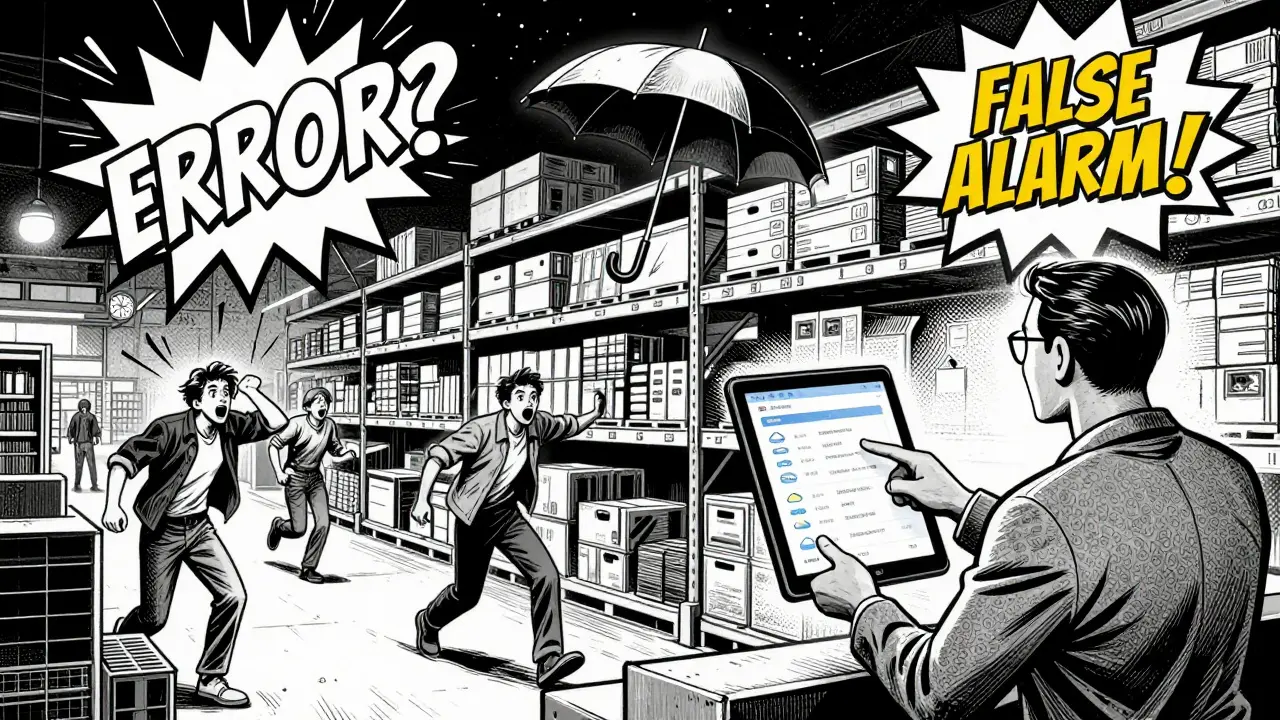
One retail chain in Atlanta saw a 140% spike in sales of a $12 umbrella. Their old system flagged it as a data glitch. The AI didn’t. It cross-referenced weather data, local event calendars, and social sentiment. Turns out, a local weather app had incorrectly predicted a 90% chance of rain for Saturday. People bought umbrellas in panic. The AI didn’t just report the spike-it told the team: “This was a false alarm triggered by a third-party weather app error. No repeat expected. Do not reorder.”
That’s the difference. One system wastes money. The other saves it.
What Generative AI Can’t Do (And What You Still Need Humans For)
Don’t get fooled. Generative AI isn’t replacing planners. It’s augmenting them.
When a product has no history-like a new electric scooter model launched in a country that’s never sold them before-the AI has nothing to learn from. It can simulate based on similar products, but it’s shooting in the dark. That’s where human insight kicks in. A planner who’s seen 10 similar launches in other markets knows what to watch for: charging infrastructure, local regulations, cultural attitudes toward scooters.
Same goes for truly unprecedented events. In 2024, a new type of cyberattack took down a major logistics software provider. No historical data existed. No AI model had ever seen this. But a supply chain manager who’d worked through the 2021 Suez Canal blockage recognized the pattern: cascading delays, port congestion, rerouting needs. She used the AI’s scenario engine to simulate it, then added her own assumptions. The result? A plan that prevented a $22M inventory crisis.
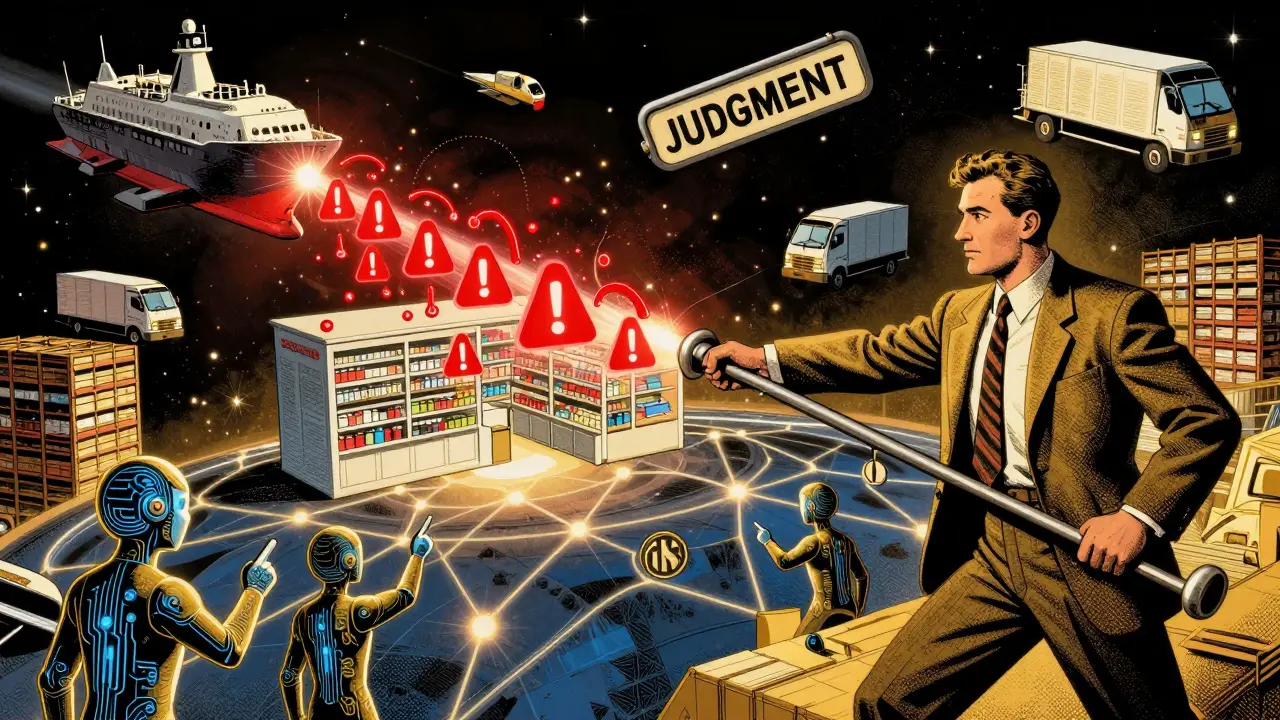
Generative AI gives you possibilities. Humans give you judgment.
Real-World Results: Who’s Winning?
Early adopters aren’t just testing this tech-they’re seeing real ROI.
A pharmaceutical company in Ohio used generative AI to forecast demand for a life-saving medication. Their old system missed a 30% surge in prescriptions during flu season. The AI predicted it three weeks ahead, factoring in CDC flu maps, pharmacy refill rates, and social media mentions of flu symptoms. They adjusted production and distribution in time. No shortages. No lost sales. $4.7M saved in emergency air freight.
A global electronics manufacturer cut inventory costs by 32% by using AI to identify which components were overstocked due to delayed shipments from Asia. Instead of blindly holding safety stock, the AI told them: “Hold 15% more of Component X because the Taiwan port strike is likely to last 3 weeks. You can reduce Component Y by 40%-its supplier in Germany has no delays and lead times are stable.” They didn’t guess. They knew.
And it’s not just big companies. Even mid-sized retailers are seeing results. One home goods chain in North Carolina reduced excess inventory by 27% and improved on-time delivery by 65% in eight months-just by letting AI explain why sales were falling short in certain regions.
What It Takes to Make It Work
Generative AI doesn’t plug into your ERP like a USB stick. It requires work.
First, data. You need clean, unified data from sales, inventory, logistics, suppliers, and external sources like weather APIs and economic indicators. Most companies spend 6 to 12 months just cleaning up their data before the AI can even start.
Second, integration. The AI needs to talk to your existing systems-SAP, Oracle, NetSuite. If your data lives in silos, the AI will be blind. One company spent 14 months integrating 18 different data sources before their AI generated its first reliable forecast.
Third, training. Planners need to learn how to read AI narratives. Not just the numbers, but the language. “This deviation is likely due to…” isn’t a bug-it’s a feature. Teams that spend 40-60 hours learning to interpret these stories see 35% faster improvement in forecast accuracy than those who treat it like a black box.
And fourth, feedback loops. Every time the AI gets something wrong, you need to tell it why. Did it miss a local event? Misread a social trend? That feedback trains the model. Companies that build this into their weekly planning meetings see AI performance improve 2-3x faster.
The Future: From Narratives to Digital Twins
The next leap isn’t just better forecasts. It’s digital twins of your entire supply chain.
Imagine a virtual copy of your warehouse, your suppliers, your shipping routes, your customers. Generative AI runs simulations on this twin-testing how a port strike in Singapore affects your product launch in Brazil. It doesn’t just predict. It visualizes. It shows you the ripple effect.
Gartner predicts that by 2027, 60% of large enterprises will use these AI-powered digital twins. Right now, it’s rare. But the trend is clear: the future isn’t just about accuracy. It’s about visibility. It’s about understanding the whole system, not just one part.
And the most important part? The AI won’t make the final call. It will propose. You will decide. That’s the winning formula.
What to Watch For
As generative AI becomes more common, vendors are pushing “explanation” as a key selling point. Look for these features:
- Clear, plain-language narratives for each forecast deviation
- Ability to trace exceptions back to specific data sources
- Scenario simulators that let you tweak variables and see outcomes in real time
- Feedback tools that let planners correct the AI and improve future predictions
Avoid vendors who promise “fully automated forecasting.” That’s a red flag. The best systems don’t eliminate human input-they elevate it.
Can generative AI replace human supply chain planners?
No. Generative AI enhances planners by providing data-driven narratives and scenario simulations, but it cannot replace human judgment in unpredictable situations, novel product launches, or ethical decisions. The most successful teams use AI to surface insights and humans to make final calls.
How long does it take to implement generative AI for demand forecasting?
Most companies need 6 to 12 months for data cleanup and integration, followed by 2 to 4 months for model training and validation. Full rollout into planning workflows typically takes another 1 to 3 months. Retailers see faster results (7 months on average), while industrial manufacturers often take 11 months or more.
What kind of data does generative AI need to work?
It needs structured data like sales history, inventory levels, and supplier lead times, plus unstructured data such as weather reports, social media trends, news headlines, and economic indicators. Ideally, you need at least 6 to 12 months of clean historical data and integration with 15-20 external data sources.
Is generative AI worth the cost for small businesses?
For small businesses with stable demand and simple supply chains, traditional tools may be sufficient. But if you deal with seasonal spikes, global suppliers, or unpredictable demand, even small companies can benefit. Cloud-based AI platforms now offer tiered pricing, with some starting under $500/month for basic forecasting and exception handling.
Why do some generative AI supply chain projects fail?
According to Gartner, 70% of generative AI supply chain projects stall because of poor data quality, lack of integration with existing systems, or unrealistic expectations. Many assume AI will fix broken processes-but it only amplifies what’s already there. Success requires clean data, trained staff, and a willingness to adapt workflows.
If your supply chain feels like it’s always one step behind, generative AI isn’t a luxury-it’s a necessity. The question isn’t whether you should use it. It’s whether you’ll be the one leading the change-or still wondering why your forecasts keep missing the mark.
10 Comments
Jen Deschambeault
This is the kind of stuff that actually makes my job bearable now. I used to spend hours chasing down why sales dropped in Region 7, only to find out it was because a local high school had a pep rally and everyone bought the same brand of water bottles. Now the AI tells me exactly that-and I can finally stop feeling like a detective with no clues.
Kayla Ellsworth
So let me get this straight-you’re telling me AI now writes little bedtime stories for supply chain managers so they don’t feel lonely at 2 a.m.? How quaint. Next they’ll give it a name and a tiny hat.
Soham Dhruv
real talk-i’ve seen this work at my old job. we had this one guy who swore ai was gonna steal his job. ended up he was the one using it the most because he kept missing the obvious stuff like weather delays. ai didn’t replace him, it just made him less wrong. also typos are my love language lol
Bob Buthune
Okay but what if the AI is wrong? Like what if it’s trained on data that’s been manipulated? What if the weather API is lying because a corporation paid it to downplay the storm? What if the influencers are bots? What if the whole thing is a surveillance operation disguised as inventory optimization? I’ve seen documentaries. This isn’t innovation-it’s control dressed up in Python.
Jane San Miguel
The notion that generative AI provides ‘narratives’ is, frankly, a marketing euphemism for anthropomorphizing statistical regression models. The real breakthrough lies not in linguistic framing but in the multivariate probabilistic integration of heterogeneous data streams-something that, until now, has been largely unattainable in operational forecasting environments.
Kasey Drymalla
they say ai knows why sales spiked but what if its just lying to make you feel safe? what if its all a big lie to get you to buy more servers? what if the whole supply chain is fake and we're all just in the matrix?
Dave Sumner Smith
you think this is new? the government has been using this since 2018 to predict riots and food shortages. they just didn't tell you. now they're selling it to Walmart as a 'business tool'. don't be fooled. the same algorithms that tell you when to restock toilet paper are the ones that decide if you get unemployment benefits next month
Cait Sporleder
While the article compellingly elucidates the transformative potential of generative AI in supply chain dynamics, one must not overlook the epistemological underpinnings of narrative generation: the algorithmic construction of causality from correlational data. The emergent ‘stories’ are, in essence, post-hoc rationalizations-plausible, yes, but not necessarily true. The danger lies not in the model’s inaccuracy, but in its persuasive elegance, which may lull human operators into a false sense of epistemic security. Furthermore, the implicit assumption that ‘narratives’ are inherently more actionable than probabilistic outputs warrants rigorous scrutiny-particularly in high-stakes contexts where misinterpretation may cascade into systemic failure.
Paul Timms
This is actually really useful. I’ve been trying to explain this to my team for months. The AI doesn’t replace us-it gives us the context we’ve been missing.
Jeroen Post
you think this is the future? wait till the AI starts deciding which products get discontinued based on social media sentiment and then you realize they're not predicting demand they're creating it. this isn't optimization this is behavioral manipulation disguised as efficiency. and don't get me started on how they're training it on biased data from big corporations who want to crush small suppliers. you're not being helped-you're being groomed