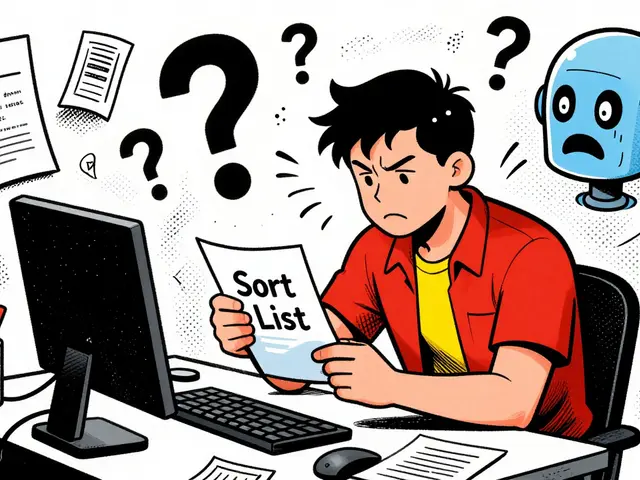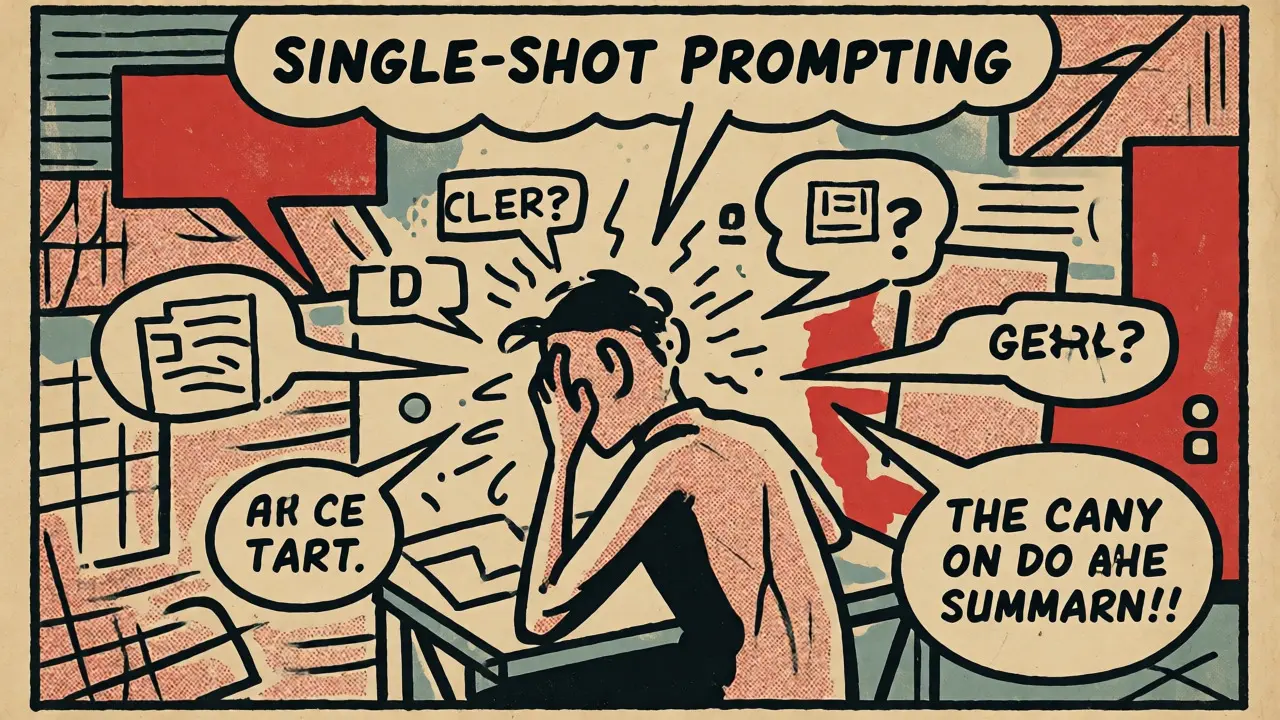
You’ve probably felt it. You ask a large language model to do something complex-like analyze a financial report, draft a legal summary, and suggest next steps-and you get a response that’s technically correct but feels… off. Maybe it missed a key detail, or the tone was wrong, or it hallucinated a statistic. You tweak the prompt. You add more context. You try again. Still not quite right. This is where single-shot prompting hits its ceiling. It’s like asking one person to read a book, write a review, design a marketing campaign, and forecast sales all at once. They might manage, but they’ll likely drop the ball somewhere.
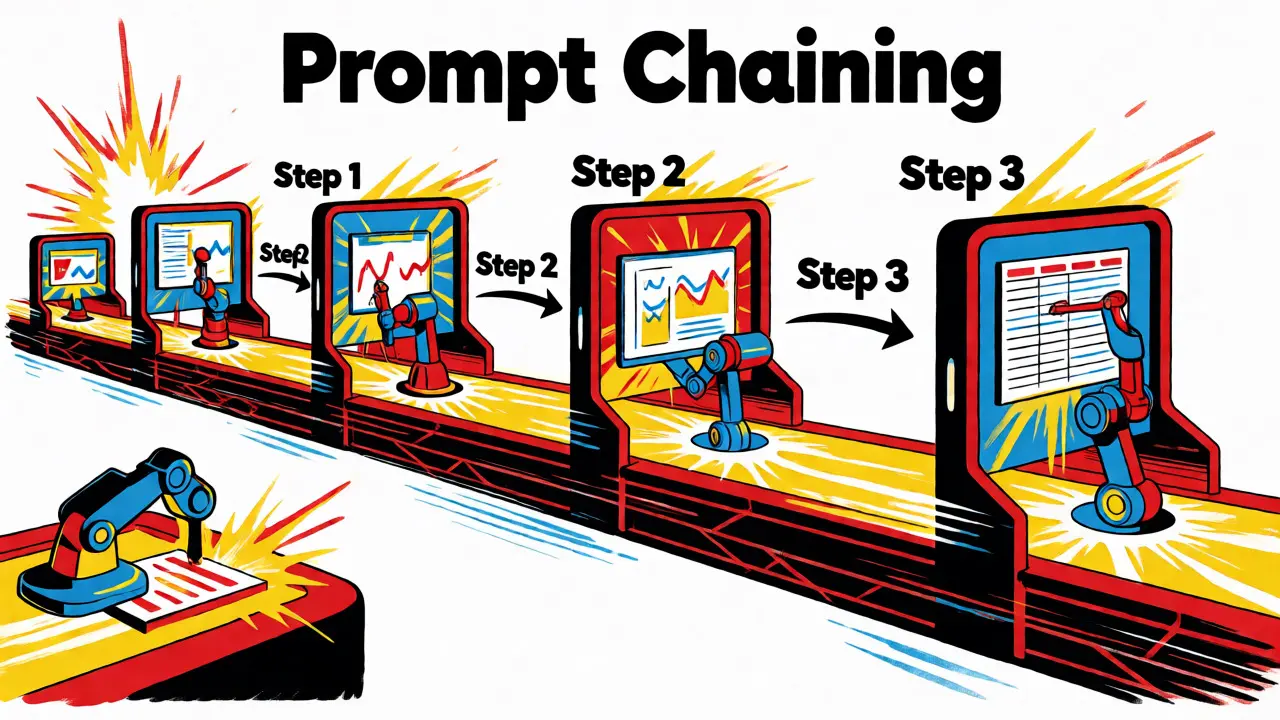
Prompt chaining solves this by breaking the task into smaller, manageable steps. Instead of one massive instruction, you create a workflow where the output of one prompt becomes the input for the next. Think of it as an assembly line for intelligence. Recent data from Maxim.ai shows this approach can boost accuracy on complex tasks by up to 37%. But is it always worth the extra effort? Let’s figure out when to chain your prompts and when to keep it simple.
The Core Difference: One Brain vs. A Team
At its heart, the debate between prompt chaining and single-shot prompting is about control versus convenience. Single-shot prompting is exactly what it sounds like: you give the model one prompt with all the instructions, examples, and context, and expect a final answer in one go. It’s fast, easy to set up, and works great for straightforward tasks like translating a sentence or summarizing a short paragraph.
Prompt chaining, defined formally in the ACL 2024 Findings paper, decomposes complex AI tasks into sequential subtasks. Each step has a specific job: extract data, analyze trends, format results. The magic happens in the handoff. The output of Step 1 (e.g., extracted key metrics) feeds directly into Step 2 (e.g., trend analysis). This structure reduces error propagation by 42% compared to monolithic prompts because you can validate results at each stage before moving forward.
It’s crucial not to confuse prompt chaining with Chain-of-Thought (CoT) prompting. CoT asks the model to "think step-by-step" within a single prompt. It’s internal reasoning. Prompt chaining is external orchestration. You’re building a pipeline. If Step 2 fails, you know exactly where to look. With CoT, if the reasoning goes wrong halfway through, you often have to restart the whole generation process.
When to Choose Single-Shot Prompting
Don’t over-engineer everything. Single-shot prompting remains the best choice for many scenarios. If your task is linear and doesn’t require intermediate validation, stick with one prompt. For example, converting raw text into JSON format, answering factual questions, or generating creative copy based on a clear brief.
Why? Because speed matters. Single-shot prompts have lower latency. There’s no overhead from managing multiple API calls or passing data between steps. According to industry benchmarks, adding just one extra step to a chain can increase end-to-end latency by 150-200ms. If you’re building a real-time chatbot where users expect instant replies, those milliseconds add up quickly.
Also, consider cost. While individual tokens are cheap, multiplying them across multiple steps adds up. If a single well-crafted prompt achieves 90% accuracy, spending 30% more tokens to get to 92% might not be worth it. Dr. Elena Rodriguez from IEEE Spectrum warns against "over-engineering," noting that diminishing returns kick in after 5-7 chain steps for most business applications.
- Simple Classification: Is this email spam or not?
- Direct Extraction: Pull the date and amount from this receipt.
- Creative Generation: Write a haiku about rain.
- Low-Latency Needs: Real-time search suggestions.
When Prompt Chaining Wins
Prompt chaining shines when complexity increases. If your task involves multiple distinct operations-extraction, transformation, analysis, synthesis-a chain gives you precision. Take content creation. Instead of asking an LLM to "write a blog post," you might chain three prompts:
- Outline Generator: Creates a structured outline based on keywords.
- Draft Writer: Expands each outline point into paragraphs.
- Editor: Reviews the draft for tone, clarity, and SEO keywords.
Data supports this. A study cited by Metaflow showed that chained refinement approaches consistently outperformed stepwise refinement within single prompts across 12 complex NLP tasks. Furthermore, developers report fewer hallucinations-87% in one survey-because each step acts as a check on the previous one. If Step 1 extracts incorrect data, Step 2 might flag it, or you can catch it during validation before it corrupts the final output.
Designing Your First Workflow
Ready to build a chain? Don’t start with seven steps. Start with two. Here’s a practical framework to design your first multi-step LLM workflow:
Step 1: Define the Jobs-to-be-Done
Break your problem down. What are the discrete actions required? For a customer support ticket, it might be: 1) Classify intent, 2) Extract relevant account info, 3) Generate response. These are your nodes.
Step 2: Create Strict Schemas
The biggest headache in chaining is bad data handoffs. If Step 1 outputs free-form text, Step 2 will struggle. Force structured outputs. Use JSON schemas. For example, Step 1 should output `{"intent": "billing", "confidence": 0.95}` rather than "The user seems to be asking about billing." This makes parsing reliable.
Step 3: Implement Validation Gates
Add logic between steps. If Step 1’s confidence score is below 0.8, route to a human instead of proceeding to Step 2. This prevents garbage-in-garbage-out errors from cascading. Maxim.ai’s research highlights that validation at each stage reduces error propagation significantly.
Step 4: Measure and Optimize
Track token usage and latency per step. Are you using 500 tokens for a step that could use 50? Optimize. Are you hitting rate limits? Batch requests. Tools like PromptFlow help visualize these chains, making debugging easier.
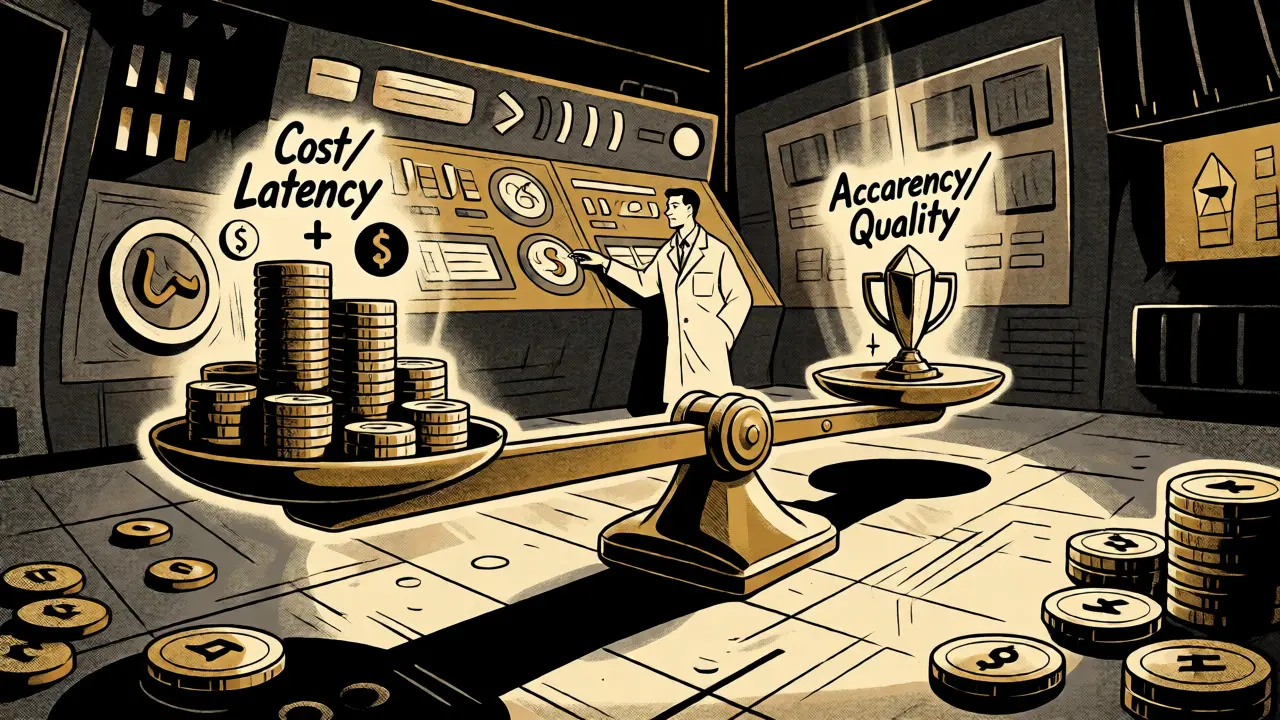
Performance Trade-offs: Cost vs. Accuracy
There’s no free lunch. Prompt chaining improves quality but costs more. Here’s how the numbers stack up based on recent benchmarks:
| Metric | Single-Shot Prompting | Prompt Chaining |
|---|---|---|
| Accuracy (Complex Tasks) | Baseline | +30-40% |
| Token Consumption | Lower | +25-35% |
| Latency | Fastest | +150-200ms per step |
| Error Correction Efficiency | 68% (CoT comparison) | 92% |
| Debugging Difficulty | Hard (black box) | Easier (modular) |
Notice the trade-off. You buy accuracy with latency and cost. For enterprise applications where mistakes are expensive (like medical diagnosis support or legal document review), that trade-off is usually worth it. For consumer apps where speed is king, it might not be.
Common Pitfalls and How to Avoid Them
Even experienced engineers stumble here. The most common issue? Context drift. As you pass information from Step 1 to Step 2, nuances can get lost. If Step 1 summarizes a document, does Step 2 know what was left out? Always include critical metadata in your handoff.
Another trap is infinite loops or redundant steps. Do you really need a separate prompt for formatting? Can the final generation step handle that? Keep chains as short as possible. Gartner predicts that by Q4 2025, 65% of enterprise implementations will use chaining, but the smart ones will automate optimization to find the minimal effective chain length.
Finally, don’t ignore maintenance. Managing five different prompt templates is harder than one. Version control your prompts. Test changes rigorously. A small tweak in Step 1 can break Step 3 unexpectedly.
Frequently Asked Questions
Is prompt chaining the same as Chain-of-Thought prompting?
No. Chain-of-Thought (CoT) encourages the model to reason step-by-step within a single prompt response. Prompt chaining involves multiple separate API calls where the output of one call is explicitly fed as input to the next. CoT is internal reasoning; chaining is external orchestration.
Does prompt chaining always improve accuracy?
Not always. For simple tasks, it adds unnecessary complexity and cost. However, for complex, multi-faceted tasks requiring sequential transformations, studies show accuracy improvements of 30-40%. Diminishing returns occur after 5-7 steps for most business cases.
How much does prompt chaining increase costs?
On average, token consumption increases by 25-35% compared to single-shot approaches. This varies based on chain length and the verbosity of intermediate outputs. Using strict JSON schemas can help minimize token waste.
What tools help manage prompt chains?
Frameworks like PromptFlow (open-source) allow visual design and schema validation. Enterprise platforms like Maxim.ai offer playgrounds for systematic experimentation across prompt variants, tracking quality, cost, and latency metrics simultaneously.
When should I avoid prompt chaining?
Avoid chaining for real-time applications requiring sub-500ms responses, simple classification tasks, or when budget constraints are tight. If a single well-crafted prompt meets your accuracy threshold, keep it simple.