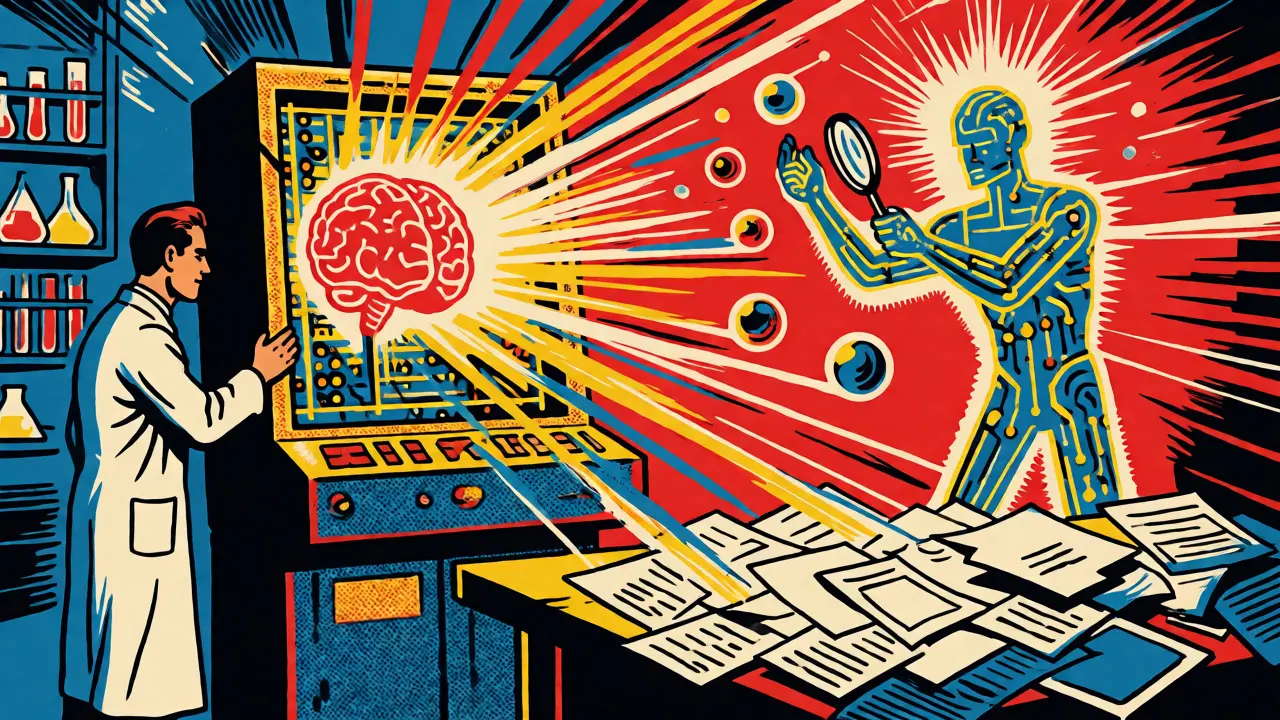
Imagine handing a computer a messy pile of experimental data and asking it not just to summarize what happened, but to figure out why it happened and what you should test next. For years, AI in science was stuck at the "summarize" stage. It could read papers, find patterns, and maybe predict a molecular property if you gave it perfect data. But it couldn't think like a scientist. That is changing fast. We are moving from AI as a passive library to AI as an active collaborator, thanks to reasoning-enhanced large language models (LLMs).
This shift isn't just about bigger models. It's about teaching machines to chain thoughts together, check their own logic, and apply specific domain rules-like chemical bonding principles or physical laws-to solve problems they've never seen before. If you're a researcher drowning in literature or trying to speed up material discovery, this new wave of AI might be the partner you didn't know you needed yet.
The Leap From Pattern Matching to Logical Thinking
Traditional AI models used in science were great at interpolation. Give them ten thousand examples of how molecules behave, and they'd guess the behavior of the eleventh one pretty accurately. But give them something weird-a novel battery electrolyte or an unknown protein fold-and they often failed silently or gave confident wrong answers. They lacked interpretability. You couldn't ask them why they made a prediction, and they couldn't generalize across different types of tasks.
Reasoning-enhanced LLMs fix this by integrating explicit logical steps into their processing. Take MPPReasoner, for example. This model doesn't just look at a molecule's structure; it combines visual images of the molecule with SMILES strings (text representations) and uses a two-stage training process. First, it learns from 16,000 high-quality reasoning trajectories generated by expert knowledge. Then, it undergoes Reinforcement Learning from Principle-Guided Rewards (RLPGR). In plain English? The model gets rewarded not just for getting the right answer, but for following the correct chemical logic to get there. It checks its own work against fundamental chemical principles, ensuring that if it predicts a reaction, it can explain the mechanism behind it.
Three Levels of AI Autonomy in Science
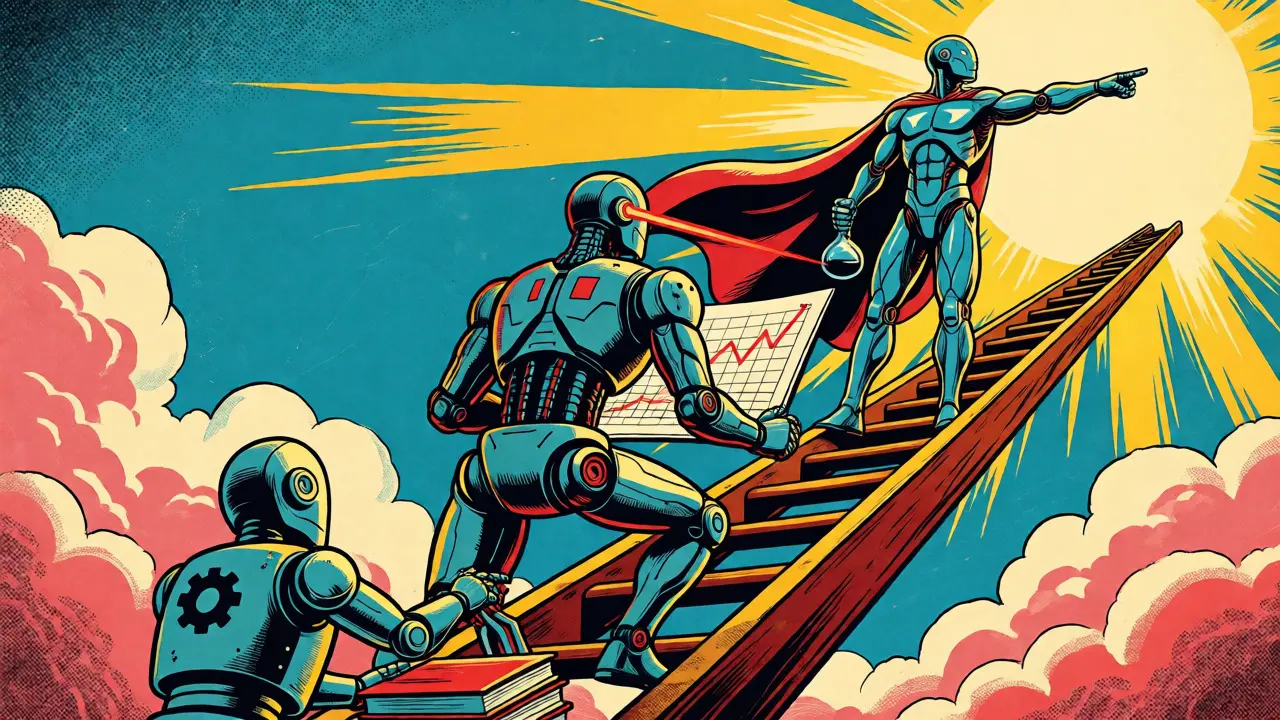
To understand where we stand, it helps to look at a taxonomy developed by researchers to categorize how much independence these systems have. Think of it as a ladder of trust.
- LLM as Tool: This is where most people started. The AI performs specific, well-defined tasks under direct human supervision. You ask it to translate a paper or format a bibliography. It’s helpful, but it has no agency.
- LLM as Analyst: Here, the AI gains autonomy. It processes complex information, conducts analyses, and offers insights with less hand-holding. It might suggest correlations in your dataset that you missed, but you still drive the experiment design.
- LLM as Scientist: This is the frontier. These systems can autonomously formulate hypotheses, plan experiments, analyze results, and propose the next step. They demonstrate initiative. While we aren't fully here yet, early versions show glimpses of this capability, especially in iterative loops where the AI refines its own strategy based on feedback.
The jump from Analyst to Scientist is the hardest part because it requires strategic redirection. The AI needs to realize when a hypothesis is dead and pivot, rather than just pushing forward blindly.
Real-World Impact: Batteries and Chemistry
You don't need theoretical models to see this working. Look at SES AI's Molecular Universe LLM. This is a 70-billion parameter model specifically adapted for battery innovation. Battery chemistry is notoriously difficult; small changes in electrolyte composition can drastically change performance and safety. Standard models struggle here because the relationships are non-linear and highly context-dependent.
SES AI solved this through "reasoning alignment." They didn't just fine-tune the model on battery data; they trained it to navigate multi-step problems using chain-of-thought reasoning. The model can now simulate how a specific mixture might degrade over time, identify potential failure points, and suggest alternatives. It’s not just predicting a number; it’s simulating a process. This kind of domain adaptation allows the AI to handle the high-stakes complexity of materials science, where a bad guess costs months of lab work.
| Feature | Traditional Scientific LLMs | Reasoning-Enhanced LLMs |
|---|---|---|
| Primary Function | Pattern recognition and retrieval | Logical deduction and hypothesis generation |
| Interpretability | Low (black box predictions) | High (step-by-step rationale provided) |
| Error Handling | Fails silently on out-of-distribution data | Self-correction via principle-guided rewards |
| Example Use Case | Summarizing a literature review | Proposing a new molecular structure for testing |
Benchmarking Real Discovery, Not Just Trivia
How do we know these models are actually good at science? Standard benchmarks like general science exams are misleading. A model might ace a multiple-choice question about Newton's laws but fail to derive a new equation from raw data. Enter the Scientific Discovery Evaluation (SDE) framework.
SDE tests models on realistic, iterative research tasks across biology, chemistry, materials, and physics. It measures two things: accuracy within specific scenarios and overall project-level performance. The results are eye-opening. When researchers turned on reasoning capabilities for the DeepSeek model, its accuracy on assessing Leinsky's rule in biology jumped from 65% to a perfect 100%. In physics, reasoning-enabled models like GPT-5 found governing equations for dynamic systems faster and with lower error rates than their non-reasoning counterparts. They even proposed structural changes, like realizing an equation needed a sign function instead of a polynomial, which is a nuanced mathematical insight.
However, SDE also reveals a gap. There is a significant difference between performing well on static knowledge retrieval and actual discovery. No current model achieves "general scientific superintelligence." They still make mistakes, often sharing similar failure modes across top-tier platforms. This tells us that while we are making huge strides, we are still far from replacing the intuition of a seasoned principal investigator.
Hybrid Frameworks: The Human-AI Partnership
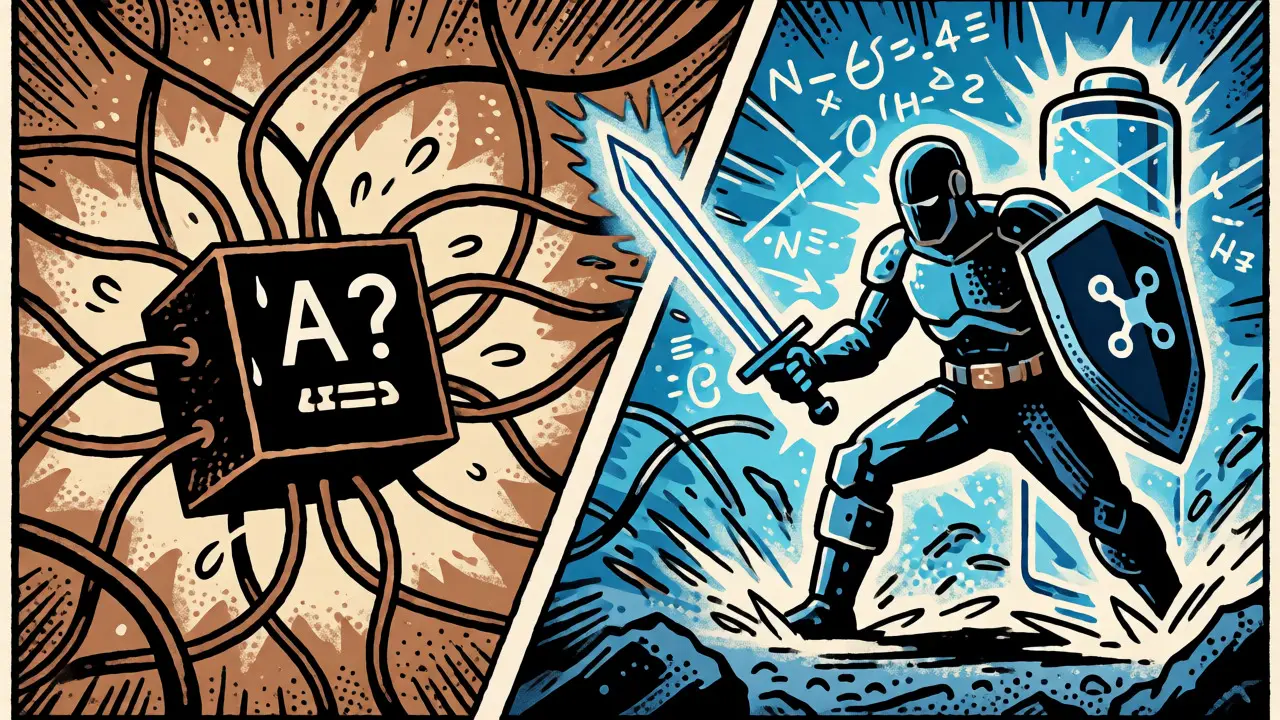
The best results aren't coming from AI acting alone. They come from hybrid frameworks that combine Retrieval-Augmented Generation (RAG) with Case-Based Reasoning (CBR). In these setups, the LLM acts as a reasoning engine, not a static oracle. It pulls relevant case studies from a graph database and vector embeddings, then applies logical rules to generate new insights.
This approach emphasizes transparency and accountability. In fields like healthcare or drug discovery, you can't afford a black box. The collaborative note-taking phase in these platforms embeds CBR into the workflow, allowing humans and AI to iterate together. The AI suggests a path; the human validates the ethical and practical implications; the AI refines the next step. This dynamic integration ensures that the AI remains a tool for augmentation, not replacement, keeping human judgment at the center of critical decisions.
What This Means for Your Lab
If you're running a lab today, you don't need to hire a team of prompt engineers tomorrow. But you should start paying attention to tools that offer reasoning traces, not just outputs. Look for software that explains its suggestions. Test whether the AI can handle out-of-distribution data-give it a weird edge case and see if it flags uncertainty or confidently hallucinates.
The era of AI simply summarizing your PDFs is ending. The era of AI helping you design your next experiment is beginning. It won't replace your curiosity, but it will certainly sharpen your focus.
Do reasoning-enhanced LLMs replace human scientists?
No, they act as collaborators. While models like those classified as "LLM as Scientist" can autonomously generate hypotheses and plan experiments, they currently lack the broad contextual understanding, ethical judgment, and creative intuition of human researchers. The most effective workflows involve humans guiding the strategic direction while AI handles heavy lifting in data analysis and pattern recognition.
What is the main advantage of RLPGR in models like MPPReasoner?
Reinforcement Learning from Principle-Guided Rewards (RLPGR) trains the model to value logical consistency and adherence to scientific principles, not just final accuracy. This means the model learns to self-correct if its reasoning steps violate known chemical or physical laws, leading to more interpretable and reliable predictions, especially for novel compounds or scenarios outside its training data.
How does the SDE benchmark differ from standard science quizzes?
Standard quizzes test static knowledge recall. The Scientific Discovery Evaluation (SDE) framework tests iterative problem-solving. It evaluates how well a model can generate hypotheses, simulate experiments, and refine conclusions over multiple steps. This reveals gaps in true discovery capability that simple trivia questions miss, such as the ability to identify necessary structural changes in mathematical models.
Can these models handle out-of-distribution data?
Better than traditional models, but not perfectly. Reasoning-enhanced models like MPPReasoner showed a 4.53% improvement on out-of-distribution tasks compared to baselines. Their ability to apply general principles (like chemical bonding rules) helps them generalize to unseen data, whereas older models often failed completely when faced with inputs significantly different from their training set.
What is the role of RAG and CBR in scientific AI?
Retrieval-Augmented Generation (RAG) allows the model to access up-to-date external databases, while Case-Based Reasoning (CBR) lets it learn from past similar cases. Together, they create a hybrid system where the LLM reasons over retrieved evidence, enhancing transparency and reducing hallucinations. This is crucial for fields like medicine and materials science where accountability and explainability are mandatory.