You’ve built a brilliant Retrieval-Augmented Generation (RAG) system. It answers questions accurately by searching through your company’s private documents. But here is the uncomfortable truth: those documents are now stored as vector embeddings-numerical representations that capture semantic meaning-and if you aren’t careful, they can leak sensitive information just by existing.
In 2026, storing vectors isn’t just about speed or accuracy anymore. It’s about survival. With regulations like the European AI Act enforcing strict security measures for high-risk personal data, and the vector database market exploding from $1.4 billion in 2023 to a projected $7.8 billion by 2028, getting this wrong has real consequences. You might think encryption solves it all, but standard encryption often breaks search functionality. So, how do you protect vectorized private documents without killing performance?
Why Standard Security Fails Vector Databases
Traditional databases store text or numbers. If you encrypt them, you lose the ability to search efficiently unless you use specific techniques. Vector databases are different. They store high-dimensional numerical arrays-often hundreds or thousands of values per document-that represent the "meaning" of the content.
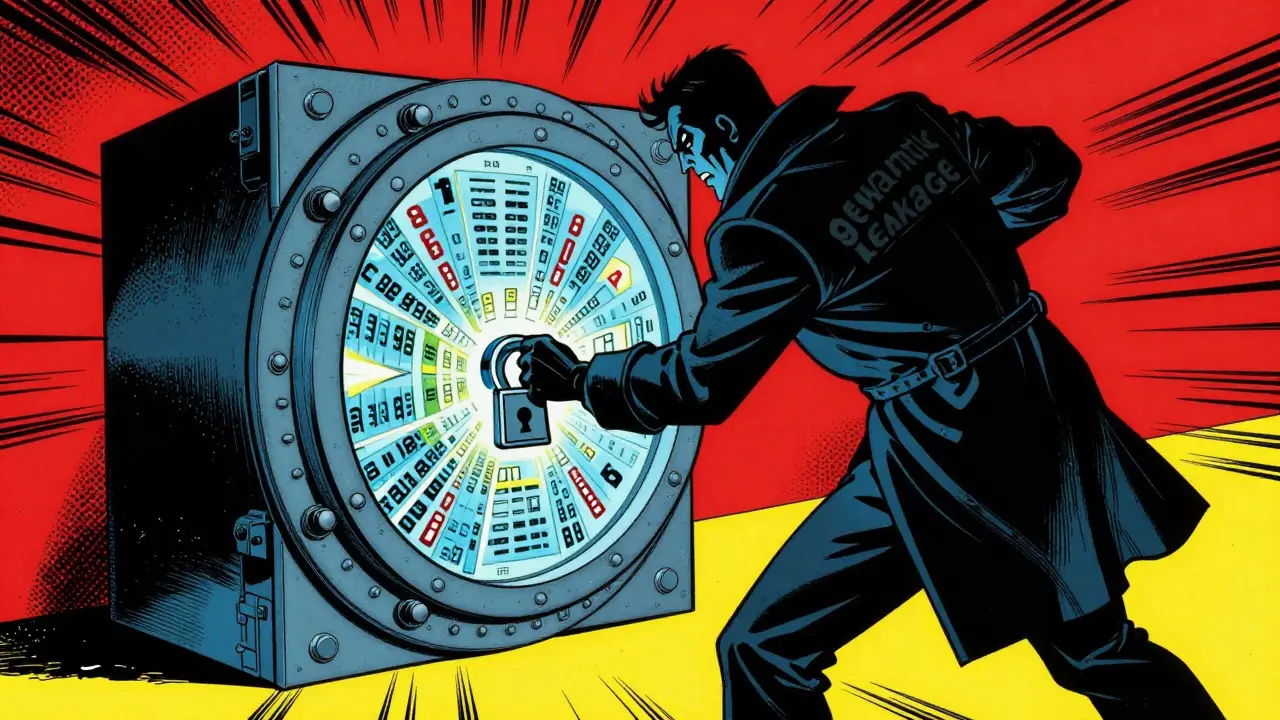
The problem? Semantics are sticky. Even if you anonymize names and dates before creating embeddings, the mathematical relationships between vectors can sometimes reveal patterns. This is called semantic leakage. A study by JPMorgan Chase found that embeddings of transaction patterns inadvertently exposed customer identities through similarity relationships, forcing them to add extra anonymization layers that slowed processing by 37%.
Dr. Sarah Chen from MIT’s AI Security Lab warned in 2024 that seemingly innocuous vectors can be reverse-engineered to reconstruct sensitive source documents. Without specialized controls, a simple similarity query could expose private details you thought were safe.
The Core Components of a Secure Embedding Store
To protect vectorized private documents, you need a layered approach. Here are the non-negotiable components:
- Data Anonymization at Ingestion: Never embed raw private data. Remove personally identifiable information (PII) before passing text to embedding models like OpenAI’s text-embedding-ada-002 or Hugging Face transformers.
- Encryption at Rest and in Transit: Use industry-standard protocols. MongoDB, for instance, integrates with AWS KMS, Google Cloud KMS, or Azure Key Vault to manage encryption keys securely.
- Strict Access Control: Implement Role-Based Access Control (RBAC). Not everyone who queries the database should see every result.
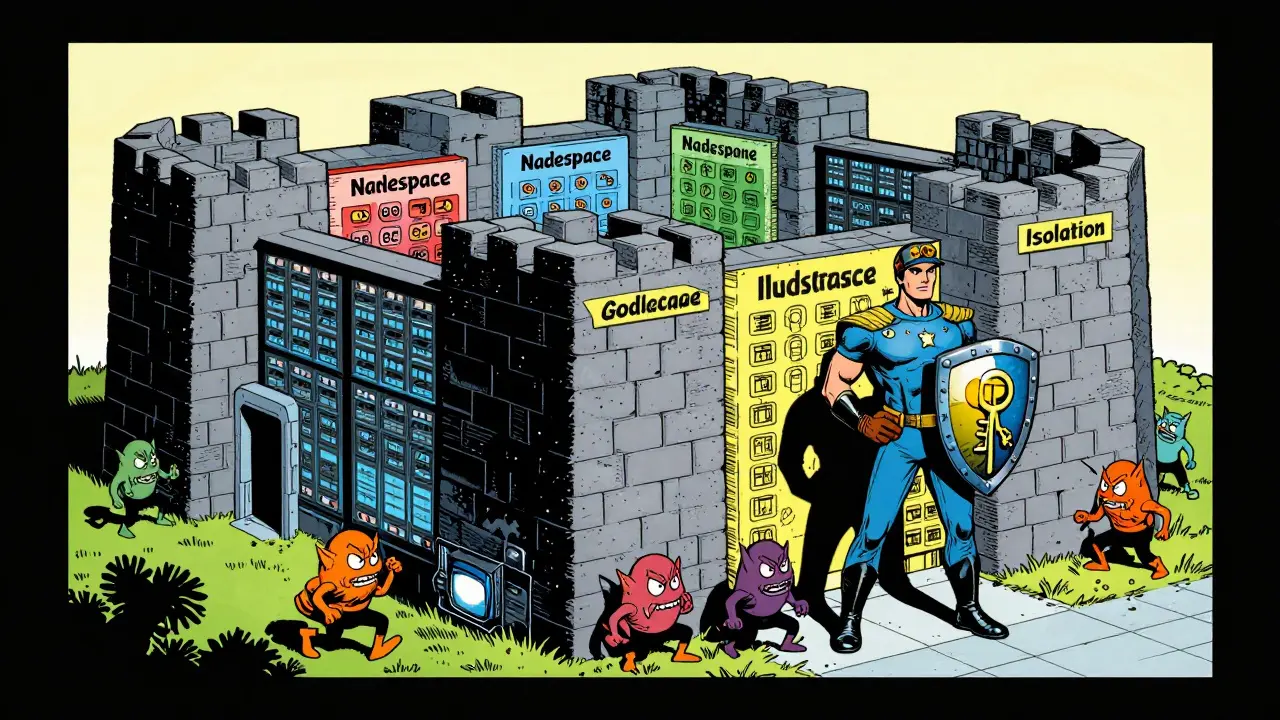
- Namespace Isolation: Tools like Pinecone offer fully isolated partitions within their own index, ensuring complete separation between different tenants or datasets.
- Embedding Validation: Continuously scan vectors to ensure no sensitive metadata slipped through during generation.
Comparing Top Vector Database Security Features
Not all vector databases are created equal when it comes to security. Some prioritize ease of use; others focus on enterprise-grade protection. Here is how leading platforms stack up in 2026:
| Platform | Encryption Support | Access Control | Isolation Mechanism | Special Security Features |
|---|---|---|---|---|
| MongoDB Vector Search | Field-level encryption with customer-managed keys | Granular RBAC | Database-level isolation | Secure Query feature; Semantic Encryption (experimental) |
| Pinecone | AES-256 at rest, TLS in transit | API key-based access | Namespace isolation | Fully isolated partitions per namespace |
| ChromaDB | Basic authentication | Limited in open-source version | Collection-based | Lacks enterprise-grade security out-of-the-box |
| Weaviate | TLS encryption | RBAC, OIDC integration | Multi-tenant architecture | Built-in authorization modules |
| Milvus | TLS encryption | RBAC | Resource groups | Distributed security controls |
If you are handling highly sensitive data, avoid open-source-only solutions like ChromaDB unless you have the engineering resources to build robust security layers yourself. Enterprise options like Weaviate or managed services like Pinecone offer better out-of-the-box protections.
Emerging Technologies: Privacy-Preserving Search
The biggest challenge in secure embedding stores is balancing privacy with performance. Traditional encryption makes vectors unreadable, breaking similarity search. New technologies aim to solve this:
- Semantic Encryption: Announced by MongoDB in late 2024, this feature keeps vectors encrypted while maintaining search functionality. However, expect a 15-20% performance penalty.
- Differential Privacy: Google Cloud introduced this for Vertex AI in October 2024. It adds statistical noise to embeddings, preserving 92-95% of search accuracy while protecting individual data points.
- Homomorphic Encryption: Still in development, this allows computations on encrypted data without decrypting it first. Expect widespread adoption between 2026 and 2027.
These tools are game-changers, but they come with trade-offs. Differential privacy reduces accuracy slightly, and semantic encryption slows down queries. Choose based on your risk tolerance.
Implementation Checklist for Secure Embedding Stores
Ready to secure your vectorized documents? Follow this step-by-step guide:
- Audit Your Data Pipeline: Identify where PII enters your system. Map every field that gets embedded.
- Implement Pre-Processing Anonymization: Use NLP libraries to detect and redact names, addresses, and financial data before sending text to embedding models.
- Configure Key Management: Integrate with a trusted key provider like AWS KMS or Azure Key Vault. Never hardcode encryption keys.
- Set Up Namespace Isolation: Separate different datasets into distinct namespaces or collections to prevent cross-data contamination.
- Enable Audit Logging: Track every query and access attempt. Privacera’s framework recommends regular auditing to detect anomalies.
- Validate Embeddings Regularly: Run automated checks to ensure no sensitive information leaked into the vector space.
- Test for Semantic Leakage: Perform adversarial testing by querying similar vectors to see if they reconstruct original documents.
Expect a learning curve. Tiger Data’s 2024 benchmark shows experienced teams take 3-6 months to implement proper security measures effectively.

Common Pitfalls to Avoid
Even seasoned engineers make mistakes. Here are the most common errors:
- Assuming Encryption Equals Security: As one Fortune 500 security engineer noted on Reddit, standard encryption destroyed their search functionality. They had to implement format-preserving encryption, which reduced accuracy by 8.3%.
- Ignoring Metadata: Vectors often carry metadata tags. If these contain IDs or timestamps, they can be used to re-identify users. Always scrub metadata too.
- Overlooking Model Risks: The embedding model itself can be a vulnerability. Ensure you’re using models deployed in controlled environments, not public APIs, for highly sensitive data.
- Neglecting Deletion Rights: GDPR’s “right to be forgotten” is tricky with vectors. Deleting a vector doesn’t always remove its influence on nearby vectors. Plan for comprehensive deletion strategies.
Future Outlook: What’s Next for Vector Security?
By 2027, Gartner predicts 85% of large enterprises will deploy specialized vector security solutions. Regulatory pressure is driving this shift. The European AI Act already mandates appropriate technical measures for systems processing high-risk personal data.
Financial services lead adoption, with 38% of organizations implementing vector databases for secure document processing in 2024. Healthcare follows closely, driven by HIPAA compliance needs. Expect security capabilities to become the primary selection criterion for vector databases, surpassing performance metrics soon.
As homomorphic encryption matures and standardized validation protocols emerge, securing vectorized private documents will become easier-but only if you start building those foundations today.
What is semantic leakage in vector databases?
Semantic leakage occurs when the mathematical relationships between vector embeddings inadvertently reveal sensitive information from the original documents. Even after anonymizing text, the structure of the vectors can allow attackers to reconstruct private data through similarity searches.
Can I use standard encryption for vector embeddings?
Standard encryption typically breaks vector search functionality because it alters the numerical values needed for similarity calculations. Instead, use specialized techniques like semantic encryption, differential privacy, or format-preserving encryption designed specifically for vector data.
Which vector database is most secure for private documents?
For enterprise-grade security, consider MongoDB Vector Search (with Secure Query), Pinecone (for namespace isolation), or Weaviate (for robust RBAC). Open-source options like ChromaDB lack built-in enterprise security features and require significant custom development.
How does differential privacy protect vector embeddings?
Differential privacy adds controlled statistical noise to embeddings, making it difficult to identify individual data points while preserving overall search accuracy. Google Cloud’s implementation retains 92-95% of search accuracy while significantly enhancing privacy.
What are the regulatory requirements for vector databases in 2026?
The European AI Act requires appropriate technical and organizational measures for systems processing high-risk personal data. GDPR’s right to be forgotten also applies, necessitating mechanisms to completely delete embedding data and ensure no residual information remains in model weights or similarity relationships.