Imagine posting a video that looks exactly like a real news clip, but every pixel was generated by an algorithm. Now imagine you are the platform hosting it. Do you take it down? Leave it up? Or label it? If you get it wrong, you might face fines in Europe or lawsuits in the US. This isn't hypothetical. As of late 2026, Generative AI has flooded digital platforms with synthetic content at a speed human moderators cannot match. The old rules for User-Generated Content no longer fit. Platforms are now caught between strict new laws demanding they police this flood and legal protections that shield them from liability for what users post. Understanding how these two forces collide is essential for anyone running a digital business today.
The New Legal Reality for Platforms
You might think regulations move slowly, but not anymore. In the last three years, we have seen a global shift from voluntary guidelines to hard law. The biggest change came from the European Union. The Digital Services Act (DSA), fully enforced since February 2024, forced large platforms to prove they were actively managing risks. It wasn't enough to just react to complaints; platforms had to show proactive systems were in place. Then came the EU AI Act, which adds another layer. It doesn't just regulate the AI models themselves but also how companies deploy them. If your platform uses AI to filter content, you must meet specific transparency and accuracy standards.
Across the Atlantic, things look different but feel similar. The United States relies heavily on Section 230 of the Communications Decency Act. This law traditionally protected platforms from being sued for what their users posted. But Section 230 was written for a world where humans wrote tweets, not where algorithms generate millions of images per hour. Courts are currently testing whether this protection extends to AI-generated outputs. If a platform's own AI generates harmful content, does Section 230 still protect it? Many lawyers say no. That uncertainty keeps executives awake at night.
Other regions are moving fast too. The UK’s Online Safety Act, enforced in late 2023, requires platforms to assess risks to children and vulnerable adults. Canada’s Bill C-63 explicitly includes deepfakes in its definition of intimate content communicated without consent. China takes a stricter approach, mandating that providers prevent illegal content generation and clearly label all AI-created media. For global platforms, this means creating one moderation strategy that satisfies four very different legal regimes simultaneously.
What Are Your Actual Duties?
So, what do these laws actually require you to do? It boils down to three main jobs: detect, disclose, and decide. First, detection. You need technical systems capable of identifying AI-generated text, images, and video in real-time. Second, disclosure. Most jurisdictions now require clear labeling. A user needs to know if they are looking at a photo taken by a camera or rendered by Midjourney. Third, decision-making. Once you find the content, what happens next? Do you remove it? Downrank it? Or just add a warning label?
Major players have adopted different strategies here. Meta, for instance, uses a "disclosure-first" approach. They generally allow labeled synthetic media to stay on Facebook and Instagram unless it breaks existing community standards, like non-consensual sexual imagery. TikTok takes a harder line. Their policy treats undisclosed realistic AI content as misleading, subjecting it to removal. They prohibit impersonations and crisis misinformation strictly. Midjourney, as a creator tool, focuses on blocking prompts and outputs automatically before the content even hits the public feed. These differences matter because they shape user expectations and legal risk profiles.
| Platform | Primary Strategy | Action on Undisclosed AI | Key Restriction |
|---|---|---|---|
| Meta | Disclosure-first | Label added; remains if compliant | No non-consensual sexual imagery |
| TikTok | Strict enforcement | Removal for misleading content | No impersonation or crisis misinformation |
| Midjourney | Pre-generation filtering | Blocked at creation stage | Community Guidelines violations |
| China Regs | Mandatory labeling | Must be visible watermark/metadata | Legal sourcing of training data |
The Myth of Pure Automation
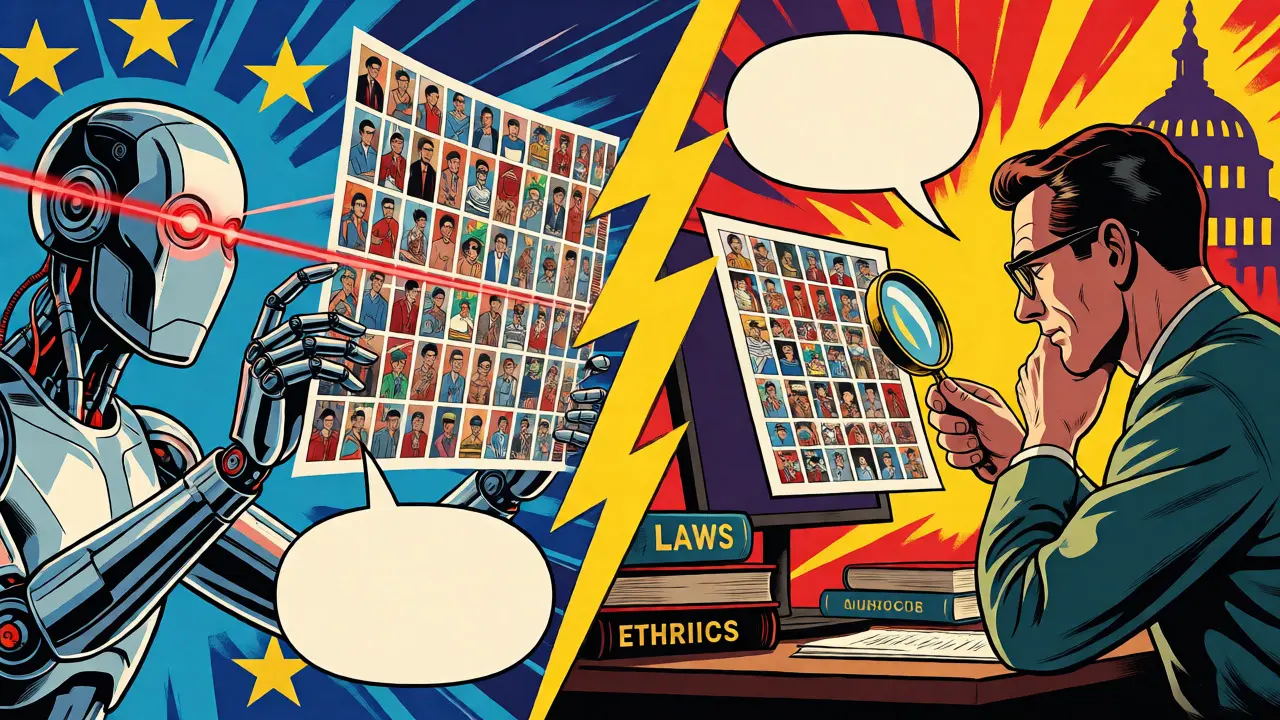
You might assume that since AI creates the problem, AI should solve it. Why hire thousands of moderators when a neural network can scan billions of posts? The reality is messier. Modern platforms use a "hybrid moderation model." Think of AI as a high-speed firewall. It catches the obvious stuff: nudity, hate speech keywords, known violent imagery. It filters out 90% of the noise quickly and cheaply. But AI struggles with context. It might flag a historical documentary as violent or miss sarcasm in a political meme.
This is where humans come back in. Human moderators today aren't just sifting through trash; they are trainers and ethicists. They review the edge cases AI misses. They define ethical boundaries. They audit the AI models for bias. For example, an AI might disproportionately flag slang used by minority communities as aggressive. A human reviewer spots this pattern and adjusts the threshold. Without this human-in-the-loop system, automated moderation often fails spectacularly, either censoring legitimate speech or letting harmful content slip through.
Real-time analysis is now standard. Tools analyze text, image, video, and audio simultaneously. This multimodal approach is crucial because a harmless image combined with hateful text creates a different meaning than the image alone. Technologies like the Coalition for Content Provenance and Authenticity (C2PA) help here. C2PA provides a digital fingerprint for media, allowing platforms to verify the origin and edit history of visuals. If a file lacks this provenance metadata, platforms treat it with more suspicion, assuming it might be manipulated or AI-generated.
Safe Harbors Under Siege
Let's talk about liability. Safe harbor provisions, like Section 230 in the US, are designed to keep platforms from going bankrupt over user posts. But generative AI blurs the line between "user" and "platform." When you use a built-in AI tool to write your bio, who is the author? You? Or the platform? If that bio is defamatory, does the platform lose its immunity?
Regulators are increasingly skeptical of broad immunity. The trend suggests that effective regulation will apply existing harm-based laws to new capabilities rather than inventing entirely new frameworks. If a platform actively curates or amplifies AI content using its own algorithms, it may be seen as publishing, not just hosting. This shifts the burden. Platforms are now required to provide transparency reports and risk assessments. They must explain how their algorithms work and how they mitigate bias. Ignorance is no longer a defense.
Intellectual property is another minefield. Who owns the output of a generative model? If your platform hosts AI art, you could face copyright claims from artists whose work trained the model. Some platforms address this by requiring users to warrant that they have rights to use AI tools. Others implement indemnification clauses. The key takeaway: you cannot rely on old contracts. Your terms of service need to explicitly cover AI-generated inputs and outputs, defining responsibility for infringement and impersonation.
Bias, Ethics, and Trust
Content moderation isn't just legal compliance; it's brand management. Users trust platforms that feel fair. If your AI moderator consistently misunderstands cultural nuances or discriminates against certain dialects, you lose users. Ethical-by-design frameworks are becoming mandatory best practices. This means training moderation models on diversified datasets and running frequent bias audits.
Consider the challenge of deepfakes. Hyperrealistic AI visuals are nearly indistinguishable from authentic content. Differentiating them is paramount for maintaining a safe environment. But false positives hurt too. Imagine banning a legitimate journalist's photo because an AI mistakenly tagged it as synthetic. That damages credibility. Platforms must balance precision with recall. They need mechanisms for public complaints and regulatory reporting so users can appeal decisions. Transparency builds trust. Showing users why content was flagged-perhaps citing a lack of provenance metadata-helps them understand the process rather than feeling arbitrarily censored.
Next Steps for Compliance
If you run a platform, don't wait for a lawsuit to act. Start by auditing your current content volume. How much is AI-generated? Can you detect it? Next, review your Terms of Service. Do they address AI ownership and liability? Update them to reflect current laws like the DSA or UK Online Safety Act. Implement a hybrid moderation stack. Use AI for scale, humans for nuance. Adopt provenance standards like C2PA to track content origins. Finally, prepare your transparency reports. Regulators want to see data on how many pieces of AI content you removed, how many appeals you received, and how your bias audits turned out.
The landscape will continue to evolve. We are likely to see more specific rulings on Section 230's applicability to AI. Global harmonization efforts may emerge, reducing the patchwork of laws. But for now, the duty is clear: platforms must be active gatekeepers, not passive pipes. The era of "we didn't know" is over. You are responsible for what flows through your digital spaces, regardless of who-or what-created it.
Does Section 230 protect platforms from AI-generated content liability?
It is currently unclear. Section 230 protects platforms from liability for user-generated content. However, courts are debating whether AI-generated content counts as "user" content or "publisher" content. If the platform's own AI creates the material, Section 230 protection may not apply, leaving platforms exposed to defamation or copyright claims.
What is the C2PA standard?
The Coalition for Content Provenance and Authenticity (C2PA) is a technical standard that provides a verifiable chain of custody for digital media. It allows platforms to check if an image or video was created by a human, edited, or generated by AI, helping moderators identify synthetic content accurately.
How does the EU Digital Services Act affect small platforms?
The DSA imposes heavier obligations on Very Large Online Platforms (VLOPs). Smaller platforms have lighter requirements but must still establish notice-and-action mechanisms for illegal content and publish basic transparency reports regarding their moderation practices.
Why is human moderation still necessary if AI is so advanced?
AI lacks contextual understanding and cultural nuance. It often produces false positives by misinterpreting sarcasm, slang, or historical references. Human moderators are essential for reviewing edge cases, auditing AI biases, and making ethical judgments that algorithms cannot replicate.
What are the risks of not labeling AI-generated content?
Failure to label can lead to regulatory fines under laws like the EU AI Act or UK Online Safety Act. Additionally, it erodes user trust, as audiences increasingly demand transparency about whether media they consume is real or synthetic.