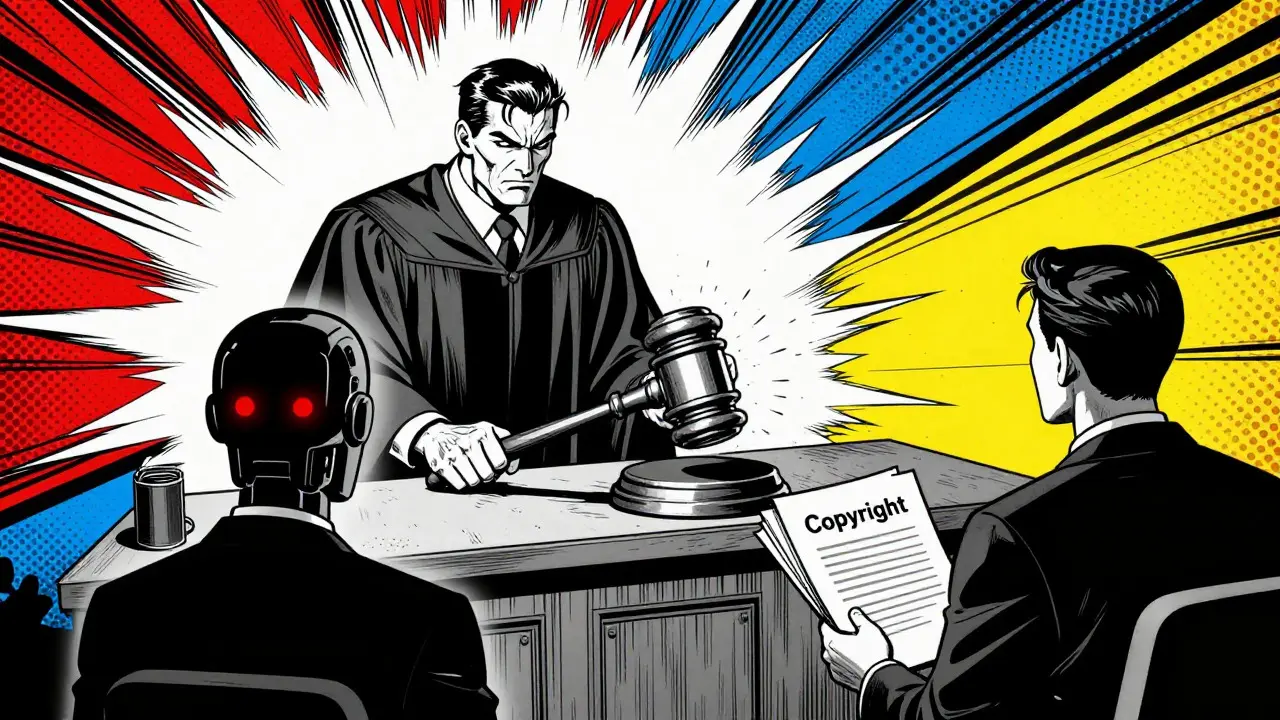
You type a prompt into your favorite Generative AI is a class of machine learning models that create new content like text, images, or code based on patterns learned from vast datasets. tool, hit enter, and get a brilliant image or a perfectly structured paragraph. It feels like magic. But behind that seamless interaction lies a legal minefield that is currently exploding. As we move through 2026, the question isn't just "Can AI do this?" but "Is it legal to have trained on this?" The intersection of copyright law, fair use doctrines, and data provenance has become the most critical operational risk for enterprises deploying artificial intelligence.
The landscape shifted dramatically with the U.S. Copyright Office's May 2025 report on generative AI training. They made one thing clear: copying copyrighted works into training datasets constitutes prima facie infringement. That means unless you have a solid defense-like fair use-or a license, you are technically infringing. For business leaders and developers, this changes everything. You can no longer assume that because data is public on the web, it is free to use. Let's break down how to navigate this complex terrain without getting sued or stifling innovation.
Understanding the Core Conflict: Training vs. Output
To understand the risk, you first need to separate two distinct phases: training the model and generating the output. These are treated differently under current legal frameworks.
When you train an AI model, you feed it millions of books, articles, images, and code snippets. The U.S. Copyright Office notes that this ingestion satisfies the basic elements of an infringement claim: ownership and copying. However, many developers argue this falls under Fair Use Doctrine is a legal principle in the United States that allows limited use of copyrighted material without permission for purposes such as criticism, comment, news reporting, teaching, scholarship, or research.. This doctrine relies on four factors: purpose, nature, amount, and market effect.
- Purpose: Is it commercial or educational? Non-profit research leans heavily toward fair use.
- Nature: Is the original work creative (like a novel) or factual? Creative works get stronger protection.
- Amount: Did you copy the whole book? In AI training, yes. This usually weighs against fair use unless the purpose is highly transformative.
- Market Effect: Does the AI output replace the need to buy the original work?
Cases like Authors Guild v. Google (2015) set a precedent where mass scanning was deemed fair use because it was transformative and didn't substitute the book. But generative AI is different. If your model spits out a paragraph that looks exactly like a New York Times article, you might be creating a market substitute. The U.S. Supreme Court's 2023 decision in Andy Warhol Foundation v. Goldsmith reinforced that even transformative uses can fail if they harm the market value of the original work.
The Human Authorship Requirement
Here is another curveball: who owns the AI-generated output? As of 2026, the answer remains strict. Only humans can hold copyright. The U.S. Copyright Office has consistently stated that works created by a machine without human authorship are not eligible for protection. This was reaffirmed in cases like Thaler v. Perlmutter (2023).
This means if you generate an image using Midjourney or Stable Diffusion and submit it for copyright registration, you must disclose the AI involvement. You can only register the parts you creatively selected, arranged, or modified. If you leave the AI output untouched, it enters the public domain immediately. For companies building IP portfolios, this is a massive constraint. You need workflows where human editors significantly alter AI drafts to ensure those final products are protectable.
Licensing: The Safer Path Forward
Because fair use is a defense you argue in court after being sued, many organizations are moving toward proactive licensing. It’s expensive, but it buys peace of mind. We’ve seen high-profile deals reshape the industry. OpenAI partnered with Shutterstock in 2022, licensing their image library for training while sharing revenue with contributors. Similarly, the Associated Press and Axel Springer signed multi-year deals with OpenAI in 2023.
These agreements typically follow three pricing models:
- Flat-Fee Licenses: A large upfront payment (often six to eight figures) for access to a dataset for a set period.
- Usage-Based Models: Fees tied to the number of API calls or training runs.
- Revenue Sharing: Rights holders get a percentage (usually 5-20%) of income generated by features using their content.
If you are an enterprise, look for providers offering indemnification. Microsoft’s Copilot Copyright Commitment, for example, promises to defend customers against copyright claims arising from outputs, provided they follow specific guidelines. This shifts the financial risk from your balance sheet to the provider’s.
| Strategy | Cost Level | Legal Certainty | Best For |
|---|---|---|---|
| Relying on Fair Use | Low (initially) | Low (high litigation risk) | Startups, non-profits, internal R&D |
| Commercial Licensing | High | High | Enterprises, public-facing products |
| Public Domain/Open Source | Medium (curation costs) | Medium-High | Open-source projects, niche models |
| Synthetic Data Generation | Medium-High | High | Privacy-sensitive sectors like healthcare |
Data Provenance: Your Legal Insurance Policy
If you aren't licensing everything, you must prove where your data came from. Data provenance is the ability to trace every piece of training data back to its source and its license terms. The U.S. Copyright Office and legal experts emphasize that "location does not override ownership." Just because a URL is public doesn't mean it's free to scrape.
Implementing robust provenance tracking involves five key controls:
- Source Audits: Verify copyright status before ingestion. Check for Creative Commons licenses or explicit terms of service.
- Granular Documentation: Keep logs with hashes, timestamps, and chain-of-custody records for every dataset version.
- Data Minimization: Delete non-essential files. Keep only what you need for the model objective.
- License Management: Track expiration dates and scope restrictions (e.g., training vs. display).
- Periodic Reevaluation: Laws change. What was compliant in 2024 might not be in 2027.
Tools like Spawning.ai’s "Have I Been Trained?" allow artists to opt out of datasets. Ignoring these opt-out requests increases liability. Building a clean audit trail now saves you millions in discovery costs later.
Global Regulatory Divergence
Copyright law is not universal. If you operate globally, you face conflicting rules.
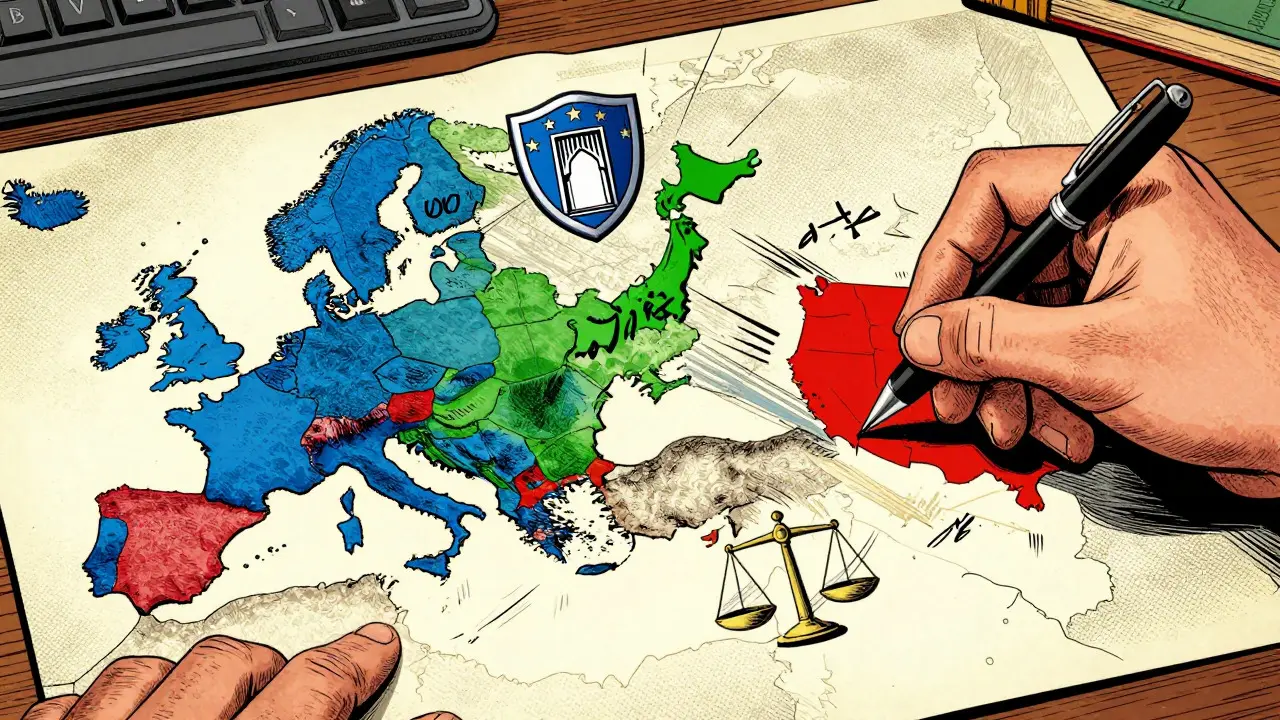
In the European Union, the Digital Single Market (DSM) Directive provides mandatory text-and-data-mining exceptions. Article 4 allows commercial TDM unless rights holders opt out via technical measures like robots.txt. Additionally, the EU AI Act (adopted in 2024) requires providers of general-purpose AI models to publish detailed summaries of copyrighted content used in training. This transparency mandate forces companies to reveal their data sources, making unlicensed scraping harder to hide.
Japan takes a more permissive approach. Article 30-4 of its Copyright Act allows reproduction for data analysis regardless of purpose, as long as it doesn't substitute normal use. This makes Japan a friendly jurisdiction for AI development.
The United Kingdom, however, walked back plans for a broad commercial exception in 2023 due to pressure from creative industries. Commercial AI training there still largely relies on narrower "fair dealing" exceptions or licenses.
This divergence means multinational developers often geo-fence their training operations or maintain separate datasets for different regions. One size does not fit all.
Practical Steps for Enterprise Compliance
So, what should you do today? Here is a checklist for CTOs and legal teams:
- Map Your Data Sources: Categorize data as internal, licensed, public web, or open-source. Assign a risk level to each.
- Restrict Subscription Scraping: Most university or professional database subscriptions explicitly prohibit automated scraping. Violating Terms of Service can breach contract law, independent of copyright.
- Implement Output Filters: Use similarity scanning to detect if your model is regurgitating verbatim text from known corpora. Block prompts likely to elicit copyrighted excerpts.
- Human-in-the-Loop: Treat AI drafts as raw material. Require editorial sign-off for any public-facing content. This establishes the human authorship needed for copyright protection.
- Train Your Teams: Legal and engineering teams must speak the same language. Joint workshops on copyright basics and license compliance are essential.
The goal isn't to stop innovation; it's to build sustainable infrastructure. As the McKinsey report noted, generative AI could add trillions to the global economy. But that value depends on trust. If creators feel robbed, they will litigate, regulate, or withhold data. By prioritizing licensing and provenance, you secure the fuel for your engines while respecting the rights of those who built them.
Is training an AI model on copyrighted data automatically illegal?
Not necessarily, but it is risky. The U.S. Copyright Office states that copying constitutes prima facie infringement, meaning you start guilty until you prove otherwise. You would need to rely on the Fair Use defense, which requires analyzing four factors: purpose, nature, amount, and market effect. If your use is highly transformative and non-commercial, you have a stronger case. If your AI output substitutes the original work commercially, you are at higher risk.
Can I copyright an image generated by Midjourney or DALL-E?
Generally, no, not for the AI-generated part itself. The U.S. Copyright Office requires human authorship. If you generate an image and use it as-is, it enters the public domain. However, if you significantly modify the image using photo editing software or combine it with other elements in a unique way, you may copyright the human-created aspects. You must disclose the AI involvement during registration.
What is the difference between the EU AI Act and U.S. copyright law regarding AI?
The U.S. relies heavily on case law and the flexible Fair Use doctrine, which creates uncertainty. The EU AI Act introduces stricter transparency requirements, forcing providers to publish summaries of copyrighted training data. Additionally, the EU's DSM Directive allows commercial text-and-data mining unless rights holders opt out, whereas the U.S. has no statutory opt-out mechanism for scraping, relying instead on contractual terms and fair use defenses.
How does data provenance help protect my company?
Data provenance creates an audit trail proving where your training data came from and under what license. If sued, you can demonstrate good faith efforts to comply with copyright law. It helps distinguish between accidental inclusion of copyrighted material and willful infringement. Robust provenance includes hashing files, logging timestamps, and verifying license terms before ingestion.
Should I license my training data or rely on fair use?
If you are building a commercial product that competes with original creators (like stock photos or news articles), licensing is safer. It eliminates ambiguity and often includes indemnification. Fair use is better suited for non-profit research, internal tools, or highly transformative applications where the output does not substitute the original market. Many enterprises adopt a hybrid approach, licensing high-risk data while using fair use for lower-risk, public-domain sources.
7 Comments
Brenna Gonedrman
THIS IS ABSOLUTELY TERRIFYING!
I mean, seriously. You just hit enter and boom, you are potentially committing a felony? It feels like the ground is literally crumbling beneath our feet right now. I read that part about the Copyright Office saying copying is infringement and my jaw dropped to the floor. We have been using these tools for years thinking it was fine. Now we are told it is all illegal unless we pay up? That is insane. The whole concept of fair use seems to be vanishing into thin air before our very eyes. It is like walking through a minefield blindfolded. One step wrong and you are done for. Companies are going to panic. Developers are going to cry. And who pays for this mess? Us. The users. The creators. Everyone is losing their minds over this legal nightmare. It is not just a small issue, it is a catastrophe waiting to happen.
Elizabeth Brooks
hey guys i think people are getting way too worked up about this lol. sure its complicated but look at the big picture. most of us are just making memes or writing emails. nobody is suing some random person for training a model on their tweet. the real risk is for the big corps like openai or google. they have the money to settle. for the rest of us, its mostly noise. also the article says public domain data is safer so just use that. dont stress too much. life goes on. tech moves fast and law moves slow. eventually they will figure it out. until then just keep creating stuff. dont let the lawyers scare you off from having fun with ai.
Elisabeth Ballet
Let's channel this energy into action instead of fear!
We have the power to shape this landscape if we stay informed and proactive. The article highlights licensing as a key path forward, and that is where we need to focus our collective attention. If you are building something, start mapping your data sources today. Do not wait for a lawsuit to force your hand. Take control of your narrative by ensuring your provenance is clean. It is not just about avoiding trouble; it is about building trust with your community. When you respect the original creators, you build a stronger ecosystem for everyone. Let's support platforms that offer indemnification and clear terms. Together we can make AI sustainable and ethical. Get those teams talking-legal and engineering need to be best friends. This is our moment to lead the change. Who is ready to audit their datasets?
Joanna Mucha
The banality of this discourse is truly exhausting.
You lot rush in with your simplistic interpretations of "fair use" as if the law were a playground rulebook rather than a complex tapestry of jurisprudential nuance. To suggest that one should merely "map data sources" is to misunderstand the ontological crisis at hand. The machine does not "copy" in the human sense; it hallucinates a new reality based on statistical probabilities. Yet here we are, clinging to the dusty robes of copyright law like children holding onto security blankets in a storm. The elitist view is that true art cannot be replicated by algorithms anyway, so why do we care if the AI infringes? Because the market is fragile. But really, the whole debate reeks of desperation. We are trying to fit a square peg into a round hole while ignoring the fact that the hole itself is dissolving. How quaint.
Kim Edwards
OMG did you see the part about Japan?!
This is literally the plot twist of the century. While we are over here sweating bullets and paying six-figure licenses, Japan is just like "yeah whatever, go ahead and scrape everything." It is absolutely wild. I feel like I am living in a dystopian novel where the rules change every five minutes. First it was okay, then it wasn't, now it depends on which country you live in? My head hurts just thinking about it. And don't even get me started on the EU. They want transparency? Sure, give me a headache instead. It is a complete circus. I bet the lawyers are laughing all the way to the bank while the rest of us try to figure out if our prompt is a crime. Total chaos. I might just move to Tokyo if they let me.
Deb Kortyna, MBA
It is imperative that organizations cease treating compliance as an afterthought.
The divergence in global regulatory frameworks necessitates a sophisticated approach to data governance. Relying solely on the notion that "public means free" is a strategic error of monumental proportions. As noted in the text, the Digital Single Market Directive in the EU provides specific exceptions, yet these are contingent upon technical opt-out mechanisms. Conversely, the United States relies on the fluidity of Fair Use, which offers little certainty in litigation. Therefore, enterprises must implement rigorous source audits and granular documentation protocols immediately. Failure to maintain a verifiable chain of custody for training data exposes the firm to significant liability. Indemnification clauses from providers such as Microsoft are valuable, but they are not a panacea for poor internal practices. One must assume that every byte of data ingested carries a potential claim. Precision in license management is not optional; it is existential.
Courtney Wagstaff
I guess we are just gonna have to dance around the landmines now huh?
Kinda funny how the magic trick got replaced by a bunch of paperwork. I used to love just typing prompts and seeing what popped up without worrying if I stole a soul or a sentence. Now I gotta check the license tags on my imagination? Sounds like a drag. But hey, if it keeps the lights on for the artists, maybe it is worth the hassle. Just wish it was less scary and more chill. Maybe synthetic data is the way to go? Make up your own facts so nobody gets mad. Wild times.