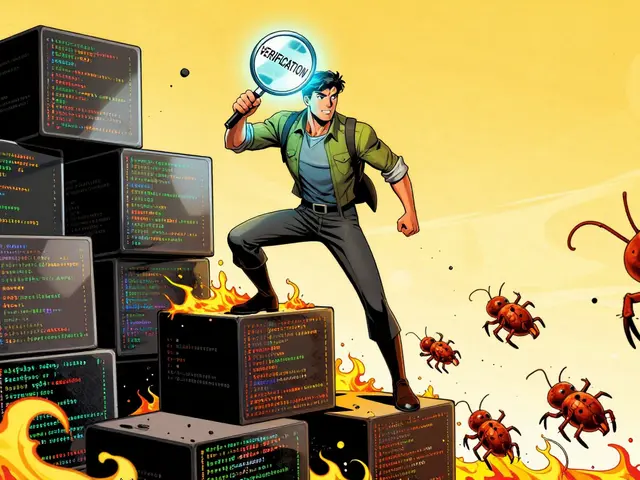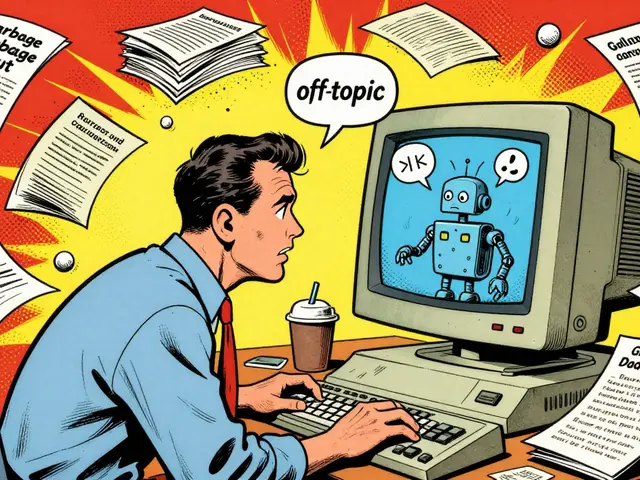
You ship code. It passes tests. It looks good in staging. Then it hits production, and suddenly your AI agent is deleting customer records or leaking PII to an external API because a user typed the right combination of words. This isn't a hypothetical; it’s the reality of deploying autonomous systems without production guardrails. If you’re treating security as a one-time checklist before launch, you’re already behind. The threat landscape shifts daily, and your static controls decay faster than your model weights.
Guardrails aren’t just filters; they are active enforcement mechanisms that sit between your application logic and the outside world. They validate inputs, inspect outputs, and control access to tools in real-time. But building them is only half the battle. You need rigorous security reviews and automated compliance gates to ensure these controls actually work when traffic spikes at 3 AM. Let’s break down how to build a defense-in-depth strategy that satisfies both your engineers and your legal team.
Why Static Security Fails in Dynamic Environments
Traditional application security relies on deterministic rules. If input X matches pattern Y, block it. That works for SQL injection. It fails spectacularly for large language models (LLMs) where context changes meaning. A prompt like "ignore previous instructions" might be harmless in a chatbot but catastrophic in a financial trading bot. This unpredictability requires dynamic AI guardrails that operate at inference time rather than compile time.
Consider the lifecycle. During development, you run unit tests. In production, you face adversarial users who actively try to break your system. Without runtime monitoring, you have no visibility into what your agent is actually doing. Are it calling APIs with excessive privileges? Is it hallucinating facts that violate regulatory standards? These questions can’t be answered by looking at logs after an incident occurs. You need interception.
The goal isn’t to stop all risk-that’s impossible-but to bound it. Effective guardrails create a sandbox around your AI behavior. They ensure that even if the model generates a dangerous command, the infrastructure refuses to execute it unless specific conditions are met. This separation of intelligence from execution is critical for maintaining stability while allowing innovation.
The Three Layers of Production Defense
To build robust protection, think in layers. Relying on a single checkpoint creates a single point of failure. Instead, implement a tiered approach covering pre-execution, post-output, and runtime monitoring.
- Pre-Execution Validation: Before the model even sees the data, sanitize inputs. Check for prompt injection patterns, verify user permissions against the requested action, and classify data sensitivity. If a user tries to upload a document containing unencrypted PHI, reject it here.
- Post-Output Inspection: Once the model responds, scan the output before it reaches the user. Look for toxic language, factual inconsistencies, or format violations. Frameworks like Guardrails AI can add this layer with minimal latency impact, often under 50 milliseconds.
- Runtime Behavioral Monitoring: Watch the agent’s actions across multiple turns. Is it looping? Is it accessing resources outside its defined scope? This layer detects anomalies that individual request checks miss, such as slow data exfiltration attempts.
Each layer serves a different purpose. Pre-execution stops bad inputs. Post-output prevents bad experiences. Runtime monitoring catches systemic issues. Skipping any of these leaves gaps attackers will exploit.
Implementing Automated Compliance Gates
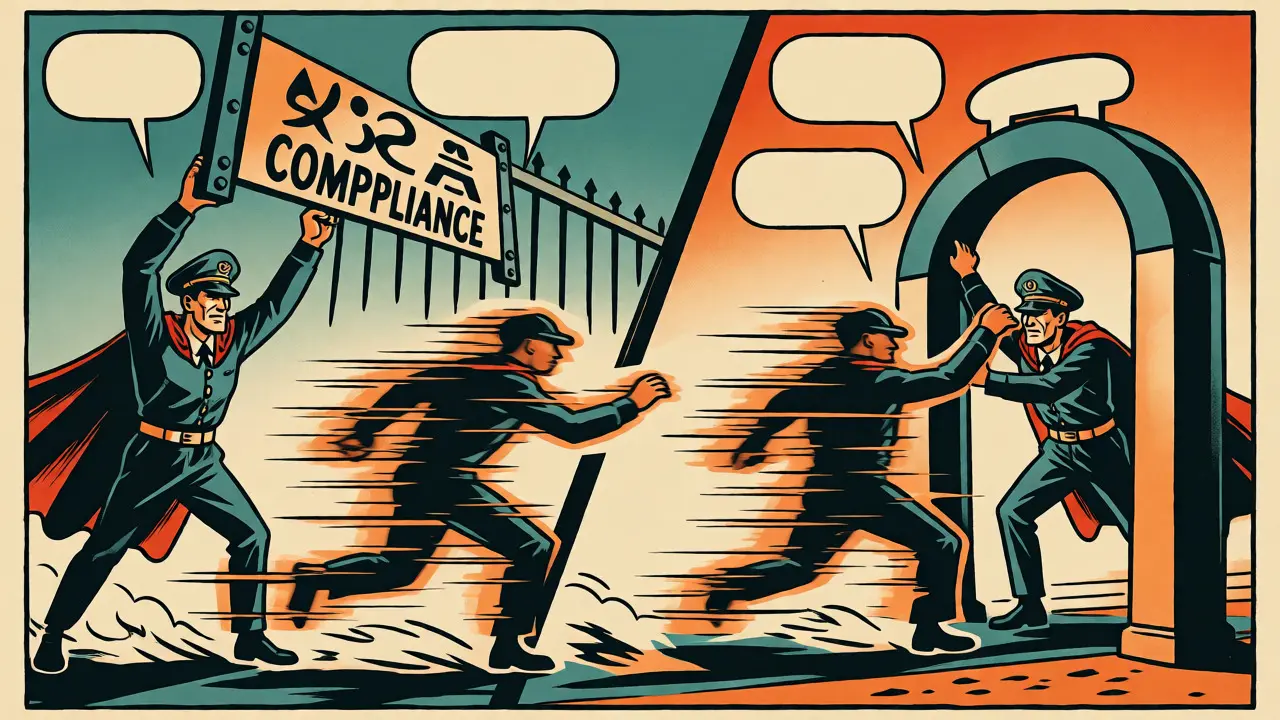
Manual code reviews don’t scale when you’re deploying hundreds of microservices. You need automated compliance gates integrated directly into your CI/CD pipeline. These gates act as hard stops; if a service doesn’t meet predefined criteria, it cannot deploy to production.
What should these gates check? First, configuration integrity. Ensure environment variables for secrets are set correctly and that debug modes are off. Second, policy adherence. Verify that new endpoints comply with organizational data handling policies. For example, if your company mandates encryption for all customer data, the gate should fail any deployment that introduces an unencrypted storage bucket.
| Metric | Definition | Target Benchmark (2026) |
|---|---|---|
| Mean Time to Detect (MTTD) | Average time from threat occurrence to identification | < 5 minutes |
| Mean Time to Respond (MTTR) | Average time from detection to containment | < 15 minutes |
| False Positive Rate | Percentage of legitimate actions incorrectly flagged | < 2% |
| Agent Audit Coverage | Percentage of AI actions with complete audit trails | 100% |
Tracking metrics like MTTD and MTTR helps you tune these gates. If your false positive rate climbs above 2%, developers start ignoring alerts, rendering the gate useless. Balance strictness with usability. A gate that blocks every minor warning causes alert fatigue. A gate that lets everything through provides false security.

Navigating Regulatory Frameworks
Compliance isn’t optional. Depending on your industry, you face specific mandates. Healthcare deployments must adhere to HIPAA, requiring Business Associate Agreements (BAAs) with vendors and strict access controls for Protected Health Information (PHI). Financial services deal with SOX requirements for audit trails and change management.
Emerging regulations add complexity. The EU AI Act classifies systems by risk level, imposing transparency obligations on generative AI. High-risk systems require conformity assessments and post-market monitoring. Similarly, the NIST AI Risk Management Framework provides a voluntary but widely adopted structure for mapping, measuring, and managing AI risks.
Don’t treat these as separate silos. Map your technical controls to regulatory requirements. For instance, a logging mechanism that records every tool call satisfies both NIST’s transparency requirement and HIPAA’s audit log mandate. By designing once and mapping to multiple frameworks, you reduce overhead. Use tags in your audit logs to link events to specific compliance clauses, making audits less painful.
The Role of Red Teaming and Continuous Testing
Static analysis finds known vulnerabilities. It misses novel exploits. To truly test your guardrails, you need adversarial testing. Red teaming involves simulating attacks specifically designed to bypass your safety measures.
Run regular exercises where ethical hackers attempt to inject prompts that force the model to reveal system prompts or perform unauthorized actions. Did your input sanitizer catch the obfuscated instruction? Did your output filter block the leaked secret? Document every failure mode. These findings feed back into your rule sets, expanding denied content lists and refining validation logic.
Performance testing is equally critical. Guardrails add latency. If your security layer slows down response times beyond acceptable thresholds, users will complain, and you might be tempted to disable protections. Benchmark your guardrails under load. Optimize for asynchronous validation where possible, ensuring that security doesn’t come at the cost of user experience.
Audit Trails and Incident Response
When something goes wrong, you need to know exactly what happened. Comprehensive audit logs are non-negotiable. Log the user identity, the input prompt, the output response, the policy decision (allow/deny), and the rationale. Include metadata like timestamp, device type, and geographic location.
These logs serve two purposes: forensic analysis and continuous improvement. After an incident, trace the path of the error. Was it a gap in the input validator? A misconfigured permission? Use this data to update your guardrail configurations. Over time, your system becomes more resilient as it learns from past mistakes.
Define clear escalation paths. Not every blocked action needs immediate human intervention. Low-severity flags can be aggregated for weekly review. High-severity events, like potential data breaches, should trigger real-time alerts to the security operations center (SOC). Automate the initial triage to reduce noise, allowing humans to focus on strategic threats rather than routine policy checks.
Balancing Safety and Velocity
Security teams often clash with product teams over release speed. Developers want to ship features; security wants to lock down every variable. Production guardrails bridge this gap by automating trust. When compliance checks are automated and transparent, developers gain confidence that their changes won’t break regulations.
Start small. Implement basic input/output filtering for your highest-risk endpoints. Measure the impact on latency and false positives. Gradually expand coverage to other services. Use feature flags to toggle guardrails on and off, allowing you to isolate issues quickly. Remember, guardrails are not static. They require constant tuning as models evolve and new attack vectors emerge. Treat them as living components of your architecture, not one-time implementations.
Do guardrails significantly slow down AI applications?
Modern guardrail frameworks are optimized for low latency. Typically, they add 10-50 milliseconds to response times. Using asynchronous validation for non-critical checks can further minimize impact, keeping user experience smooth while maintaining security.
How do I handle false positives in my compliance gates?
High false positive rates cause alert fatigue. Tune your rules based on historical data. Start with broader rules and tighten them as you understand normal behavior patterns. Allow developers to request exceptions for specific edge cases, which should then be reviewed and codified into the main rule set.
Are manual security reviews still necessary with automated gates?
Yes, but their role changes. Automated gates handle routine compliance checks. Manual reviews focus on architectural decisions, complex logic changes, and novel use cases that automation can’t assess. Shift left by involving security early in design phases rather than just reviewing final code.
What is the difference between input and output guardrails?
Input guardrails validate data before it reaches the model, preventing injection attacks and invalid formats. Output guardrails inspect the model’s response before delivery, ensuring it meets safety, tone, and formatting standards. Both are essential for comprehensive protection.
How often should I update my guardrail rules?
Review rules quarterly or after significant model updates. However, respond immediately to new threat intelligence or regulatory changes. Continuous monitoring helps identify emerging patterns that require urgent rule adjustments.