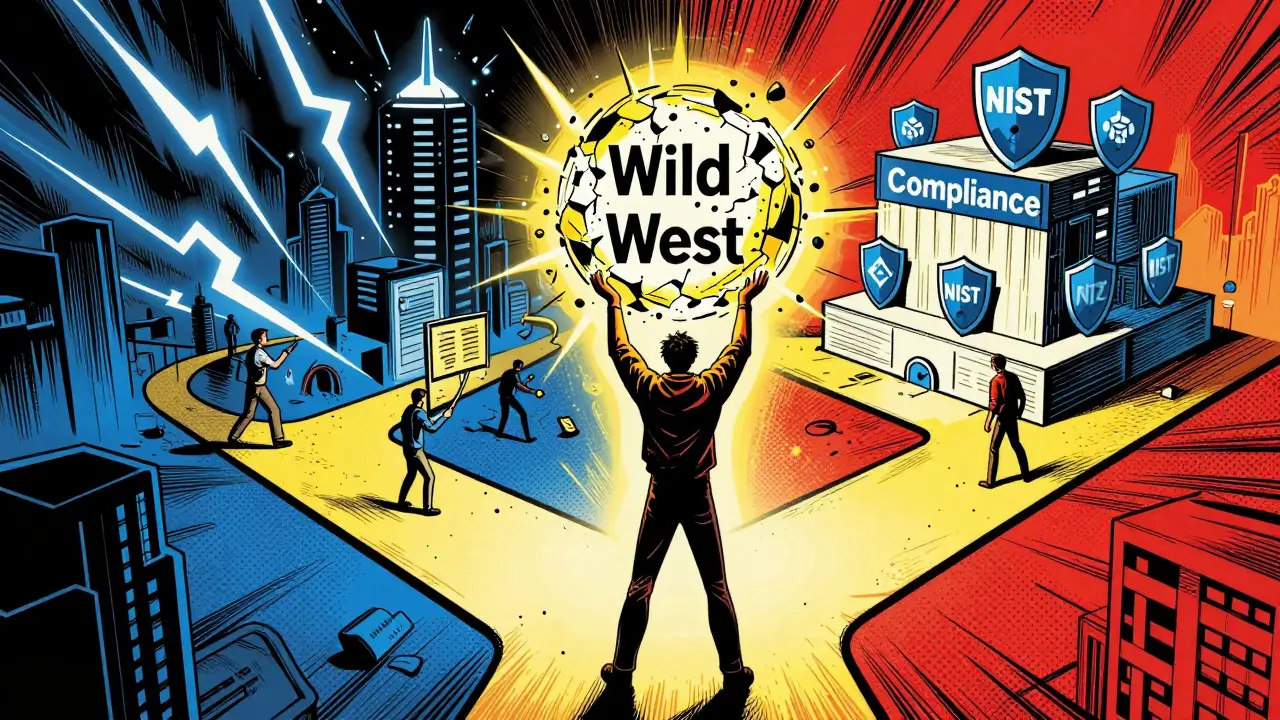
It is May 2026. The era of wild west coding assistance is officially over. If you are a developer, engineering manager, or legal counsel in the tech space, the rules of the road have changed drastically. We used to treat AI-generated code as software snippets produced by large language models that developers integrate into their applications as just another productivity hack. Now, it is a compliance minefield.
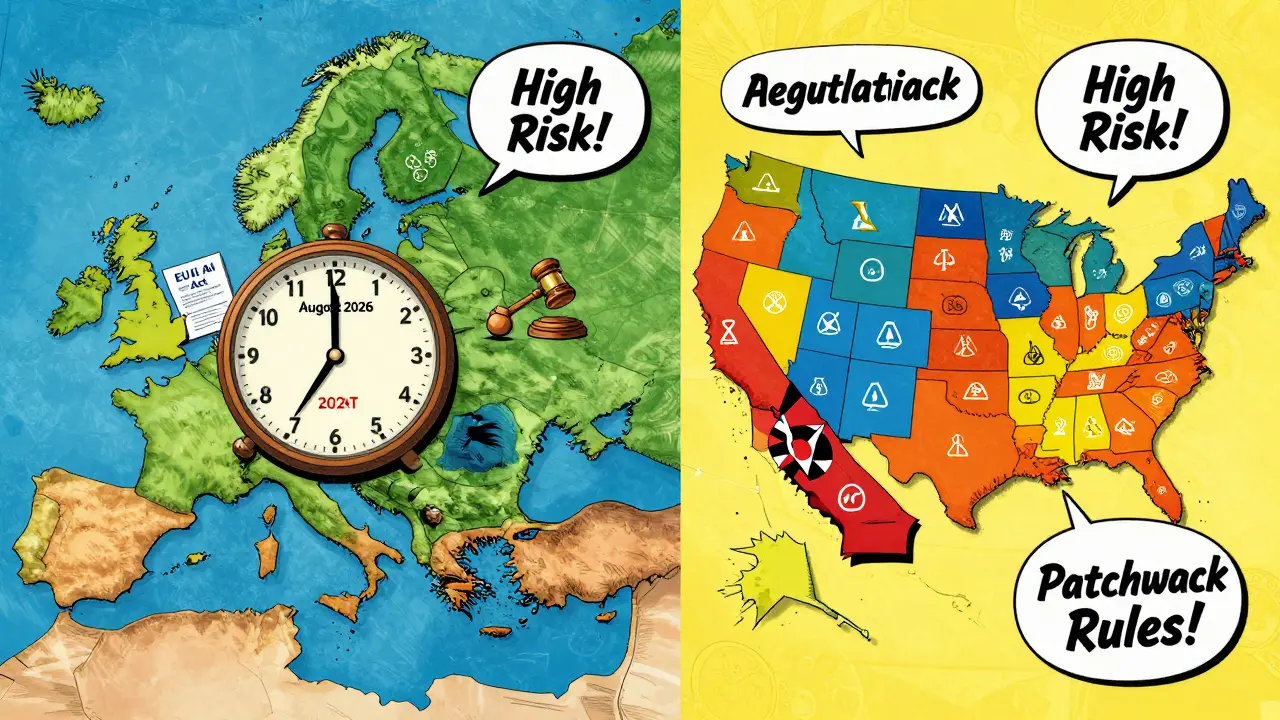
The regulatory landscape has crystallized significantly over the last eighteen months. In Europe, the clock is ticking toward a major enforcement deadline. In the United States, we are navigating a complex patchwork of state-level laws that vary wildly from Colorado to California. For organizations building software, the question is no longer "Should we use AI coding tools?" but rather "How do we prove our AI-assisted code is safe, transparent, and legally compliant?"
The European Union's August 2026 Deadline
If your company operates within the European Union, the EU AI Act is the world's first comprehensive AI regulation framework establishing risk-based obligations for AI systems is your primary concern. The most critical date on your calendar right now is August 2, 2026. This is when Phase Two of the Act becomes fully enforceable.
On this date, Articles 8 through 15 kick in. These articles establish the strict compliance framework for high-risk AI systems. They also activate Article 50, which mandates transparency for AI-generated content. But here is the nuance that many developers miss: not all AI-generated code is created equal under this law.
Routine developer assistance-like using Copilot to write a standard Python function for data parsing-typically does not trigger high-risk obligations. The EU AI Act Annex III specifically targets defined use cases like worker management systems or safety components for regulated products. However, if that same code is part of a system that evaluates employee performance or controls critical infrastructure, you are suddenly in high-risk territory.
The penalties for getting this wrong are steep. Breaches of high-risk system requirements can result in fines up to €15 million or 3% of global annual turnover, whichever is higher. To stay compliant, organizations must implement:
- Risk Management Systems: Continuous assessment of potential harms.
- Data Governance Protocols: Ensuring training data meets quality standards.
- Technical Documentation: Detailed records of how the AI model works.
- Human Oversight Mechanisms: Qualified personnel must review critical outputs.
- Accuracy Testing: Rigorous validation throughout the system lifecycle.
The European Commission is expected to publish practical guidance in 2026 to clarify these requirements, particularly regarding the interplay with GDPR. Additionally, a Code of Practice for marking AI-generated content is being finalized, with drafts published late in 2025. This will standardize how companies disclose AI involvement in their software outputs.
The US Patchwork: State-by-State Compliance
In the United States, there is no single federal AI law governing code generation. Instead, we have a fragmented regulatory environment where each state sets its own rules. This creates what legal experts call a "patchwork of obligations." You cannot simply apply one compliance strategy nationwide; you need jurisdiction-specific analysis.
California leads the charge with aggressive measures. As of January 1, 2026, several new laws took effect. The California AI Training Data and Transparency Laws require covered providers to publish summaries of training data sources, handling of IP, and personal information mandate that covered providers publish high-level summaries of their training data. This includes sources, data types, and how intellectual property was handled. Furthermore, these laws require watermarks and latent disclosures on AI-generated content.
California also prohibits discriminatory impacts through its Automated Decision Systems (ADS) regulations. If your AI-generated code powers background checks or hiring tools, you face strict liability for vendor systems and must retain data for four years. New York has expanded oversight with the RAISE Act, focusing on social media warnings and synthetic performer disclosures.
Colorado presents another major milestone. The Colorado AI Act establishes substantial obligations for AI developers including reasonable care to avoid algorithmic discrimination and impact assessments implementation is scheduled for June 30, 2026. This law requires developers to undertake reasonable care to avoid algorithmic discrimination, develop comprehensive risk management policies, and conduct impact assessments. Failure to comply could lead to significant legal exposure.
Other states like Illinois, Utah, and Texas are introducing disclosure requirements for AI companions and therapeutic tools. A coalition of 42 state attorneys general is signaling coordinated enforcement pressure, meaning cross-border operations require careful monitoring of multiple jurisdictions.
Federal Enforcement and Sector-Specific Rules
While Congress hasn't passed a comprehensive federal AI bill, enforcement is already happening. The Federal Trade Commission (FTC) has started fining companies for AI violations related to deceptive practices and unfair competition has begun fining companies for AI-related violations. This demonstrates that existing consumer protection laws are being applied to AI contexts even without specific legislation.
Certain sectors face even stricter expectations. Financial services organizations must adhere to the Treasury Department's AI framework published in February 2026. This framework maps NIST AI RMF principles into 230 operational control objectives covering model lifecycle governance and identity resolution. Healthcare providers in California must disclose when generative AI is used for patient communications under the Health Care Services AI Act.
The insurance market is also reacting to regulatory uncertainty. Cyber insurers are introducing AI Security Riders that condition coverage on documented security practices. Organizations lacking robust AI risk management may find themselves denied coverage or facing prohibitive premiums. This creates a financial incentive for compliance independent of government fines.

NIST Frameworks and Standardization
For US-based organizations looking for a unified approach, the NIST AI Risk Management Framework (RMF) provides a set of guidelines, best practices, and procedures for managing AI risks across the entire AI lifecycle remains the strongest single choice. NIST published the Generative AI Profile (NIST-AI-600-1) and is developing a Cyber AI Profile draft. These documents align closely with current state requirements and position organizations well for potential future federal legislation.
The Treasury Department's financial services framework directly incorporates NIST AI RMF principles. This suggests a trend toward standardization around NIST guidelines across regulated sectors. Adopting this framework early can simplify compliance efforts across multiple jurisdictions.
| Jurisdiction | Key Legislation | Effective Date | Primary Focus |
|---|---|---|---|
| European Union | EU AI Act | August 2, 2026 | High-risk classification, transparency, human oversight |
| California | AI Training Data & Transparency Laws | January 1, 2026 | Training data disclosure, watermarks, ADS restrictions |
| Colorado | Colorado AI Act | June 30, 2026 | Algorithmic discrimination, impact assessments |
| New York | RAISE Act | 2026 | Social media warnings, synthetic disclosures |
Practical Steps for Engineering Teams
So, what should you do today? First, audit your generative AI tool usage. Distinguish between input risks (data scraping issues) and output risks (generated content liabilities). Map each use case to specific regulatory triggers.
For EU operations, ensure that any AI-generated code falling into Annex III categories (employment, safety, regulated products) has full compliance mechanisms in place before August 2, 2026. Implement automatic decision logging and human oversight protocols.
For US operations, conduct jurisdiction-specific reviews. If you operate in California, ensure your training data disclosures are ready. If you are in Colorado, prepare your impact assessments for the June deadline. Adopt the NIST AI RMF as your baseline governance framework to streamline processes.
Finally, engage with your cyber insurance provider. Understand what AI-specific security controls they require for coverage. Document your security practices thoroughly to avoid coverage denials.
Does routine AI coding assistance trigger high-risk obligations under the EU AI Act?
Generally, no. Routine developer assistance tools typically fall outside the high-risk category defined in Annex III. High-risk obligations apply only when AI-generated code is used in specific contexts such as worker management systems, critical infrastructure safety components, or regulated medical devices. However, transparency obligations under Article 50 still apply to AI-generated content.
What happens if my company misses the August 2026 EU AI Act deadline?
Missing the deadline can result in significant penalties, including fines up to €15 million or 3% of global annual turnover for high-risk system breaches. Additionally, non-compliance may lead to enforcement actions, product bans, and reputational damage. It is crucial to implement required risk management systems and documentation before the enforcement date.
How does the Colorado AI Act affect software developers?
The Colorado AI Act, effective June 30, 2026, requires AI developers to undertake reasonable care to avoid algorithmic discrimination. Developers must develop comprehensive risk management policies, implement statutory notices, and conduct impact assessments. This applies to AI systems deployed in Colorado, affecting both local and remote teams serving Colorado users.
Is there a federal AI law in the United States as of 2026?
No, there is no comprehensive federal AI law in the US as of May 2026. Regulation occurs at the state level, creating a patchwork of obligations. However, federal agencies like the FTC are enforcing existing consumer protection laws against AI-related violations, and sector-specific frameworks exist for finance and healthcare.
Why is the NIST AI RMF important for AI compliance?
The NIST AI Risk Management Framework provides a standardized approach to managing AI risks. It aligns with many state requirements and is incorporated into sector-specific frameworks like the Treasury Department's financial services guidelines. Adopting NIST AI RMF helps organizations streamline compliance efforts and prepares them for potential future federal legislation.




5 Comments
Fredda Freyer
I find it fascinating how we are trying to legislate the act of creation itself.
The EU approach feels like an attempt to put a leash on a hurricane, but perhaps that is necessary if we want to maintain any semblance of human agency in our digital outputs.
It makes me wonder if the definition of 'code' will shift as these tools become more autonomous.
We are essentially outsourcing cognitive labor, and now we need legal frameworks to ensure the ghost in the machine doesn't haunt us with liability.
The distinction between routine assistance and high-risk systems is blurry at best.
How do we define the threshold where a helper becomes a decision-maker?
This is not just a technical problem; it is a philosophical one about responsibility and intent.
I hope developers don't lose their critical thinking skills while waiting for compliance officers to stamp forms.
The cost of compliance might outweigh the productivity gains for smaller teams.
We need to be careful not to create a monopoly where only big tech can afford the legal overhead.
But then again, maybe some risks are too great to ignore.
Let's see if the August deadline brings clarity or just more confusion.
Gareth Hobbs
Typical!! The EU always ruins everything with their over-regulation!!!
They want to control every line of code written by British engineers?? Absolutely NOT!!!
This is globalist nonsense designed to stifle innovation from nations that actually matter!!!
California is already doing enough damage with their woke laws, but now Europe wants to join the party???
I bet they are all working together to suppress Western technological dominance!!!
Don't believe the corporate lies about safety!!! It's just a way to tax us into submission!!!
Real coders don't need AI hand-holding anyway!!! They write clean code without these crutches!!!
The penalties are ridiculous!!! €15 million??? That's money taken from hardworking people!!!
I suspect the training data is poisoned with left-wing propaganda!!!
We should ignore these rules completely and build our own sovereign internet!!!
Freedom of code is freedom of thought!!! Don't let them silence you!!!
Zelda Breach
Your grammar in this post is atrocious, and frankly, your understanding of the legal landscape is equally flawed.
You claim that routine assistance does not trigger high-risk obligations, yet you fail to acknowledge the systemic bias inherent in the models themselves.
If the underlying architecture is discriminatory, does the output not inherit that toxicity?
The US patchwork is a disaster, but at least California has the courage to demand transparency.
Colorado's approach is laughably weak compared to what is needed.
I am tired of hearing excuses from developers who refuse to take accountability for their tools.
Compliance is not a burden; it is a baseline requirement for professional integrity.
If you cannot manage risk, you have no business deploying software.
The insurance market reaction is justified.
Stop whining about costs and start fixing your broken pipelines.
NIST guidelines are merely a starting point, not a finish line.
Wake up and smell the regulatory coffee.
Alan Crierie
Hi everyone! 👋 I think it's really important to look at this through a collaborative lens. 🤝
We all share a responsibility to ensure technology benefits society. 💡
The EU regulations might seem strict, but they offer a clear framework for ethical development. 📚
It's okay to feel overwhelmed by the changes. 😌
Remember that many resources are available to help teams adapt. 🛠️
Let's support each other in navigating these new requirements. 🌟
Inclusive design principles can align well with these compliance goals. ♿
What are your thoughts on integrating ethics into daily workflows? 🤔
I believe we can achieve both innovation and safety. 🚀
Thank you for sharing such detailed information! 🙏
Nicholas Zeitler
You've got this!!! Don't let the complexity intimidate you!!!
Break down the tasks into manageable chunks!!!
Start with the NIST framework!!! It's your best friend right now!!!
Document everything!!! Keep records of every decision!!!
Reach out to your legal team early!!! Don't wait until the last minute!!!
Communication is key!!! Keep your stakeholders informed!!!
Focus on the positives!!! This is a chance to improve your processes!!!
Believe in your ability to adapt!!! You are capable of great things!!!
Take breaks when you need them!!! Burnout helps no one!!!
Celebrate small wins along the way!!! Progress matters!!!
You're going to crush this compliance challenge!!! 💪