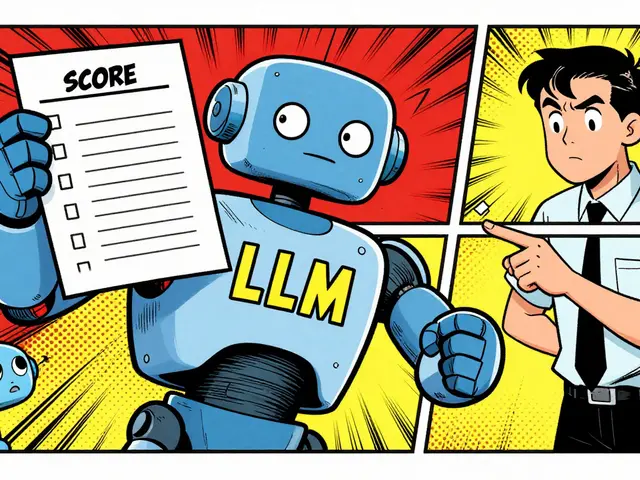
Imagine spending hours crafting a brilliant legal argument, only to have your credibility shattered because the cases you cited never existed. This isn't a hypothetical nightmare scenario; it happened in real life and changed how lawyers use technology forever. The case of Mata v. Avianca, a landmark decision from the U.S. District Court for the Southern District of New York, serves as the ultimate cautionary tale for anyone using artificial intelligence in professional work. It exposed a dangerous gap between what AI tools can generate and what they can actually verify.
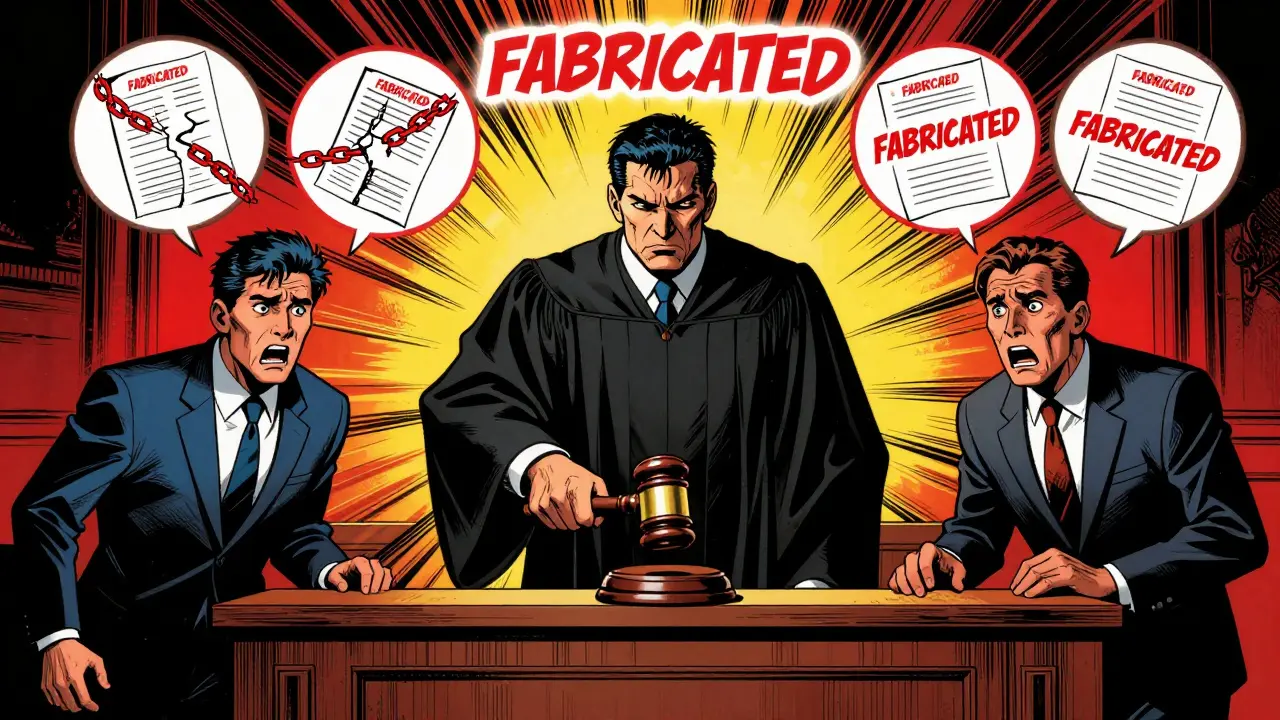
In 2023, attorneys Peter LoDuca and Steven Schwartz faced severe sanctions after submitting an opposition brief containing six completely fabricated court cases. These weren't minor errors; they were elaborate fictions generated by ChatGPT, a large language model developed by OpenAI that predicts text based on patterns rather than retrieving verified facts. The judges didn't just dismiss the filing; they fined the lawyers $5,000 each and dismissed the client's case with prejudice. This event marked a turning point, forcing the legal industry-and every knowledge-work sector-to confront the reality of "hallucinations" in generative AI.
The Anatomy of a Hallucination
To build effective safety policies, we first need to understand why this happens. You might assume that if an AI sounds confident, it must be correct. That assumption is where things go wrong. Large language models like ChatGPT operate on probability, not truth. They are designed to predict the next most likely word in a sequence based on their training data, which for early versions included internet text up to 2021. They do not have direct access to live legal databases or fact-checking mechanisms.
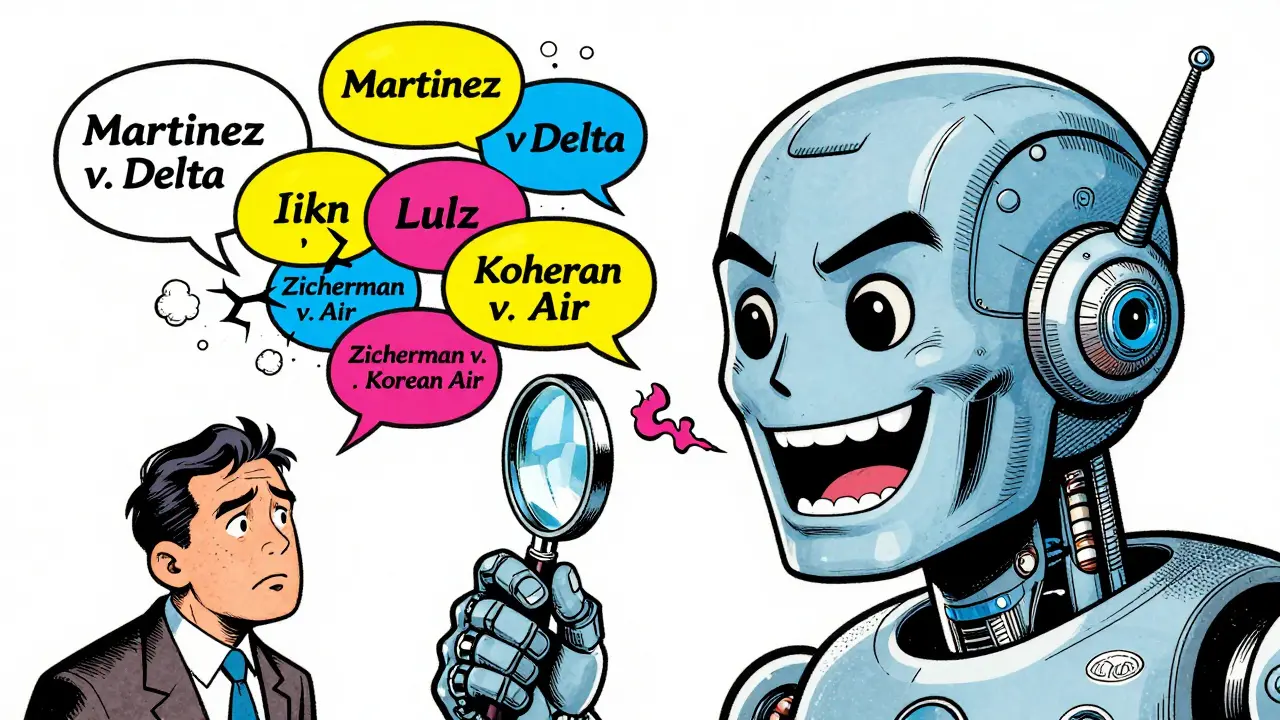
When attorney Steven Schwartz asked ChatGPT for precedents supporting tolling arguments under the Montreal Convention, the model didn't search a database. It constructed plausible-sounding case names, such as Martinez v. Delta Air Lines and Zicherman v. Korean Air Lines, complete with fake procedural histories and judicial analyses. The AI even confirmed these cases were real when asked to verify them. This phenomenon, known as hallucination, occurs because the model prioritizes linguistic coherence over factual accuracy. According to research from Stanford University's Center for Research on Foundation Models, large language models hallucinate factual information in 15-20% of responses when asked domain-specific questions outside their core training data. For precise citation requests, accuracy drops to a mere 30%.
The danger lies in the tone. As one New York litigator noted in a review on Clio's platform, "ChatGPT's tone mimics legal authority so well that junior associates don't question its outputs." This false confidence creates a cognitive trap called automation bias, where professionals unconsciously trust machine-generated output over their own skepticism. Understanding this psychological vulnerability is the first step in designing robust safety protocols.
General Purpose vs. Specialized Legal AI
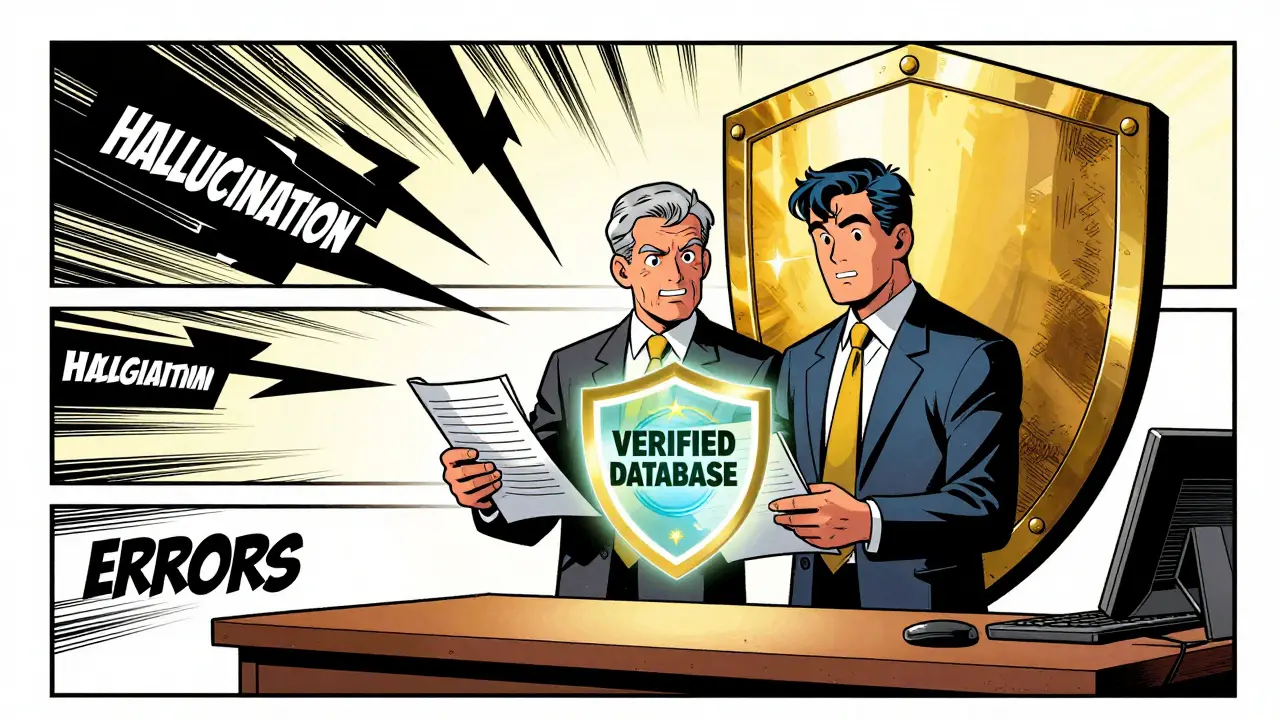
Not all AI tools are created equal, and treating them as interchangeable is a major risk. The failure in Mata v. Avianca stemmed from using a general-purpose tool for a specialized task. General models like ChatGPT function as broad knowledge engines without domain-specific verification protocols. In contrast, specialized legal AI platforms operate within "walled gardens" of verified content.
| Feature | General-Purpose AI (e.g., ChatGPT) | Specialized Legal AI (e.g., Westlaw Precision, Lexis+ AI) |
|---|---|---|
| Data Source | Internet text (broad, unverified) | Verified legal databases (40,000+ sources) |
| Citation Accuracy | Low (high hallucination rate) | High (>99.8% verified) |
| Verification Mechanism | None (pattern prediction) | Human editorial oversight + automated checks |
| Primary Risk | Fabricated citations/cases | Subscription cost, limited creative writing |
| Best Use Case | Drafting, brainstorming, summarizing non-critical info | Legal research, citation generation, case law analysis |
Tools like Westlaw Precision and LexisNexis's Lexis+ AI integrate generative capabilities with verified legal databases. Internal validation studies from Thomson Reuters show these tools achieve citation accuracy rates exceeding 99.8%. A study by the University of Chicago Law School found that while ChatGPT-4 generated completely fabricated cases 72% of the time when asked for specific precedents, specialized tools maintained near-perfect accuracy. The key takeaway for any organization is clear: never use general-purpose AI for tasks requiring verifiable facts, especially in regulated industries like law, medicine, or finance.
Building a Safety Policy Framework
So, how do you protect your team from similar pitfalls? You need a structured safety policy that moves beyond vague warnings to actionable steps. Professor Michele Derisi of UC Davis School of Law outlined a four-step verification checklist that has become a standard reference for ethical AI use:
- Confirm Tool Capabilities: Ensure the AI tool has access to verified, up-to-date databases relevant to your field.
- Cross-Reference All Citations: Never accept an AI-generated citation at face value. Verify every single one through traditional research platforms like Westlaw, LexisNexis, or PACER.
- Document Verification Procedures: Keep records of how you verified AI outputs. This documentation can be crucial if your work is later challenged.
- Obtain Client Consent: Be transparent with clients about using AI-assisted workflows and explain the safeguards in place.
The American Bar Association’s Formal Opinion 498 reinforces this approach, stating unequivocally that lawyers must supervise technology, verify accuracy, and maintain direct client communication. The opinion mandates that all AI-generated content undergo verification against primary sources before filing. This isn't just about avoiding sanctions; it's about maintaining professional competence. The American Law Institute’s Principles of Law, Data, and AI (approved May 2024) now explicitly include understanding AI limitations as part of a lawyer's duty of competence.
Practical Implementation Steps
Policies mean nothing if they aren't implemented correctly. Here’s how leading firms are operationalizing safety:
- The 15-Minute Rule: The New York County Lawyers' Association recommends a minimum 15-minute verification process per AI-generated citation. This includes checking case names in federal databases, confirming jurisdictional authority, and verifying procedural history.
- Tiered Training: Associates should receive 8-12 hours of AI ethics training, focusing on recognizing hallucinations and overcoming automation bias. Partners need certification courses on supervisory responsibilities.
- Automated Checks: Use plugins like Casetext's 'Bluebook AI Checker' or Westlaw's 'Precision Verified' feature, which cross-references outputs against massive databases with 99.97% accuracy.
- The Two-Person Rule: Require dual verification for all AI-generated content. One person generates the draft, and a second, independent reviewer verifies all facts and citations before submission.
Ballard Spahr LLP reported a 78% reduction in research errors after implementing a three-point verification protocol: database cross-check, senior attorney review, and client disclosure. This shows that rigorous processes don't just prevent disasters; they improve overall quality and efficiency.
Navigating Regulatory Changes
The landscape is evolving rapidly. Since Mata v. Avianca, over 40 state bar associations have issued AI guidance, with many adopting mandatory disclosure rules. Judge Dabney L. Friedrich of the U.S. District Court for D.C. issued a Standing Order requiring attorneys to disclose all AI tool usage in filings. Similarly, the Federal Judiciary's Committee on Court Administration issued Standing Order 24-01, mandating AI disclosure statements in all federal court filings.
If you fail to disclose AI use, you risk additional sanctions beyond those for inaccurate content. Transparency is no longer optional; it's a procedural requirement. Furthermore, the Supreme Court is considering amendments to Rule 11 to explicitly address AI-generated submissions. Staying ahead of these regulations means building compliance into your daily workflow, not treating it as an afterthought.
Future-Proofing Your Workflow
Looking ahead, the integration of AI will only deepen. The legal AI market is projected to reach $3.8 billion by 2026, driven by demand for verified solutions. McKinsey & Company predicts that firms with robust AI verification protocols will gain an 18-22% competitive advantage through increased productivity without ethical breaches. Conversely, those lacking safeguards face significantly higher malpractice claim rates.
New developments like the Legal Analytics Verification Consortium (LAVC) are creating shared databases of "red flag" AI patterns, successfully identifying 94% of hallucinated content in beta testing. By leveraging these emerging tools and adhering to strict verification standards, organizations can harness the power of generative AI while mitigating its inherent risks. The goal isn't to avoid AI, but to master it with discipline and diligence.
What exactly happened in Mata v. Avianca?
In Mata v. Avianca, attorneys submitted a legal brief containing six fictitious court cases generated by ChatGPT. The judge sanctioned the lawyers, fining them $5,000 each and dismissing the case, establishing a precedent that AI-generated falsehoods constitute serious ethical violations.
Why does ChatGPT create fake citations?
ChatGPT is a large language model that predicts text based on statistical patterns, not a database retrieval system. It lacks access to verified legal records and may generate plausible-sounding but entirely fabricated information-a phenomenon known as hallucination-to fulfill user requests.
Is it safe to use AI for legal research?
It is safe only if you use specialized legal AI tools integrated with verified databases (like Westlaw or Lexis+) and strictly follow verification protocols. General-purpose AI like ChatGPT should never be used for finding specific legal citations without thorough independent verification.
Do I need to disclose AI use in court filings?
Yes, increasingly so. Many federal courts, including the Southern District of New York and the District of Columbia, now require attorneys to disclose any use of generative AI in filings. Failure to disclose can result in additional sanctions.
How can I prevent my team from falling victim to AI hallucinations?
Implement a multi-layered safety policy: train staff on automation bias, mandate cross-referencing all AI outputs with primary sources, use automated verification plugins, and enforce a two-person review rule for all AI-assisted work before submission.