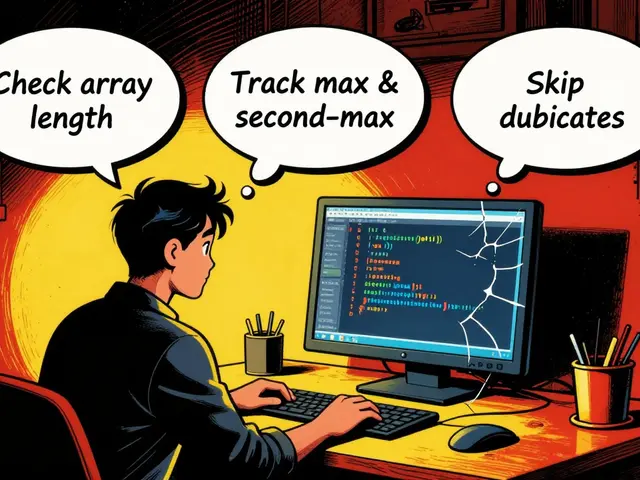
You type a simple prompt into your AI coding assistant: "Add user authentication." The model generates code. It works. But then you look closer. The new auth logic is tangled with your payment processing module. Your frontend state management is leaking into the backend database layer. You didn't ask for a rewrite of your entire system, but that's exactly what happened.
This is the hidden trap of vibe coding. As developers increasingly rely on Large Language Models (LLMs) to generate code through natural language instructions, we are seeing a surge in speed but also a sharp rise in architectural chaos. Without strict guardrails, AI models tend to create tight coupling-where components become so interdependent that changing one breaks another. This article explains how to define and enforce service boundaries in vibe coding to keep your systems maintainable, secure, and scalable.
What Is Vibe Coding and Why It Breaks Architecture
Vibe coding is an AI-assisted programming approach where developers describe software requirements in natural language, and an LLM generates the implementation. It sits between no-code platforms and traditional full-stack development. You get more control than drag-and-drop builders, but less friction than writing every line manually. Tools like GitHub Copilot, Cursor, or Replit use this paradigm.
The problem isn't the code quality itself; it's the lack of structural awareness. LLMs process tokens, not architecture. They don't inherently understand concepts like bounded contexts, single responsibility, or loose coupling. When you ask an AI to "fix the bug," it might solve the immediate issue by modifying files across three different modules, creating invisible dependencies. This phenomenon, known as tight coupling from prompts, turns a clean modular system into a fragile monolith over time.
Why do AI coding assistants create tight coupling?
AI models optimize for completing the task based on patterns in their training data, not for long-term architectural integrity. Without explicit constraints, they often choose the path of least resistance, which frequently involves mixing concerns (like UI logic and data access) within the same file or service.
The Core Problem: Loose Prompts, Loose Boundaries
In traditional software engineering, service boundaries are defined by APIs, databases, and deployment units. In vibe coding, these boundaries are often implicit or non-existent. Michael Shmilov, an engineering leader who has scaled AI-driven development, notes that early experiments with single-agent setups failed because the agent tried to understand everything at once. It would edit frontend React components and backend Node.js services simultaneously, erasing the separation of concerns.
Consider a scenario where you're building an e-commerce app. You prompt the AI to "add a discount feature." An unconstrained model might:
- Modify the product database schema directly.
- Add logic to the checkout API endpoint.
- Update the frontend cart component to display the discount.
- Hardcode the discount calculation in multiple places.
Now, if you want to change how discounts work, you have to hunt through five different files. Worse, the AI has created a dependency between the cart UI and the database schema. This is tight coupling. It makes future changes risky and slow.
Strategy 1: Constitutional Architecture
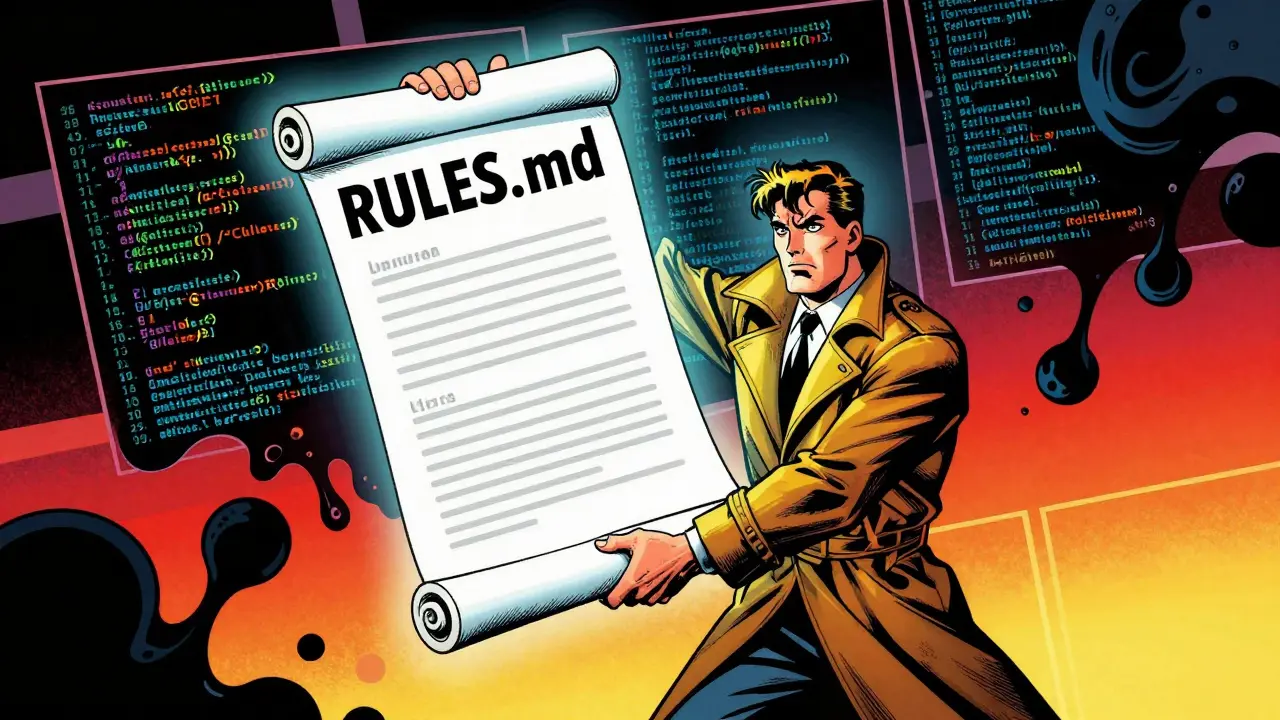
To prevent this, you need to treat your project's architecture as a set of immutable laws. WorldlineTech, a team that documented their experience with vibe coding, implemented what they call a "Constitutional Architecture." This involves creating explicit documents that the AI must read before generating any code.
The core artifact is a RULES.md file. This isn't just a README; it's a constraint engine. It contains hard rules like:
- No Cross-Module Imports: Code in
modules/grimoirecan never import frommodules/weaver. - Spec-Driven Development: If a feature isn't defined in a specification document, it doesn't exist. The AI cannot invent features.
- Layer Separation: Business logic must reside in services, not controllers or UI components.
By including these rules in the system prompt or bootstrap context, you force the LLM to operate within predefined boundaries. If the AI tries to violate a rule, it should be configured to stop and ask for clarification rather than proceeding.
Strategy 2: Modular Monoliths Over Microservices
Many developers assume that microservices are the answer to coupling. However, for most vibe coding projects, especially those led by small teams or individuals, microservices introduce unnecessary complexity. Instead, adopt a modular monolith architecture.
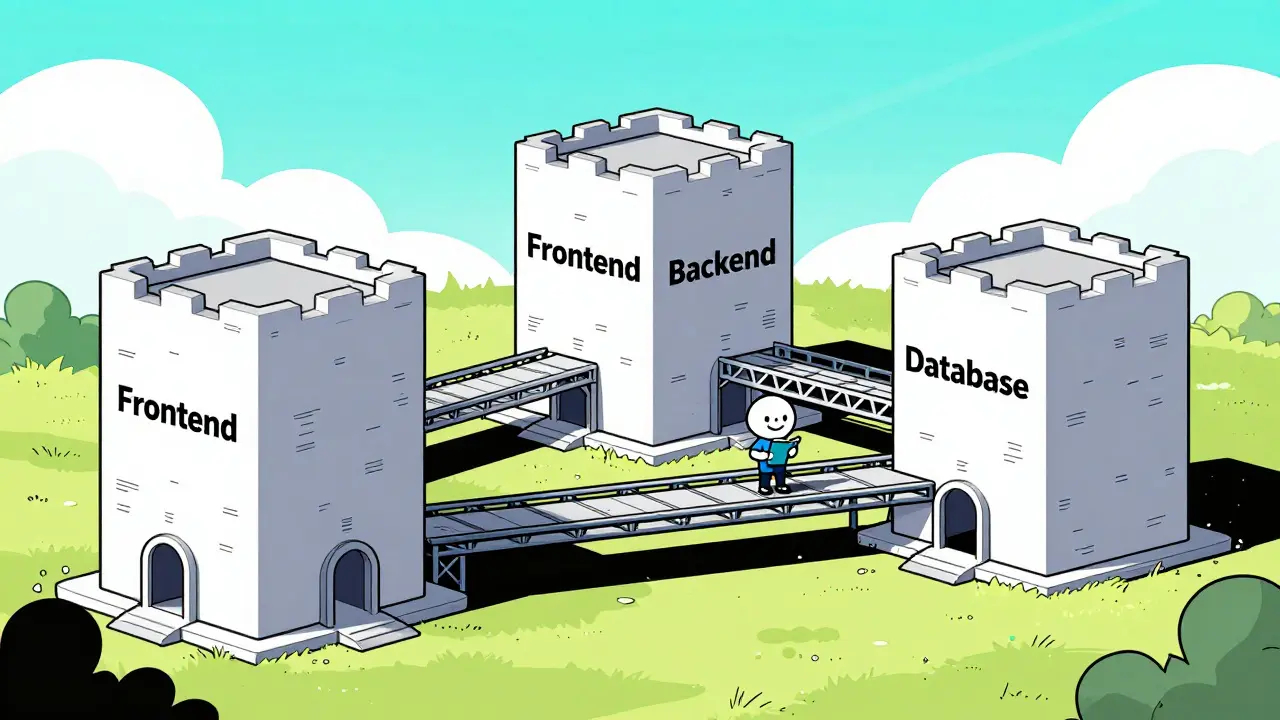
A modular monolith keeps all code in a single repository and deployment unit but enforces strict internal boundaries. Each module owns its data and logic. Communication between modules happens only through well-defined interfaces or events, not direct function calls.
| Approach | Coupling Risk | Complexity | Best For |
|---|---|---|---|
| Unstructured Monolith | High | Low | Prototypes only |
| Modular Monolith | Low | Medium | Solo devs, small teams |
| Microservices | Low (if designed well) | High | Large enterprises, high scale |
Using tools like Turborepo or Nx, you can enforce these boundaries at the build level. If Module A tries to import from Module B, the build fails. This gives the AI a clear signal: "This path is closed." It prevents the model from silently introducing dependencies that bypass your architectural intent.
Strategy 3: Agent-Specific Context Windows
Another effective technique is to split your AI interactions along service lines. Instead of giving one AI session access to your entire codebase, create separate sessions or agents for each service or layer.
For example:
- Frontend Agent: Has access only to React components, CSS, and API client libraries. It knows nothing about database schemas.
- Backend Agent: Has access to API routes, business logic, and database migrations. It knows nothing about UI state.
When the frontend needs a new feature, the human developer acts as the bridge. You draft an API contract specifying the input and output. Then, you feed this contract to the backend agent to implement the server-side logic. This mirrors how distributed teams work in traditional microservice environments. It ensures that changes in one area don't accidentally ripple into others.
Enforcing Boundaries with Architectural Decision Records (ADRs)
Architecture isn't static. As your project evolves, you'll make decisions that affect boundaries. To keep the AI aligned with these changes, use Architectural Decision Records (ADRs). An ADR is a short document that records a significant decision, its context, and its consequences.
For instance, if you decide to move PDF generation from the server to the client, you write an ADR explaining why. You then instruct the AI to read this ADR before working on any related code. If the AI proposes a solution that contradicts the ADR (e.g., trying to generate PDFs on the server), it violates the established boundary. By requiring the AI to cite relevant ADRs in its responses, you create a traceable audit trail of architectural reasoning.
Security Implications of Loose Boundaries
Tight coupling isn't just a maintenance nightmare; it's a security risk. The Cloud Security Alliance highlights that vibe coding empowers citizen developers who may not understand security implications. If an AI-generated function has broad database access, it might inadvertently expose sensitive data from unrelated tables.
To mitigate this, enforce principle of least privilege at the infrastructure level:
- Scoped Database Credentials: Each service or module should have a database user with access only to its specific tables.
- Sandboxed Execution: Run AI-generated code in isolated environments with limited network access.
- Secret Management: Never allow AI to handle secrets directly. Use environment variables injected at runtime, not hardcoded in generated files.
Northflank, a deployment platform, emphasizes that secure vibe coding requires these five pillars: secret hygiene, sandboxing, scoping credentials, safe deployment, and monitoring. These controls act as hard boundaries that the AI cannot override, regardless of how persuasive its prompts are.
Practical Steps to Implement Boundary-Aware Vibe Coding
If you're starting a new project or refactoring an existing one, follow these steps to establish robust service boundaries:
- Define Your Modules: Identify the core domains of your application (e.g., Users, Payments, Inventory). Create a directory structure that reflects these domains.
- Write RULES.md: Document your architectural constraints. Include import rules, layer separation guidelines, and technology stack choices.
- Create Initial ADRs: Record key decisions about data storage, communication patterns, and error handling.
- Configure Your AI Tool: Set up your IDE or CLI wrapper to automatically load RULES.md and relevant ADRs into the context window for every session.
- Enforce Build-Time Checks: Use linters or build tools to detect cross-module imports or violations of coding standards.
- Review Contracts Manually: Before allowing the AI to implement cross-service interactions, review and approve the API contracts yourself.
Remember, the goal isn't to stop using AI. It's to harness its power while maintaining control over your system's structure. By treating service boundaries as first-class citizens in your development process, you can enjoy the speed of vibe coding without sacrificing the stability of professional software engineering.
Can I use vibe coding for production applications?
Yes, but only if you enforce strict architectural boundaries. Unconstrained vibe coding leads to technical debt and security vulnerabilities. With constitutional architecture, ADRs, and scoped permissions, it can be a viable strategy for production systems.
What is the difference between vibe coding and no-code?
No-code platforms provide visual interfaces and templates with limited customization. Vibe coding allows you to generate actual code via natural language, offering greater flexibility and control, but requiring more technical oversight to manage architecture and security.
How do I prevent AI from changing my database schema unexpectedly?
Use scoped database credentials so the AI-generated code can only access specific tables. Additionally, include a rule in your RULES.md that prohibits schema migrations unless explicitly approved via an ADR.
Is a modular monolith better than microservices for AI coding?
For most teams, yes. Modular monoliths reduce operational complexity while still enforcing logical boundaries. Microservices add network latency and deployment overhead that can outweigh the benefits unless you have a large, distributed team.
What tools help enforce service boundaries in vibe coding?
Tools like Turborepo, Nx, and ESLint can enforce import rules and module boundaries at build time. AI wrappers that inject context-specific rules (like RULES.md) into the prompt also help guide the model's behavior.