You built a killer AI model. It predicts customer churn with 94% accuracy. But when you deploy it, does it accidentally discriminate against certain demographics? Does it leak private data in ways your legal team didn't foresee? This is where AI Ethics Boards come in. They aren't just corporate window dressing; they are the critical governance layer that stops technical brilliance from becoming reputational disaster.
If you're leading development teams or sitting on a board, you know the pressure to ship fast. But the regulatory landscape has shifted. With the EU AI Act fully effective and NIST's Risk Management Framework updating regularly, flying blind is no longer an option. An AI Ethics Board acts as your organization's moral compass and risk filter, ensuring that innovation doesn't outpace responsibility. Let's break down how these boards work, why you likely need one, and how to structure them so they actually have teeth.
What Exactly Is an AI Ethics Board?
An AI Ethics Board is a specialized governance entity formed within organizations to provide oversight, guidance, and expertise on ethical considerations related to artificial intelligence development and deployment. Think of it less like a committee that meets once a year to pat itself on the back, and more like a safety inspectorate for code. Unlike traditional IT steering committees that focus on budget and timeline, this board focuses on impact, fairness, transparency, and accountability.
The concept gained serious traction between 2018 and 2020. Remember the backlash Google faced over bias in its facial recognition tools? That was the wake-up call. Since then, major tech firms and increasingly non-tech enterprises have realized that algorithmic decisions affect real people's lives-from loan approvals to hiring screens. The board’s job is to ensure those algorithms align with societal values and company principles before they hit production.
It’s not just about avoiding lawsuits. Harvard DCE research highlights five core principles these boards enforce: fairness, transparency, accountability, privacy, and security. If your AI can’t meet these standards, the board flags it. Simple as that.
Why Traditional Oversight Fails AI Projects
You might ask, "Can't our existing legal or compliance teams handle this?" Often, no. Standard governance structures lack the specific technical literacy required to evaluate machine learning models. A general counsel knows GDPR requirements but might not understand how feature selection in a neural network introduces proxy bias. A CIO understands infrastructure costs but may miss the nuanced social implications of an automated customer service bot.
Deloitte’s 2025 global study found a massive gap here. While 77% of executives believe their workforce can make ethical AI decisions independently, actual implementation often lags. Why? Because ethical reasoning isn't intuitive when buried in thousands of lines of Python. Diligent.com points out that while AI processes data efficiently, it lacks moral reasoning. That reasoning must come from humans-specifically, humans who understand both the code and the context. Without a dedicated board, you risk what experts call "ethics washing," where companies claim to be ethical but lack the structural power to prove it.
Core Responsibilities: More Than Just Advice
Don't let anyone tell you these boards are purely advisory. For effective governance, they need operational weight. According to BigDataFramework.org, six key functions define a robust AI Ethics Board:
- Ethical Guidance: Defining frameworks that address bias, transparency, and fairness specific to your industry.
- Policy Development: Creating procedures that developers must follow during the AI lifecycle.
- Risk Assessment: Conducting pre-deployment audits for potential ethical pitfalls.
- Consultation: Acting as a sounding board for engineers facing dilemmas (e.g., "Should we use this data source?").
- Oversight and Auditing: Regularly reviewing deployed systems for drift or unintended consequences.
- Diversity Assurance: Ensuring the board itself-and the data it reviews-represents diverse perspectives.
Operation Hope’s framework adds depth here, suggesting boards look at eight focus areas including economic opportunity, employment, and accessibility. This breadth prevents tunnel vision. You’re not just checking for race bias; you’re checking if your AI excludes users with disabilities or disadvantages low-income customers.

Building the Right Team: Who Sits at the Table?
Structure matters. If your board consists only of senior VPs who never touch code, it will fail. If it’s all data scientists with no business acumen, it will also fail. The sweet spot blends internal expertise with external independence.
Shelf.io’s guide recommends four success factors: defining a unified mission, recruiting diverse members, specifying scope, and engaging early. Practically, this means your board should include:
- Technical Leads: Data science heads or CTOs who understand model limitations.
- Legal and Compliance: Experts in regional regulations like the EU AI Act.
- HR and People Ops: To assess impacts on workforce and culture.
- External Experts: Academics or ethicists who bring objectivity and avoid groupthink.
A common mistake is giving the board veto power too late in the game. Successful implementations, like those at Microsoft and IBM, grant boards authority over high-risk deployments. If a model fails the ethical audit, it doesn't launch. Period. This shifts the culture from "ask forgiveness later" to "design responsibly now."
Implementation Costs and ROI
Let’s talk money. Setting up a functional AI Ethics Board isn't free. Phenom.com estimates annual costs between $150,000 and $500,000 for mid-sized enterprises. This covers member time, external consultants, and tooling for auditing. Sounds steep? Consider the alternative.
KPMG’s 2025 study shows organizations with robust AI governance see 22% fewer regulatory compliance issues. One lawsuit or regulatory fine can dwarf the cost of the board. Plus, there’s brand value. Customers are increasingly aware of AI biases. Public trust is a tangible asset. When you market your product as "ethically vetted," you differentiate yourself in crowded markets.
| Metric | Data Point | Source Context |
|---|---|---|
| Annual Cost (Mid-Sized) | $150k - $500k | Phenom.com HR Tech Analysis |
| Reduction in Compliance Issues | 22% | KPMG Global Study 2025 |
| Fortune 500 Adoption Rate | 62% | Deloitte Tracking Q2 2025 |
| Time to Launch Delay | 30-45 Days | Shelf.io Implementation Data |
Yes, the board might slow your product launch by a month. But would you rather launch fast and fix broken trust later, or launch slightly slower with confidence? Most mature leaders choose the latter.
Regulatory Pressure and Future Trends
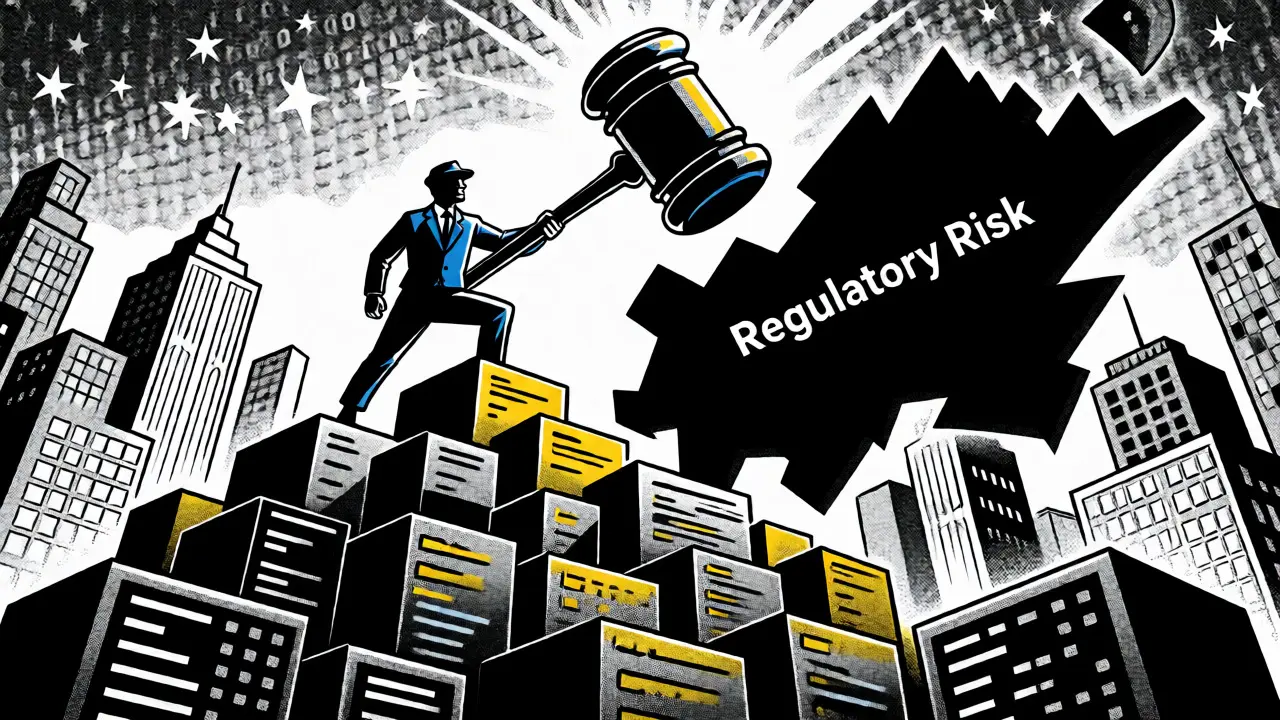
You can’t ignore the law anymore. The EU AI Act, effective in 2026, mandates ethics oversight for high-risk AI systems. In the US, the SEC is expected to require public companies to disclose AI governance structures by Q3 2026. ISO/IEC 23894:2023 already sets international standards, specifically mandating oversight bodies in Section 7.2.
We’re seeing a shift from voluntary guidelines to mandatory compliance. The World Economic Forum is even working on global certification standards for AI ethics bodies by 2027. If you wait until regulators force your hand, you’ll pay double to build a compliant structure under duress. Building it now gives you control over the narrative.
Another trend is integration into ESG reporting. 63% of S&P 500 companies now include AI ethics metrics in their annual disclosures. Investors are watching. They want to know your AI isn't going to cause a PR nightmare next quarter.
Pitfalls to Avoid
Not every board succeeds. Here’s what kills them:
- Lack of Independence: If the board reports to the VP of Product whose bonus depends on shipping features, conflicts of interest arise. Report directly to the CEO or Board of Directors.
- Vague Mandates: "Be ethical" isn't a policy. Define specific criteria for rejection.
- Too Late Engagement: Bringing the board in after the model is trained limits options. Involve them during design.
- Ignoring Technical Debt: Ethical fixes often require retraining models. Budget for this.
Dr. Timnit Gebru, former co-lead of Google’s Ethical AI team, famously argued for boards with "real power to halt deployments." Listen to her. Advisory roles without enforcement mechanisms are decorative. Give them the keys to stop the car.
Frequently Asked Questions
Do small startups need an AI Ethics Board?
Not necessarily a full formal board initially. Startups can begin with a designated "Ethics Champion" or a lightweight review panel involving founders and a legal advisor. However, as soon as you start processing sensitive user data or automating decisions affecting users, structured oversight becomes critical to avoid costly pivots later.
How does an AI Ethics Board differ from a Data Privacy Officer?
A Data Privacy Officer focuses primarily on legal compliance regarding personal data handling (like GDPR or CCPA). An AI Ethics Board has a broader scope, addressing algorithmic bias, societal impact, fairness in outcomes, and transparency of decision-making logic, which may extend beyond strict privacy laws.
What is the biggest challenge in establishing these boards?
Securing executive buy-in is the top hurdle, reported in 68% of failed attempts. Leaders often view ethics reviews as bottlenecks. Overcoming this requires demonstrating clear ROI through reduced regulatory risk and enhanced brand trust, rather than framing it solely as a compliance cost.
Can AI itself help govern AI?
Partially. Automated tools can flag statistical biases or data anomalies quickly. However, AI lacks contextual understanding and moral reasoning. Human judgment is still required to interpret whether a flagged issue constitutes a genuine ethical violation or a benign artifact. The board uses AI tools for detection but relies on human deliberation for decisions.
How often should the board meet?
Quarterly reviews are standard for mature organizations, but agile environments may require monthly syncs. Crucially, the board should be available for ad-hoc consultations during the development cycle, especially before major releases or changes in data sources.