You might think AI is just a fancy autocomplete for code or a tool that spits out pretty pictures of buildings. But the reality hitting us in late 2026 is far more profound. AI-assisted development has moved from novelty to necessity, fundamentally reshaping how we make architectural decisions in both physical structures and digital systems. It’s no longer about whether an architect uses AI; it’s about how they leverage it to avoid costly mistakes before they even lay a brick or write a line of code.
If you’re still treating AI as a toy, you’re missing the point. The core value isn’t speed alone-it’s the ability to process thousands of variables simultaneously. Whether you are designing a residential complex in Asheville or scaling a microservices architecture for a global SaaS platform, the principles of technical decision-making remain strikingly similar. You need to know where to trust the machine and where to step in with human judgment. Here is how you navigate this new landscape without losing your mind or your budget.
The Shift from Drafting to Decision-Making
For decades, architects spent hours drawing lines. Today, those lines are generated by algorithms. In building design, tools like Forma are changing the game by allowing designers to explore options based on real-time data. Imagine you have two weeks to finalize a housing project concept. With traditional methods, you might iterate through five designs. With AI, you can generate hundreds, filtering them by cost, carbon emissions, and livability metrics instantly.
This shift forces a change in role. You aren’t just a creator anymore; you’re an editor. The AI provides the raw material-the floor plans, the structural suggestions, the energy simulations-and you decide which ones align with the client’s vision and regulatory constraints. This isn’t about replacing creativity; it’s about removing the drudgery so you can focus on high-level strategy. When MBH Architects used Forma, they cut design time from two weeks to six hours. That’s not magic; it’s computational power doing the heavy lifting while humans steer the ship.
Generative Design and Parametric Freedom
Have you ever wondered why some buildings look so organically complex? That’s often parametric architecture, where rules define relationships between elements rather than fixed shapes. AI supercharges this by using Generative Adversarial Networks (GANs) to create forms that a human brain might never conceive.
Consider the Delve project for Quintain. The AI didn’t just copy existing styles; it made unorthodox decisions. It increased building heights in specific spots to maximize daylight and created oddly shaped courtyards to improve quality of life. These weren’t aesthetic whims; they were data-driven optimizations. The AI looked at sun angles, wind patterns, and usage data, then proposed a structure that exceeded human-designed benchmarks in every measurable way.
- Exploration: Generate dozens of variations in minutes.
- Optimization: Balance conflicting goals like cost vs. sustainability.
- Innovation: Discover forms outside traditional design biases.
This capability allows you to test "what if" scenarios rapidly. What if we change the material? What if we rotate the building 15 degrees? The AI recalculates the impact on energy efficiency and structural integrity instantly, giving you a feedback loop that was previously impossible to maintain manually.
Sustainability as a Core Metric
Sustainability is no longer a checkbox; it’s a primary driver of architectural value. Regulations are tightening, and clients demand green certifications like LEED. Manually calculating the carbon footprint of different facade materials or HVAC placements is tedious and error-prone. AI steps in here by analyzing both the raw schematics and expected usage patterns to find inefficiencies.
Tools now simulate real-world impacts such as wind flow, noise pollution, and solar shading. For instance, AFRY used cloud-based AI tools to simulate these factors on proposed designs, ensuring compliance with local regulations before breaking ground. This proactive approach prevents expensive retrofits later. If a design fails a wind tunnel simulation, the AI suggests adjustments to the facade geometry immediately. It’s like having a physics engine built into your drafting table.
| Feature | Traditional Method | AI-Assisted Method |
|---|---|---|
| Simulation Speed | Days per iteration | Minutes per iteration |
| Variable Complexity | Limited to key factors | Hundreds of environmental variables |
| Error Detection | Post-design review | Real-time during creation |
| Cost Impact | High due to rework | Low due to early optimization |
Software Architecture: The Digital Twin of Building Design
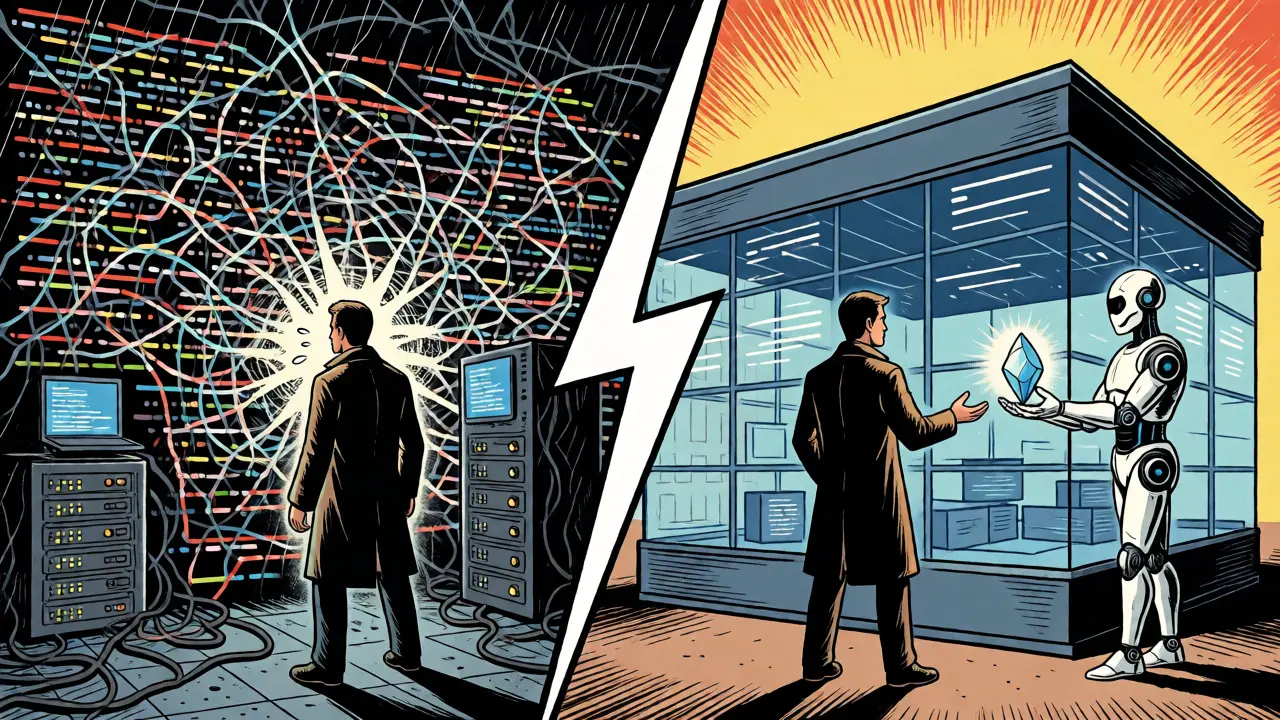
Don’t let the term "architecture" fool you into thinking this only applies to concrete and steel. In software engineering, technical decision-making faces identical challenges. Just as a bad building layout causes traffic jams, poor system architecture causes latency bottlenecks and security vulnerabilities. AI serves as a consultant here, too.
Developers use AI to detect architectural antipatterns. Have you ever noticed a module that does everything but nothing well? An AI tool scanning your codebase can flag this violation of the Single Responsibility Principle before it becomes a maintenance nightmare. It validates your system design against best practices, suggesting refactors that align with industry standards.
Treat AI as a senior engineer who never sleeps. During the requirement gathering phase, it can predict potential scalability issues based on historical data from similar projects. If you’re planning a monolithic application but anticipate rapid growth, the AI might suggest a microservices approach early on, saving you from a painful migration later. The goal is consistent alignment with technical goals from day one, not after the first major outage.
Integration with BIM and IoT Infrastructure
Physical buildings are becoming smart ecosystems. Integrating Internet of Things (IoT) devices requires careful planning. Where do you place sensors? How do you ensure maintenance access? AI helps optimize building plans with IoT requirements in mind. When integrated into Building Information Modeling (BIM) platforms, AI tools analyze models in real-time.
These tools don’t just store data; they act on it. They can schedule predictive maintenance tasks by identifying potential construction problems or operational inefficiencies. For example, if the AI detects that a certain HVAC zone consistently runs hotter than predicted, it might suggest adjusting the ductwork layout in the next revision. This keeps the digital twin accurate and useful throughout the building’s lifecycle.

The Human Element: Oversight and Ethics
Here is the trap many fall into: blind trust. AI is powerful, but it lacks context. It doesn’t know that the client hates the color blue, or that the city council recently changed zoning laws regarding shadow casting. Human oversight remains essential. You must validate outputs against organizational standards and project-specific constraints.
Architects must critically evaluate AI recommendations. Does this efficient layout feel welcoming? Does this software architecture match our team’s skill set? Over-relying on AI without proper validation can lead to sterile designs or brittle systems. The emerging best practice is a division of labor: let AI handle routine optimization and data crunching, while humans handle strategic direction, ethical considerations, and creative nuance.
Practical Steps for Implementation
Ready to bring AI into your workflow? Don’t try to overhaul everything at once. Start small.
- Audit Your Bottlenecks: Identify where you spend the most time on repetitive analysis (e.g., energy modeling, code reviews).
- Pilot One Tool: Choose a specialized tool like Forma for buildings or an AI code assistant for software. Test it on a low-risk project.
- Train Your Team: Teach staff how to prompt effectively and interpret results. Garbage in, garbage out still applies.
- Establish Validation Protocols: Define who signs off on AI-generated decisions. Never let the algorithm be the final authority.
- Measure ROI: Track time saved versus errors caught. Adjust your strategy based on hard data.
The future of architecture-both physical and digital-is collaborative. It’s not human vs. machine. It’s human *with* machine. Those who master this partnership will build faster, cheaper, and smarter. Those who resist will find themselves spending days doing what their competitors’ algorithms did in seconds.
Is AI replacing architects and software engineers?
No, it is transforming their roles. AI handles data-heavy tasks like optimization and pattern detection, freeing professionals to focus on creative strategy, client relations, and complex problem-solving that requires contextual understanding.
What is parametric architecture?
Parametric architecture is a method where design elements are defined by mathematical relationships and parameters rather than fixed coordinates. AI enhances this by rapidly exploring parameter combinations to find optimal solutions for structural integrity, aesthetics, and environmental performance.
How does AI help with sustainability in building design?
AI analyzes vast amounts of environmental data, including sun paths, wind patterns, and material properties, to simulate energy consumption and carbon footprints. It suggests design adjustments that minimize waste and maximize efficiency before construction begins.
Can AI detect errors in software architecture?
Yes. AI tools can scan codebases and system diagrams to identify antipatterns, such as circular dependencies or tight coupling, that violate best practices. This allows teams to refactor early, reducing technical debt and improving long-term maintainability.
What is the risk of relying too much on AI for architectural decisions?
The main risk is losing critical human judgment. AI optimizes for quantifiable metrics but may miss qualitative aspects like cultural relevance, user experience nuances, or ethical implications. Human oversight is required to validate that AI outputs align with broader project goals and values.