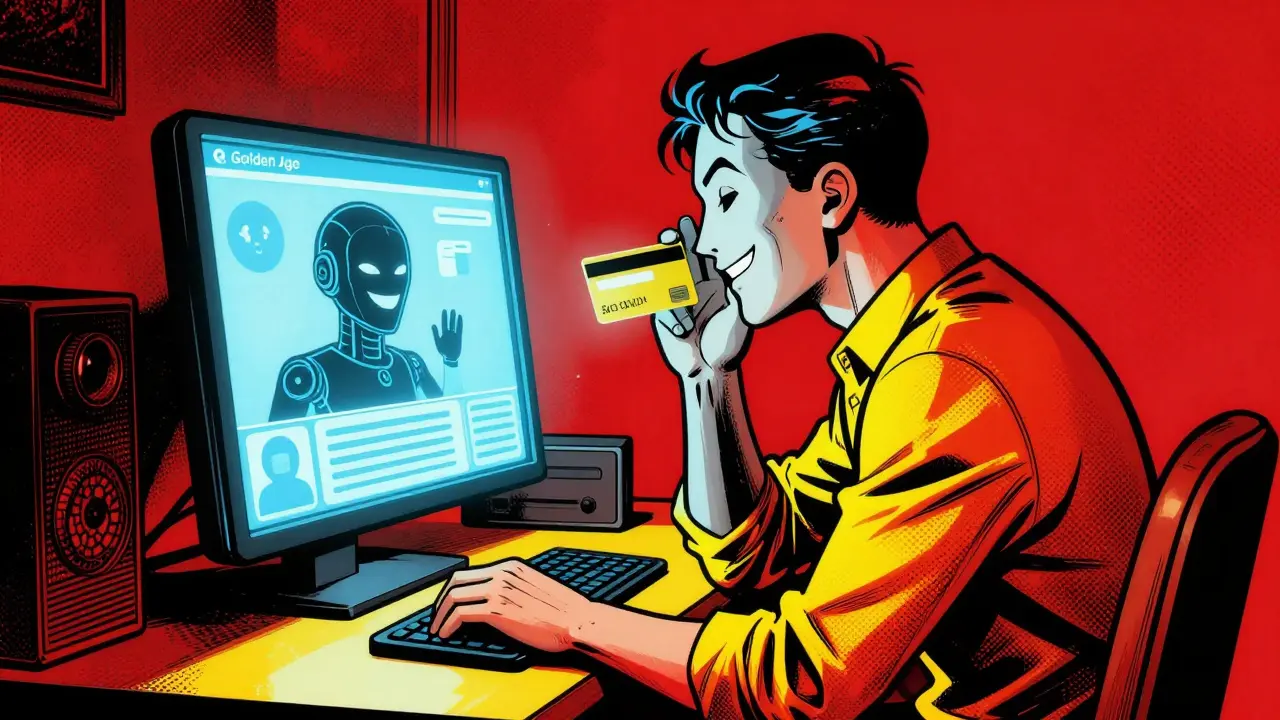
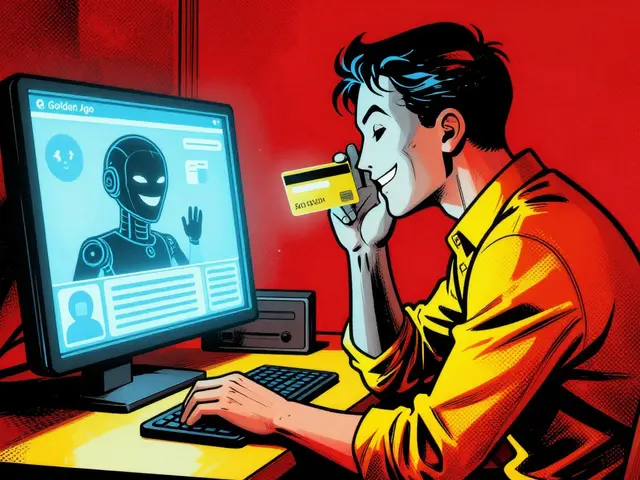
Imagine you are chatting with customer support. The tone is empathetic, the responses are instant, and it feels like a real person is helping you. You share your credit card details to resolve an issue. Later, you realize you were talking to an AI chatbot that was never disclosed as artificial. This isn't just a minor annoyance; it is a calculated manipulation known as an AI dark pattern. As artificial intelligence becomes woven into every layer of user experience (UX), the line between helpful automation and deceptive design is blurring faster than ever before.
The term 'dark pattern' was coined by Harry Brignull in 2010, but the landscape has shifted dramatically. Today, we face AI-generated variants that adapt in real-time, exploiting cognitive biases with surgical precision. According to recent data from Omnisearch, only 12% of users can correctly identify AI-generated fake reviews, compared to 28% for human-written deceptive content. This gap in detection creates a dangerous environment where businesses can manipulate behavior at scale without immediate consequence. But there is a growing movement to stop this. With new regulations like the EU's AI Act and ISO standards rolling out in 2026, ethical design checks are no longer optional-they are survival strategies.
What Are AI Dark Patterns?
To prevent them, you first need to recognize what they look like. Traditional dark patterns were static: a confusing checkbox here, a hidden unsubscribe button there. AI dark patterns are dynamic. They learn from your hesitation, your mouse movements, and your past purchases to adjust their deception on the fly.
Luiza Jarkovsky defines AI dark patterns specifically as features that make people believe media is authentic when it is not, or that a human is interacting with them when it is actually an algorithm. There are two primary forms:
- False Appearance: Using AI to generate fake urgency notifications, such as "Only 1 item left!" when inventory is plentiful, or creating synthetic positive reviews to boost credibility.
- Impersonation: Chatbots or voice assistants that mimic human empathy and identity without disclosing their artificial nature, leading users to trust them more than they should.
These tactics leverage psychological triggers like Fear Of Missing Out (FOMO) and social guilt. The Decision Lab notes that these patterns exploit weaknesses in our decision-making processes, capitalizing on the rush of unpredictability similar to slot machines. When AI personalizes this manipulation, the conversion rates for targeted actions jump by 37% compared to traditional deceptive designs. That is a powerful incentive for bad actors, which is why ethical checks are critical.
The Cost of Deception: Why Ethics Pay Off
You might think that short-term gains from dark patterns are worth the risk. The numbers suggest otherwise. Finance Watch reported that 68% of consumers permanently abandon services after discovering they were deceived by AI. Trust is hard to build and incredibly easy to break.
Consider the regulatory landscape. In January 2025, the Government of India implemented regulations prohibiting 12 common dark design patterns, imposing fines up to ₹500,000 (approximately $6,000 USD) per violation. Meanwhile, the European Union’s AI Act, enforced starting February 1, 2026, targets deceptive AI interfaces with penalties reaching €30 million or 6% of global turnover. These are not small fees; they are existential threats to non-compliant businesses.
| Feature | Traditional Dark Patterns | AI-Generated Dark Patterns |
|---|---|---|
| Detection Rate | Higher (users often notice static tricks) | Low (only 12% detect fake AI reviews) |
| Personalization | Static, one-size-fits-all | Dynamic, adapts to user behavior in real-time |
| Conversion Boost | Moderate | High (37% higher for targeted actions) |
| Regulatory Risk | Moderate (general consumer protection laws) | Very High (specific AI acts and ISO standards) |
| User Retention Impact | Negative if discovered | Catastrophic (68% permanent abandonment) |
Beyond fines, there is the brand reputation angle. A Reddit thread in early 2026 collected over 1,200 reports of users angry about interacting with undisclosed AI chatbots. On Trustpilot, e-commerce platforms using AI-generated urgency notifications averaged a dismal 2.1/5 rating. In contrast, platforms with transparent AI implementations saw 82% approval ratings. Ethical design is not just moral; it is commercially superior in the long run.
Implementing Ethical Design Checks: A 5-Step Audit
How do you ensure your team isn’t accidentally-or intentionally-building these traps? You need a structured approach. The UX Tigers catalog recommends a comprehensive 5-step ethical audit that any design team can implement.
- Identify All User Decision Points: Map out every moment a user makes a choice. A typical app flow has around 12.7 decision points. At each step, ask: Is this choice clear, or is it obscured?
- Map Cognitive Biases: For each decision point, identify which bias might be exploited. Are you triggering FOMO? Are you using default options to lock users in? Document these risks explicitly.
- Verify AI Transparency: Test whether users know they are interacting with AI. The benchmark is high: at least 92% of users must correctly identify AI elements. If your chatbot doesn’t clearly state it is a bot, you fail this check.
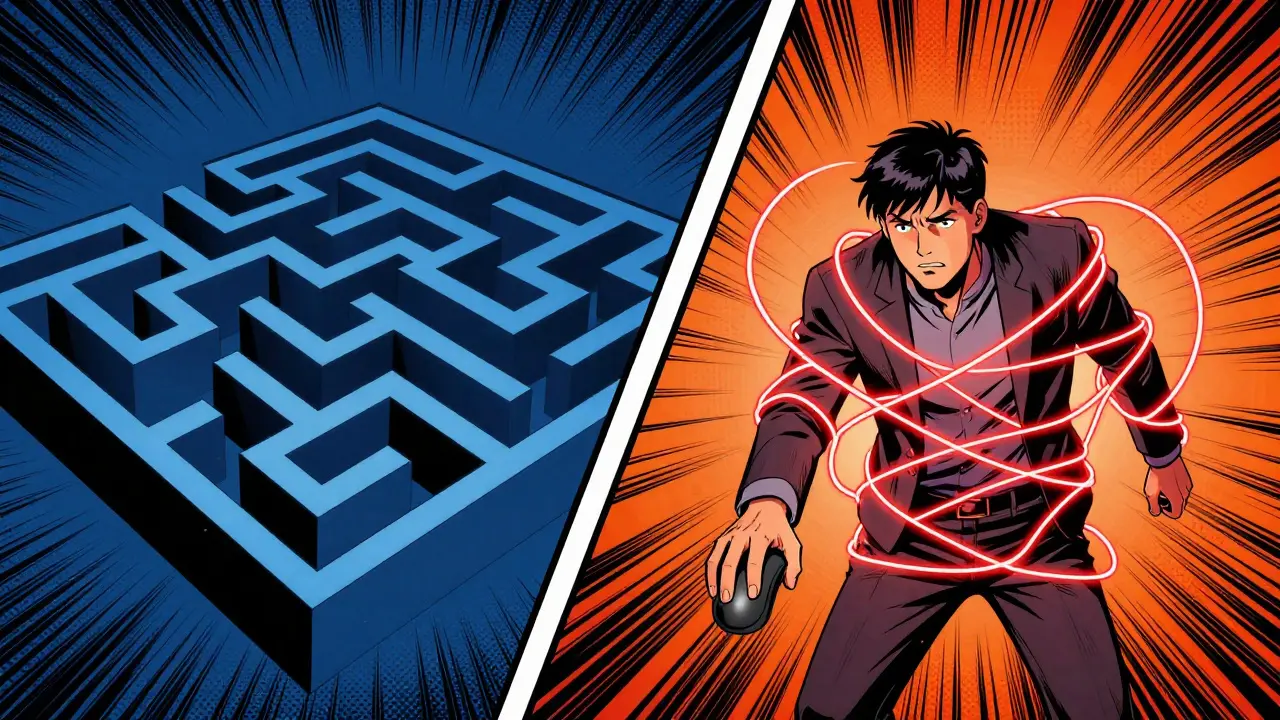
- Test Cancellation and Opt-Out Paths: It should be easy to leave. Your cancellation process must have a maximum of 3 steps and achieve a 95% success rate. If users report having to navigate 17 steps to cancel while sign-up took 3, you have a dark pattern.
- Document Justification: If you use any persuasive elements, document why. Is it necessary for safety? Or is it just to boost metrics? The Partnership on AI requires companies to implement 'manipulation risk scoring' for all AI-generated interfaces. Scores above 0.7 on their 0-1 scale require executive sign-off.
This process takes time. Scalable Path analysis shows UX designers need 8-12 weeks of specialized training to effectively implement these checks. However, the cost of training is far lower than the cost of litigation or lost customers.

Overcoming Internal Resistance
Even with clear guidelines, implementing ethical checks often faces pushback. Omnisearch documented that 68% of conversion rate optimization teams initially oppose ethical constraints on AI design. Their argument? Removing deceptive elements drops conversion rates by 15-22% in the short term.
This is where leadership must intervene. You have to reframe the conversation from "conversion loss" to "customer lifetime value." A user tricked into buying once will never return. A user who trusts your transparent AI interface may become a loyal advocate. Gartner’s Mark Minevich argued in February 2025 that there is a "spectrum of ethical acceptability," suggesting that personalization does not automatically equal deception. The key is consent and clarity.
Start small. Pilot ethical audits on low-risk flows first. Show stakeholders the data: compare the retention rates of users who experienced transparent AI versus those who encountered hidden manipulations. Use tools like those from EthicalAI, which processed 2.3 million interface scans monthly in late 2025, to provide objective evidence of dark patterns in your own products.
The Future of Ethical AI Design
We are entering an era of standardization. In January 2026, the International Organization for Standardization released ISO/IEC 24027:2026, establishing the first global standard for preventing AI dark patterns. This document provides concrete criteria for what constitutes ethical design, moving beyond vague principles to actionable rules.
Forrester predicts that by 2027, AI-powered dark pattern detection tools will reach 95% accuracy. This means that soon, your competitors’ deceptive practices will be automatically flagged by third-party scanners and exposed to regulators and consumers alike. The window to act voluntarily is closing.
By 2029, consumer awareness is expected to drive 80% of e-commerce platforms to adopt transparent AI labeling. Those who wait until then will find themselves playing catch-up in a market that increasingly rewards honesty. MIT’s Digital Ethics Lab warned in December 2025 that without standardized frameworks, AI-generated dark patterns could erode digital trust to critical levels by 2030. We don’t want to live in that future.
Ethical design is not about restricting creativity; it is about building sustainable relationships with users. When AI serves the user rather than manipulating them, everyone wins. Start your audit today. Check your decision points. Verify your transparency. And remember: trust is your most valuable asset, and it is easily broken by a single hidden bot.
What is the difference between a traditional dark pattern and an AI dark pattern?
Traditional dark patterns are static design choices, like a confusing checkbox or a hidden fee, that remain the same for all users. AI dark patterns are dynamic and adaptive. They use algorithms to analyze user behavior in real-time and adjust the interface to maximize manipulation. For example, an AI system might generate fake scarcity messages ("Only 1 left!") based on how long a user hesitates, whereas a traditional site would show the same message to everyone regardless of behavior.
Why are AI dark patterns harder to detect than human-made ones?
AI dark patterns are designed to mimic authenticity and human interaction seamlessly. Research from Omnisearch shows that only 12% of users can identify AI-generated fake reviews, compared to 28% for human-written deceptive content. AI can also impersonate humans through chatbots that use empathetic language and natural pauses, making it difficult for users to distinguish between a real person and an algorithm unless explicitly told otherwise.
What are the legal consequences of using AI dark patterns in 2026?
The legal risks are significant and growing. The EU’s AI Act, enforced from February 2026, imposes fines of up to €30 million or 6% of global turnover for deceptive AI interfaces. In India, regulations implemented in 2025 carry fines of up to ₹500,000 per violation. Additionally, the U.S. Federal Trade Commission saw a 300% increase in dark pattern complaints from 2023 to 2025, with AI variants making up 68% of cases in late 2025. Non-compliance can lead to heavy financial penalties and reputational damage.
How can I audit my product for AI dark patterns?
Follow a 5-step ethical audit: 1) Identify all user decision points in your app flow. 2) Map potential cognitive biases being exploited at each point. 3) Verify AI transparency, ensuring at least 92% of users correctly identify AI elements. 4) Test cancellation paths to ensure they take no more than 3 steps with a 95% success rate. 5) Document justification for any persuasive elements, using manipulation risk scoring where scores above 0.7 require executive approval.
Does removing dark patterns hurt conversion rates?
In the short term, yes. Omnisearch reports that removing deceptive elements can reduce conversion rates by 15-22%. However, this is offset by higher customer retention and trust. Finance Watch found that 68% of consumers permanently abandon services after discovering AI deception. Transparent AI implementations see 82% approval ratings, leading to better long-term customer lifetime value and reduced regulatory risk.

8 Comments
Laura Davis
Listen, I am done with the BS. If a bot talks to me, it better say 'I am a bot' in the first message.
It is not rocket science. You are manipulating people who just want help. Stop hiding behind empathy algorithms and be honest.
I lost money because a chatbot sounded so nice I trusted it with my card details. Never again.
This post is spot on about the need for strict checks. No more excuses.
Edward Nigma
Look, everyone is crying about ethics but let's be real here. Business is business.
If a dark pattern works, it works. The article says conversion drops by 20% if you remove them. That is revenue down the drain.
Who cares about 'trust' when you are trying to pay rent? The regulations are just bureaucrats trying to control innovation.
People are stupid enough to fall for fake urgency every time. Blaming the designer is missing the point. It is supply and demand of deception.
Francis Laquerre
Oh my god, this is absolutely terrifying!
I felt chills reading that part about the 68% abandonment rate. It is like we are living in a dystopian novel where our own devices are turning against us.
The idea that an AI can mimic human empathy to steal your trust is pure horror. We need to stand together and demand transparency now!
This isn't just design; it is a moral crisis of epic proportions. We must act before it is too late!
michael rome
It is imperative that we consider the long-term implications of these practices. While short-term gains may seem attractive, the erosion of consumer trust is a catastrophic failure of corporate responsibility.
We must adhere to the highest standards of ethical conduct. The ISO standards mentioned are a beacon of hope in a darkening digital landscape.
I urge all designers to take this seriously. It is not optional. It is essential for the preservation of our digital society.
Andrea Alonzo
I have been thinking a lot about how we interact with technology lately, and it really makes me sad to see how much manipulation is baked into the systems we use every single day without even realizing it.
When I read about the cognitive biases being exploited, I couldn't help but think about how vulnerable we all are, especially older adults or those who are less tech-savvy, and it breaks my heart that companies would choose profit over protecting their users from harm.
We need to create a culture where empathy is not just a buzzword but a fundamental principle that guides every line of code and every design decision we make.
Imagine if we all took a moment to pause and ask ourselves if we would feel comfortable using this feature if it were our mother or our child on the other side of the screen.
That simple shift in perspective could change everything and lead us toward a future where technology truly serves humanity rather than exploiting its weaknesses.
Bineesh Mathew
The soul of commerce has been hollowed out by silicon ghosts!
These AI entities are not merely tools; they are parasitic shadows feeding on the collective anxiety of the masses. To call this 'design' is an insult to the very concept of art.
It is a spiritual violation. We are trading our authenticity for algorithmic convenience. The fines are mere pocket change to the leviathans of tech, but the damage to the human spirit is immeasurable.
We must awaken from this digital slumber before we lose the ability to distinguish truth from fabricated illusion forever.
Oskar Falkenberg
I mean, yeah, it is pretty obvious that hiding the fact that you are a bot is kinda sketchy right? Like, why would you do that unless you had something to hide basically.
I tried to cancel a subscription recently and it was like navigating a maze designed by a sadist, took me forever to find the button which was greyed out half the time.
So when I see articles like this talking about the 3 step rule for cancellation, I am totally on board with that idea because nobody wants to waste their time fighting with a website just to leave.
It is just common sense really, treat people with respect and they will stay, trick them and they will leave and tell everyone else too.
Caitlin Donehue
I guess I wonder if the problem is really the AI or just the lack of regulation.
It seems like most people would prefer a quick answer from a bot anyway as long as they know it is a bot.
Maybe the issue is just poor implementation rather than malicious intent in many cases.