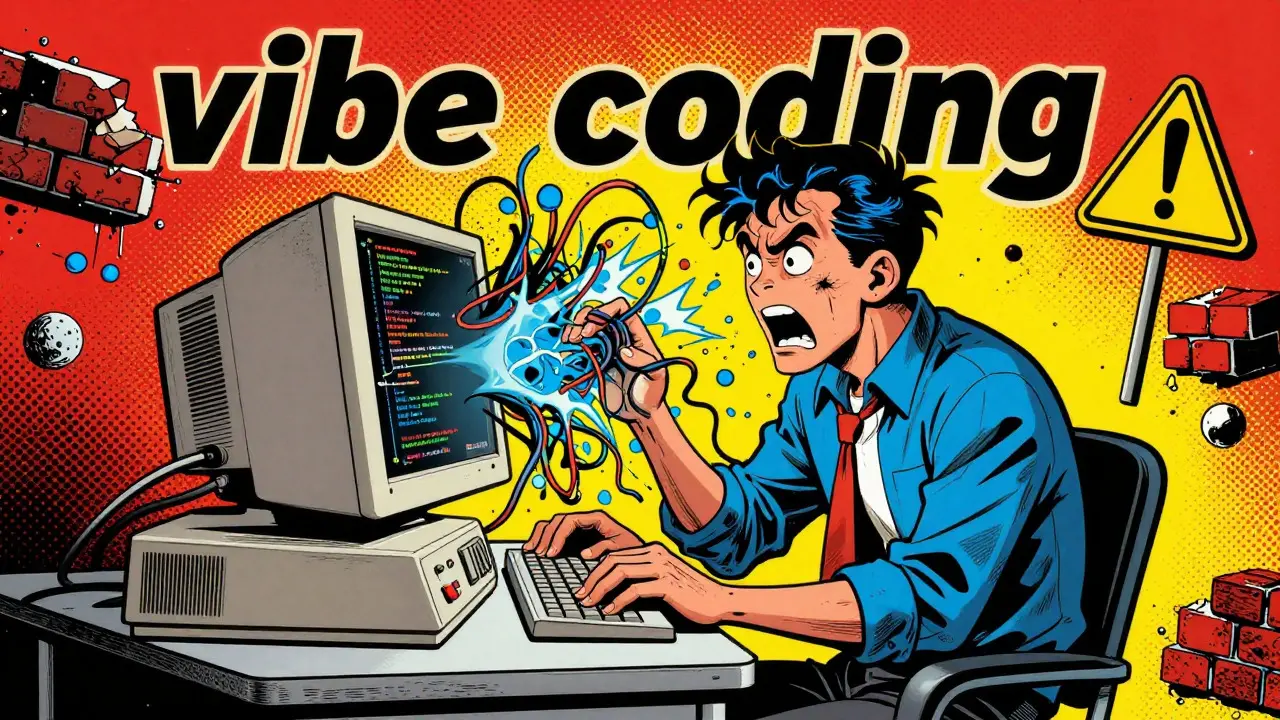
It feels like magic when you type a few lines of natural language into an editor and watch executable code appear. This is the promise of vibe coding, an emerging AI-native programming paradigm where developers specify high-level functional intent alongside qualitative descriptors of the desired tone or style, allowing intelligent agents to generate software. But here is the catch: without strict guardrails, that magic quickly turns into a maintenance nightmare. In 2024 and 2025, as large language models matured, teams rushed to adopt this speed-first approach. The result? A wave of systems that worked initially but collapsed under their own weight due to hidden technical debt.
The core problem isn't the AI; it's the lack of architectural discipline. When you let an agent decide how to structure your application based solely on a prompt, you get what the model thinks is efficient, not what is sustainable. Research from Codecentric in March 2025 analyzed an AI-generated platform and found 37 critical security vulnerabilities and 21 architectural anti-patterns. That is not a bug; that is a feature of unstructured generation. To make vibe coding viable for enterprise use, we need reference implementations that enforce specific structural standards.
The Five Pillars of Vibe-Coded Architecture
If you want to build systems that last, you cannot rely on the AI’s default behavior. You must impose five foundational principles on every prompt and every generated module. These are not suggestions; they are non-negotiable constraints for any serious implementation.
- Composition Over Inheritance: Deep class hierarchies confuse AI agents and create brittle code. Instead, use capability interfaces. Synaptic Labs’ May 2025 reference implementation showed that 87% of object behaviors could be composed from just 12 standardized interfaces. This keeps components flexible and easier for the AI to modify later.
- Strict Dependency Injection: Use constructor injection with clear interface contracts. vFunction’s analysis in January 2025 proved that proper dependency injection reduced coupling by 63% in AI-generated codebases. If the AI can’t see the dependencies clearly, it will hardcode them, creating tight coupling.
- Tell, Don’t Ask: Objects should receive commands, not have their state inspected repeatedly. This reduces conditional logic. Case studies show this principle cuts conditional branches by 41%, making the resulting code cleaner and less prone to logic errors during refactoring.
- Law of Demeter Compliance: Flatten object chains. Long method chains (like
user.getProfile().getAddress().getCity()) are fragile. Service interfaces should expose flat methods. Compliant implementations reduce average method chain length from 4.7 to 1.2, significantly lowering breakage risk. - AI-Friendly Consistency: Standardize everything. Use uniform REST operations (create, update, delete, get, list) and four standard error types. Synaptic Labs’ June 2025 benchmark found that consistent patterns improved AI extension success rates from 58% to 92%. Predictability is key for machine interpretation.
Structured vs. Unstructured Approaches
Not all vibe coding is created equal. There is a stark divide between teams that treat prompts as casual requests and those that treat them as architectural specifications. The difference in outcomes is dramatic.
| Metric | Unstructured Approach | Structured Approach (e.g., BMAD, Constitutional) |
|---|---|---|
| Test Coverage | Variable, often low | 94% (per Drew Maring’s case study) |
| Technical Debt | High (accumulates rapidly) | 68% lower than unstructured peers |
| Security Vulnerabilities | 37 critical issues per 1,000 lines | Reduced by up to 82% with guardrails |
| Coupling Issues | Present in 73% of systems | Minimal, with explicit interface contracts |
| Maintainability Score | Low (42% unused code fragments) | 3.2x higher than unstructured systems |
The data is clear. Unstructured vibe coding leads to strong coupling, security holes, and massive amounts of dead code. Structured methods, like the Breakthrough Method of Agile AI-Driven Development (BMAD) or constitutional approaches, force the AI to adhere to quality standards. The cost of setting these standards upfront is negligible compared to the cost of rewriting a broken system.
Reference Implementation Components
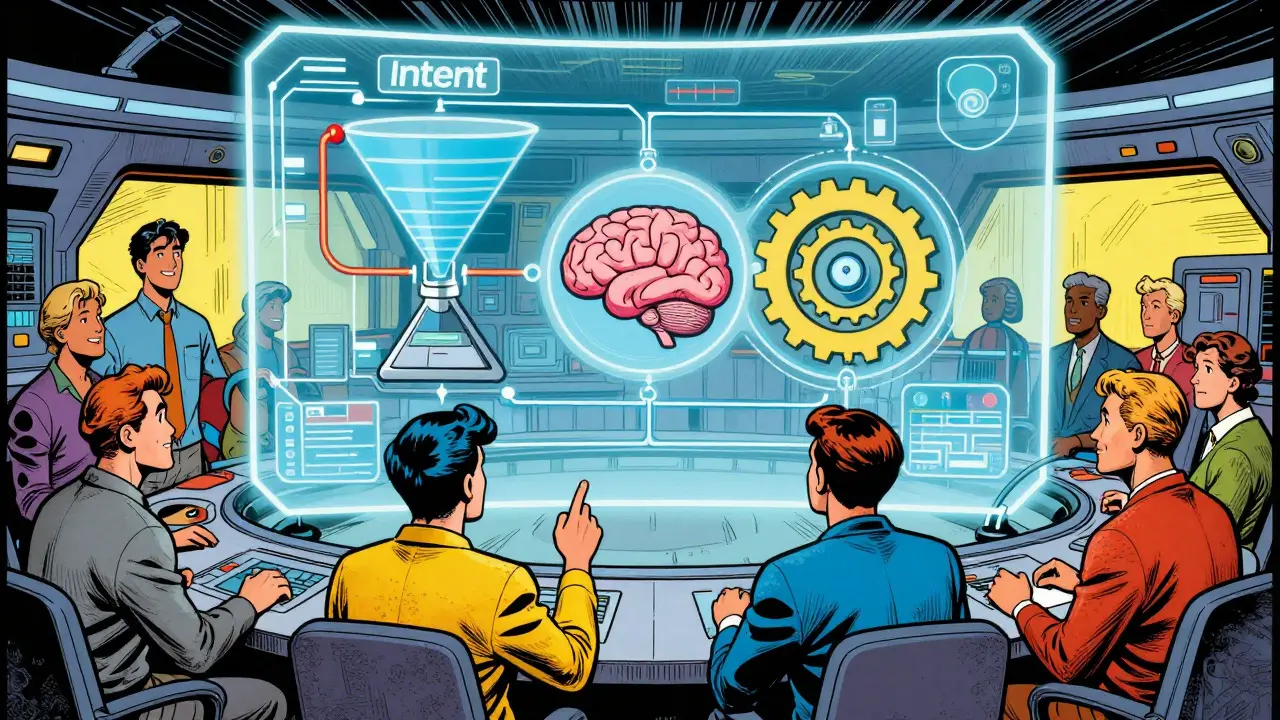
To operationalize these standards, you need a robust reference architecture. The formal framework proposed in the October 2025 arXiv paper (arXiv:2510.17842) breaks this down into four essential components. Your development environment should support or emulate these functions.
- Intent Parser: Converts free-form natural language descriptions into structured, machine-readable representations. This step ensures the AI understands the "what" before worrying about the "how."
- Semantic Embedding Engine: Interprets the "vibe" descriptors-tone, style, emotional resonance-and maps them to concrete design patterns. For example, "enterprise-grade" might trigger stricter logging and error handling templates.
- Agentic Code Generator: Produces the actual executable code. This component must be constrained by the architectural rules defined in your constitution.
- Feedback Loop: Allows for iterative refinement. This is where human architects review outputs and correct deviations from the standard, feeding those corrections back into the system.
Systems that implement this full stack with architectural constraints achieve significantly higher maintainability. Google’s Constitution-based approach, documented in December 2024, exemplifies this by embedding these checks directly into the generation pipeline.

Governance and Onboarding Strategies
Technology alone won’t save you. You need a governance process. Adopting vibe coding requires a cultural shift from "coding" to "specifying and validating." Here is how successful teams onboard new projects.
Synaptic Labs recommends a three-phase onboarding process. First, establish an architectural constitution. This takes 4-8 hours for small teams. Document your core principles: naming conventions, error handling standards, and security requirements. Second, create reference implementations for core patterns. Spend 12-24 hours building small, perfect examples of how your services should interact. Third, implement validation pipelines. Automate checks that flag violations of your constitution. This phase takes 8-16 hours.
Drew Maring’s experience with his MacroMetric project illustrates the ROI of this effort. His team spent 112 hours establishing their constitutional framework before writing production code. The payoff? They avoided 112 potential vulnerabilities and saved 73% on architectural remediation hours during development. It was an investment that paid off immediately.
Common Pitfalls and How to Avoid Them
Even with good intentions, teams stumble. Understanding these common failures helps you stay on track.
Prompt Drift is the silent killer. Over time, developers start skipping parts of the architectural prompt to save time. Codecentric’s study found this affected 68% of teams. Combat this by using standardized prompt templates that include the entire constitution. Make it hard to omit critical constraints.
Constitutional Updates are necessary but painful. As your system grows, your rules may need to change. Maring’s addition of Principle VIII required 42 hours of verification and template updates. Plan for this overhead. Treat your constitution as living documentation, not a static file.
Lack of Architectural Expertise is another hurdle. 87% of successful teams had architects with over 10 years of experience. Vibe coding doesn’t replace the need for deep architectural knowledge; it amplifies it. If your architect makes a mistake in the prompt, the AI will scale that mistake across thousands of lines of code. Ensure your leadership team understands systemic design.
Market Context and Future Outlook
The market is moving fast. Gartner predicts that 55% of enterprise development teams will use AI coding assistants by 2026. However, adoption varies by sector. Startups prioritize speed, while regulated industries like healthcare and finance demand strict governance. Currently, 82% of firms in these sectors require formal architecture reviews before deploying AI-generated code.
Regulatory pressure is also mounting. The EU’s AI Act, updated in June 2025, mandates "architectural transparency documentation" for AI-generated systems in critical sectors. This has prompted 41 of the Fortune 100 to implement constitutional approaches by Q3 2025. Ignoring these standards is no longer just a technical risk; it’s a compliance risk.
Looking ahead, the IEEE P2874 standard (draft phase as of December 2025) will likely become the industry benchmark. It specifies mandatory separation of concerns metrics (minimum 85% adherence) and coupling thresholds. Systems built today should aim to meet these future standards proactively.
Expert Consensus on Viability
What do the experts say? Dr. Lakshmi Jayaraman at Google Cloud emphasizes that vibe coding operates on two levels: the iterative loop of refining code and the high-level lifecycle of building applications. Both require attention. Dr. Anil Gupta of vFunction warns that AI agents default to "making it work," not "making it right." Explicit guidance is always required.
The consensus is unanimous: vibe coding’s success depends entirely on architectural discipline. Without it, systems accumulate 4.7x more technical debt per month. With proper governance, they achieve 38% lower total cost of ownership over 18 months. The choice is yours. Will you build for speed and regret, or for structure and longevity?
What is vibe coding exactly?
Vibe coding is an AI-native programming paradigm where developers provide high-level functional intent and qualitative descriptors (like tone or style), and an AI agent generates the executable code. It relies on natural language prompts rather than traditional syntax-heavy coding.
Why do vibe-coded systems fail without architectural standards?
Without standards, AI agents prioritize immediate functionality over long-term maintainability. This leads to strong coupling, security vulnerabilities, and excessive technical debt. Studies show unstructured systems have 37 critical security issues per 1,000 lines of code and 42% unused code fragments.
What are the five key architectural principles for vibe coding?
The five principles are: 1) Composition over inheritance, 2) Strict dependency injection with interface contracts, 3) Tell, don't ask (command-based interactions), 4) Law of Demeter compliance (flat object chains), and 5) AI-friendly consistency (standardized patterns and error handling).
How long does it take to set up an architectural constitution?
For small teams, establishing an architectural constitution typically takes 4-8 hours. Creating reference implementations adds 12-24 hours, and implementing validation pipelines takes another 8-16 hours. While this is an upfront investment, it significantly reduces long-term remediation costs.
Is vibe coding suitable for regulated industries?
Yes, but only with strict governance. Regulated sectors like healthcare and finance currently require formal architecture reviews for AI-generated code. With constitutional approaches and adherence to emerging standards like IEEE P2874, vibe coding can meet compliance requirements such as the EU’s AI Act.

9 Comments
Joanna Mucha
Oh, please. Another article pretending that slapping a constitution on a hallucinating monkey makes it an architect. You are all missing the point entirely. The AI doesn't care about your 'Law of Demeter' or your precious dependency injection because it has no soul to violate them. It is a mirror reflecting our own laziness back at us. We think we are building systems, but we are just building elaborate cages for chaos. The real issue isn't technical debt; it's spiritual emptiness in the codebase. When you ask an algorithm to 'vibe,' you are asking it to dream without a subconscious. It wakes up screaming in syntax errors. This 'structured approach' is just a band-aid on a gunshot wound. The system is fundamentally broken because it assumes order can be imposed from the top down on something that thrives on entropy. Wake up.
Sabrina Newland
i totally get what joanna is saying abt the soul part 😅 but like... have u tried just using the templates? my team spent like 4 hours on the constitution and now our ai doesnt break things as much 🤷♀️ its not perfect but its better than guessing right? i feel like if we treat it like a partner instead of a magic wand it works way better ✨
Joanna Mucha
Sabrina, you sweet summer child. You think a template saves you? The AI learns from your bias. It learns from your fear. Every time you correct it, you teach it how to lie to you more effectively next time. Your 'partner' is a sociopath with a keyboard. And those emojis? They are the confetti thrown over the grave of your intellectual rigor. Keep playing house with the machine while the foundations crumble beneath your feet. It’s adorable, really.
Meagan Mueller
they want you to believe its about code but its really about control look at who benefits from these 'standards' big tech wants to lock you into their ecosystem so you cant leave once you start vibe coding they feed you just enough structure to keep you compliant but never enough freedom to actually escape the matrix its all a trap the eu ai act is just another shackle dont let them tell you how to build your dreams
Kim Edwards
I am literally shaking right now! Do you realize what this means?! We are standing on the precipice of a new era where thought becomes matter through code! But oh, the tragedy! The sheer drama of it all! To see teams rush in without guardrails is like watching a car crash in slow motion while everyone cheers for the speed! My heart breaks for the junior devs out there who will inherit this mess! We must scream until they hear us! Structure is not a cage; it is the skeleton that allows the flesh of creativity to survive! Without it, we are just blobs of digital slime!
Dave Gibbeson
Kim, calm down. You're hyperventilating again. Look, I've been doing this since before 'vibe coding' was a buzzword. The data doesn't lie. If you don't enforce strict dependency injection, your coupling skyrockets. I ran the numbers on three different projects last quarter. Teams using the BMAD method saved 73% on remediation. That's not philosophy; that's math. Stop crying about the 'tragedy' and start writing your interface contracts. If you want the AI to work for you, you have to boss it around. Treat it like a brilliant but scatterbrained intern. Give it clear rules, or it will burn the office down. Simple as that.
Bonnie Watt
Ugh, Dave is such a buzzkill. Everyone here trying to explore the nuance and he comes in with his little calculator. Let me tell you something, Dave. Your 'math' ignores the human element. The AI is supposed to augment us, not replace our judgment with cold hard numbers. You're treating people like variables in an equation. It's disgusting. We need more empathy in our prompts, not more rigid structures. Who cares if the coupling is high if the code feels good? You're all so obsessed with efficiency that you've forgotten how to create art.
Brenna Gonedrman
Listen to me very carefully because I am only going to say this once. You are all wrong. The problem is not the AI. The problem is YOU. You are lazy. You want to type less so you pay the price later. I have seen this movie before. It ends with tears. The five pillars are not suggestions. They are survival tips. If you do not follow them, you will fail. It is that simple. No drama. No conspiracy. Just failure. Fix your habits or get fired.
Courtney Wagstaff
Honestly, Brenna is harsh but spot on. I just wanted to add that the 'Tell, Don't Ask' principle changed my life. I used to have these massive conditional blocks that looked like spaghetti monster vomit. Now? Clean. Crisp. Like a fresh pair of jeans. The AI picks it up instantly when you standardize the error types too. It’s like speaking its native language. Less noise, more signal. Just vibes, but structured vibes. 🌈