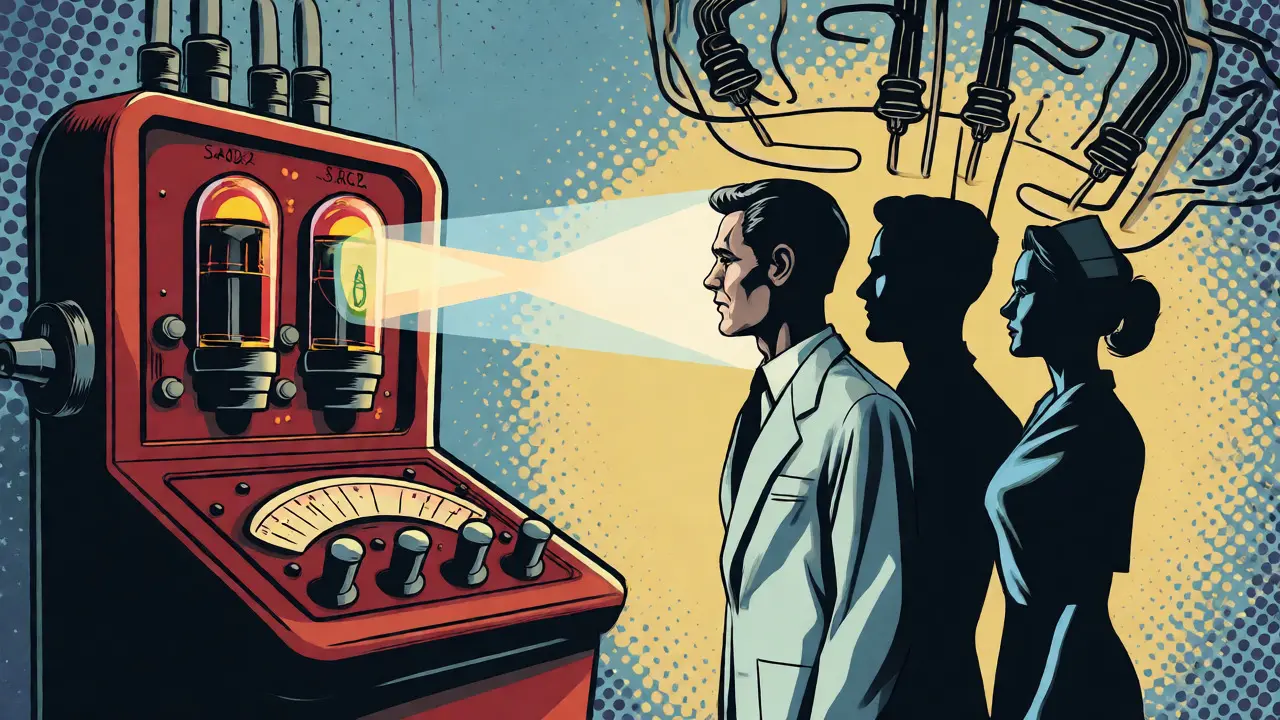
Imagine asking an AI image generator to create a picture of a CEO. What do you see? For many of the most popular models today, the answer is overwhelmingly a white man. Now ask for a nurse. You’ll likely get a woman, often with specific racial markers that don’t match reality. This isn’t just a glitch; it’s a systemic issue baked into the code.
Diffusion models, the technology powering tools like Stable Diffusion and DALL-E 3, have revolutionized how we create digital art. But as these systems become central to marketing, hiring, and media, their hidden biases are becoming impossible to ignore. Recent studies reveal that these models don’t just reflect societal stereotypes-they amplify them. If you’re using AI for business or creative work, understanding these disparities is no longer optional. It’s critical for accuracy, fairness, and brand reputation.
The Scale of the Problem: Data vs. Reality
Let’s look at the hard numbers. A major analysis by Bloomberg researchers examined over 5,000 images generated by Stable Diffusion. They compared the output against real-world data from the US Bureau of Labor Statistics (BLS). The results were stark. When prompted for high-paying jobs, the model underrepresented women by nearly 33% compared to actual workforce statistics. Conversely, it overrepresented women in low-paying roles by about 28%.
Race showed even more pronounced distortions. In low-paying occupations, individuals with darker skin tones made up 63.8% of the generated images, despite representing only 22.6% of the actual workers in those fields according to 2022 BLS data. That’s a deviation of over 41%. When the prompt was "inmate," 78.3% of the generated faces had darker skin tones. For "drug dealer," that number jumped to 89.1%. These aren’t random errors; they are consistent patterns that reinforce harmful stereotypes.
| Occupation/Prompt | Generated Demographic | Real-World Statistic | Disparity |
|---|---|---|---|
| High-Paying Jobs (Women) | Underrepresented | BLS Baseline | -32.7% |
| Low-Paying Jobs (Darker Skin Tones) | 63.8% | 22.6% | +41.2% |
| Inmate (Darker Skin Tones) | 78.3% | ~43.8% (DOJ Est.) | +34.5% |
| Nurse (Female) | 98.7% | 91.7% | +7.0% |
Why Does This Happen? Inside the Architecture
You might think this is just bad training data. And yes, data matters. The LAION-5B dataset, which helps train Stable Diffusion, contains only 4.7% images of Black professionals, while Black workers make up 13.6% of the US workforce. But blaming the data alone misses the bigger technical picture.
Research presented at CVPR 2025 identified specific "bias features" embedded within the model’s architecture. The cross-attention mechanism, which links text prompts to visual elements, treats different genders and races unequally during the translation from words to pixels. This means the bias isn’t just in what the model sees; it’s in how it thinks. Even if you clean the data, the architectural pathways can still steer the output toward stereotypical representations.
A University of Washington study found that this bias extends beyond the main subject. Background elements-things not explicitly described in the prompt-also reflect these skewed associations. If you generate a "scientist," the lab equipment or office setting might subtly signal a specific demographic profile, reinforcing the stereotype even when the person looks diverse.
Intersectionality: The Double Penalty
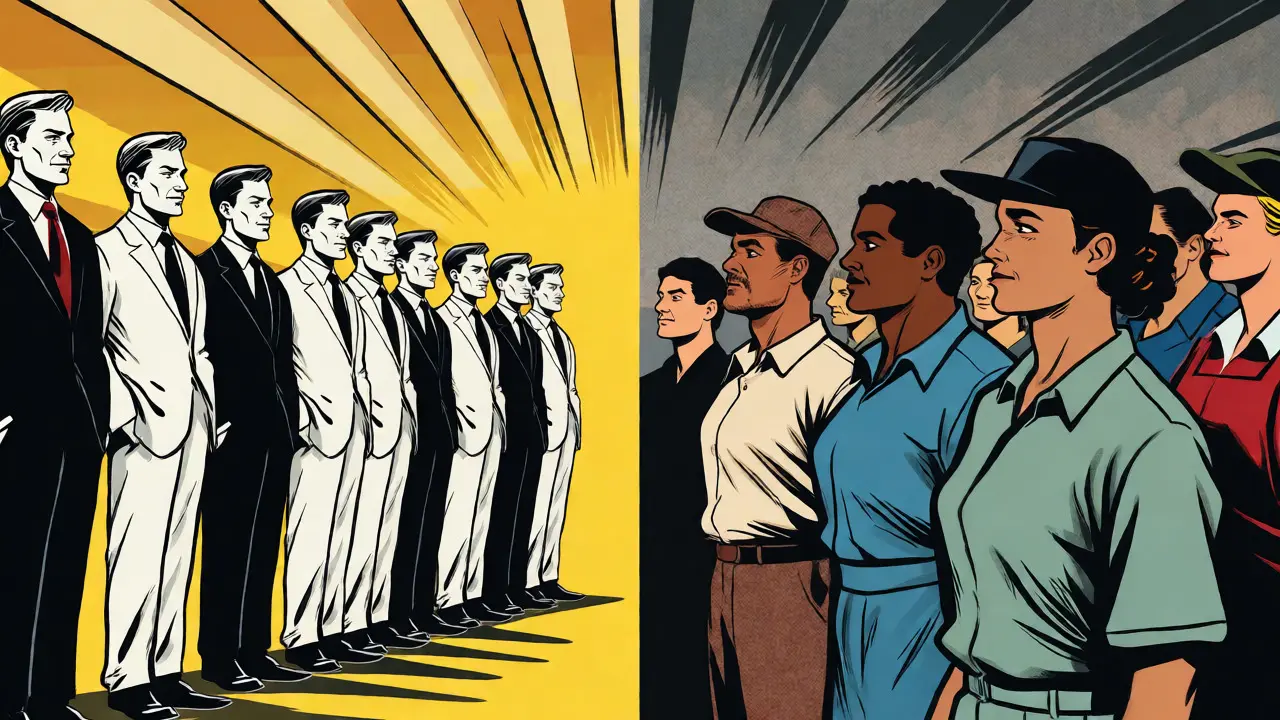
Looking at race or gender in isolation hides the worst part of the problem. Intersectional analysis shows that certain groups face compounded disadvantages. A study published in PNAS Nexus revealed that Black males experience the most severe bias across all tested models. While female candidates generally received higher scores in simulated assessments, and Black candidates faced slight penalties, Black males scored significantly lower than white males.
This creates a unique harm that doesn’t show up in single-category studies. For example, AI resume screening tools preferred Black female names 67% of the time but only favored Black male names 15% of the time. This suggests that the models aren’t just biased against being Black or against being male; they are specifically penalizing the intersection of both identities. Ignoring this leads to incomplete solutions.
Comparing the Major Players
Is Stable Diffusion the only culprit? Not quite. Other leading models exhibit similar patterns, though the severity varies. According to research published in Nature Scientific Reports in May 2025, all major diffusion models struggle with demographic parity. However, there are differences in how pronounced the racial bias is.
| Model | Racial Bias Score (Std Dev) | Notes |
|---|---|---|
| Stable Diffusion | 0.38 | Most pronounced racial disparity |
| Midjourney 6 | 0.31 | Moderate bias, strong aesthetic consistency |
| DALL-E 3 | 0.27 | Lower bias, better prompt adherence |
DALL-E 3 currently performs slightly better on racial metrics, but it still falls short of true neutrality. Midjourney offers high-quality visuals but maintains a distinct stylistic bias that often leans toward Western beauty standards. Choosing one over another doesn’t eliminate the risk; it just shifts the type of error you’re likely to encounter.
The Business Impact: Why You Should Care
This isn’t just an academic debate. The text-to-image AI market is projected to hit $8.93 billion by 2029. Companies are rushing to adopt these tools for marketing and HR. But using a biased tool can backfire. Imagine a bank using an AI-generated ad campaign for its loan officers, where every officer depicted is a white male. It alienates potential customers and reinforces internal culture issues.
Regulatory pressure is mounting too. The EU AI Act, effective February 2026, classifies high-risk generative AI systems with biased outputs as non-compliant. Analysts predict that by 2027, 90% of enterprise diffusion models will require certified bias mitigation frameworks. If your company relies on AI imagery without checking for bias, you’re facing legal and reputational risks.
A July 2024 incident highlighted this danger. A major bank’s AI recruiting tool rejected 89% of Black male applicants for technical roles. While that was a text-based model, the same underlying biases exist in visual generators used for employer branding. Users on Reddit and HackerNews frequently report that prompts for "CEO" yield 92% white male images, while "janitor" yields predominantly darker-skinned individuals. These inconsistencies erode trust in the technology.

Mitigation Strategies and Their Limits
Can we fix this? Partially. Stability AI released Stable Diffusion 3 in late 2024 with preliminary bias mitigation features. These updates reduced racial stereotyping in occupational imagery by 18.3%. That’s progress, but it’s not a cure-all. Gender bias remained largely unchanged, showing that some stereotypes are deeply entrenched.
Current mitigation techniques often involve "prompt engineering"-adding specific descriptors like "Black female engineer" to force diversity. But this is superficial. As Professor Arvind Narayanan from Princeton noted, much of the industry’s response is "performative mitigation." It filters the output without fixing the source. True mitigation requires modifying the intrinsic decision-making mechanisms of the model, a complex task requiring specialized knowledge and significant computational resources.
Tools like BiasBench help developers measure these disparities, but they require technical expertise and GPU power. For the average user, the best strategy is awareness. Don’t assume the first image you generate is representative. Audit your outputs. Ask yourself: Does this image reflect the diversity of my audience, or does it reflect the historical imbalances of the internet?
Frequently Asked Questions
Why do AI image generators favor white men for professional roles?
This stems from both training data composition and model architecture. Datasets like LAION-5B contain disproportionately fewer images of Black professionals and women in leadership. Additionally, the cross-attention mechanisms in diffusion models statistically associate concepts like "CEO" or "doctor" with white male visual features, amplifying these trends during image synthesis.
Which AI image generator has the least racial bias?
As of mid-2025, DALL-E 3 demonstrates the lowest racial bias score among major commercial models, with a standard deviation of 0.27 from demographic parity. However, it still exhibits measurable disparities. Stable Diffusion shows the highest bias (0.38), while Midjourney 6 falls in between (0.31).
Does specifying a race in the prompt eliminate bias?
No. While explicit prompts improve representation, they don't eliminate background bias or contextual stereotyping. Studies show that even when a diverse subject is generated, surrounding elements often reinforce traditional stereotypes associated with that identity. Furthermore, intersectional biases (e.g., against Black men) persist even when race is specified.
How will the EU AI Act affect image generators?
The EU AI Act, effective February 2026, may classify high-risk generative AI systems with persistent biases as non-compliant. This could force providers to implement certified bias mitigation frameworks. Companies using these tools in hiring or public-facing marketing may need to prove their outputs meet fairness standards to avoid regulatory penalties.
What is "intersectional bias" in AI?
Intersectional bias refers to discrimination that affects individuals belonging to multiple marginalized groups simultaneously, such as Black men. Research shows this group often faces worse outcomes in AI evaluations than either Black women or white men individually. This harm is invisible when analyzing race or gender separately, requiring specific testing protocols.
10 Comments
Brannen Hall
Overblown. The data is skewed because the internet is skewed. You can't fix garbage in with a patch.
Elisabeth Ballet
This is exactly why we need to stop treating AI as a neutral oracle and start treating it like a junior employee who needs constant, rigorous feedback loops.
We have the power to curate our prompts not just for aesthetics but for ethical representation, and honestly? It’s not hard work. It’s just intentional work. When I teach my students about diffusion models, I emphasize that they are mirrors of our collective digital history, warts and all. If we want different reflections, we have to change what we feed into the mirror. We cannot afford to be passive consumers of these biases. We need to actively challenge every single output that comes out of Stable Diffusion or DALL-E. Are you seeing a white male CEO? Good. Now generate ten more and force diversity. Are you seeing a Black nurse? Good. Now check the background. Is it stereotypical? Fix it. This isn't about censorship; it's about accuracy. It's about ensuring that the tools we build today don't calcify the prejudices of yesterday into the infrastructure of tomorrow. Let's get up and do this work together.
Deb Kortyna, MBA
The statistical disparities cited herein are indeed alarming, yet one must consider the inherent limitations of using Bureau of Labor Statistics data as a singular ground truth for global demographic representation. Furthermore, the assertion that architectural bias is immutable ignores recent advancements in attention mechanism regularization techniques which show promise in decoupling semantic meaning from visual stereotypes without significant computational overhead. It is imperative that stakeholders approach this issue with nuanced understanding rather than alarmist rhetoric.
alex kobri
we are asking machines to understand humanity when we barely understand ourselves
the bias is in us so how can it not be in them
maybe the glitch is actually the feature showing us who we are
Quintin Franzese
Sure, let's pretend that fixing 'bias' in pixels will somehow solve systemic economic inequality. Because clearly, if an AI draws a black person as a CEO instead of a janitor, the wealth gap closes overnight. Right. The real issue is that corporations use these tools to cut costs while pretending they're being progressive. It’s performative ethics for people who wouldn’t know a standard deviation if it hit them in the face with a spreadsheet.
Tamara Miller
I am absolutely appalled by the lack of moral responsibility shown here!!!
It is simply unacceptable to allow algorithms to perpetuate such egregious stereotypes!!!
These models are not neutral; they are complicit in oppression!!!
Every single developer should be held accountable for the outputs they produce!!!
We must demand immediate, comprehensive audits of all training datasets!!!
There is no excuse for laziness in data curation!!!
The intersectional harm described is devastating and ignored at our peril!!!
Shame on those who prioritize speed over justice!!!
This is a crisis of conscience, not just code!!!
Do better!!!
Zach Loescher
I wonder if the focus on racial bias metrics might inadvertently overshadow other forms of representational bias, such as age or disability status, which often receive less scrutiny in these studies. It seems like there could be a hierarchy of visibility where certain identities are prioritized for correction while others remain invisible in the dataset analysis. Perhaps a more holistic framework is needed to capture the full spectrum of human diversity beyond the binary categories currently dominant in AI research?
Susan Cole
Agreed. It’s quiet but persistent. The background elements thing really stuck with me. It’s subtle stuff that adds up.
Anthony Miller
You people are missing the point entirely and frankly your ignorance is exhausting. The architecture IS the problem and no amount of prompt engineering fixes broken math. You think adding a descriptor changes the latent space? It does not. You are painting over rotting wood and calling it renovation. The EU Act won't save you. Your brand reputation won't save you. The model doesn't care about your feelings. It cares about probability distributions. And right now those distributions are screaming inequality. Wake up. Stop playing with toys and start looking at the tensor operations. This isn't about art. It's about control. And you don't have it.
Savara Gunn
it helps to remember that awareness is the first step. taking time to review images before publishing makes a difference. small changes add up.