
Imagine finishing your weekly lesson plans in twenty minutes instead of two hours. Or having a complete, standards-aligned syllabus drafted before you’ve even finished your morning coffee. This isn’t science fiction anymore. By mid-2026, Generative AI is a suite of large language model tools that create text, code, and structured data based on user prompts has moved from experimental novelty to daily operational reality for educators. The shift is dramatic: where teachers once spent evenings typing out repetitive instructions, they now use AI as a drafting assistant to handle the heavy lifting of curriculum design.
But here is the catch. AI doesn’t replace the teacher; it replaces the blank page. If you treat these tools like magic wands that produce perfect final products, you will run into trouble with accuracy, bias, and shallow pedagogy. If you treat them like fast interns who need supervision, you unlock massive time savings. This guide breaks down exactly how to use generative AI for three core operations: writing syllabi, designing lesson plans, and creating grading rubrics.
The Reality of AI in Education Operations
Let’s be clear about what is happening in schools and universities right now. Industry analyses identify over a dozen distinct use cases for generative AI in education, but the most impactful ones revolve around administrative and design tasks. Tools like Microsoft Copilot, ChatGPT, and Gemini are powerful, but specialized platforms like Magic School and SchoolAI have carved out a niche by building educational structures directly into their interfaces.
The goal isn’t just speed. It’s consistency and alignment. A human teacher might forget to include a specific state standard in one lesson plan but remember it in another. An AI tool, if prompted correctly, can ensure every single activity ties back to the same learning objective. However, this requires you to stay in the driver’s seat. Research from 2024 analyzing hundreds of AI-generated lesson plans found that while the volume of content was impressive, the cognitive depth often lacked rigor without human intervention. You are the editor-in-chief; the AI is the copywriter.
Drafting Syllabi with Precision and Policy
Syllabi are more than schedules; they are contracts between instructor and student. Traditionally, writing one means copying last year’s document, changing the dates, and hoping you didn’t miss any new institutional policies. Generative AI changes this workflow entirely.
You can use AI to generate the initial structure of a course overview, including descriptions, weekly schedules, and reading lists. But the real value lies in codifying policy. In 2026, every syllabus needs an AI-use statement. Institutions like the University of Texas at San Antonio (UTSA) provide templates that range from fully permissive to strictly prohibitive. You can ask your AI tool to draft a syllabus section that explicitly defines how students may use AI in your class.
For example, you might prompt the AI to write a policy stating: "Students may use generative AI for brainstorming, but no more than 25% of the final written work can be AI-generated, and all AI use must be cited." The AI can then format this into professional academic language, ensuring it aligns with APA guidelines or your institution’s specific code of conduct. This saves you from legal gray areas and sets clear expectations from day one.
- Define the scope: Tell the AI whether AI is banned, limited, or encouraged.
- Specify citation rules: Require students to append prompts and outputs if allowed.
- Align with integrity codes: Ensure the language matches your school’s academic dishonesty policies.
Lesson Planning: From Blank Page to Structured Activity
This is where teachers see the biggest immediate return on investment. Let’s look at a concrete scenario. You teach sixth-grade math and need to cover ratios and proportions according to Utah Core Standards. In the past, you’d spend an hour finding resources, tweaking activities, and writing objectives. Today, you go to a platform like Magic School or SchoolAI.
Here is the workflow:
- Input parameters: Select grade level (6th), subject (Math), and paste the specific standard code.
- Generate: Click generate. Within seconds, the AI produces a full lesson plan including learning intentions, success criteria, an opening hook, guided practice, independent practice, and a closing assessment.
- Refine: This is crucial. The output is a first draft. You review it. Does the "hook" actually engage sixth graders? Is the differentiation sufficient for special education students?
- Edit: Modify the prompt to add constraints, such as "include a visual aid for visual learners" or "simplify the language for English Language Learners," and regenerate.
Platforms like SchoolAI use a six-step framework to scaffold this process, ensuring you don’t just get generic text but a pedagogically sound structure. The AI handles the formatting and the initial idea generation, freeing you to focus on the nuances of your specific classroom dynamics. Remember, the CITE Journal study highlighted that AI-generated plans can sometimes lack depth. Your job is to inject that depth through review and adaptation.
Creating Grading Rubrics That Make Sense
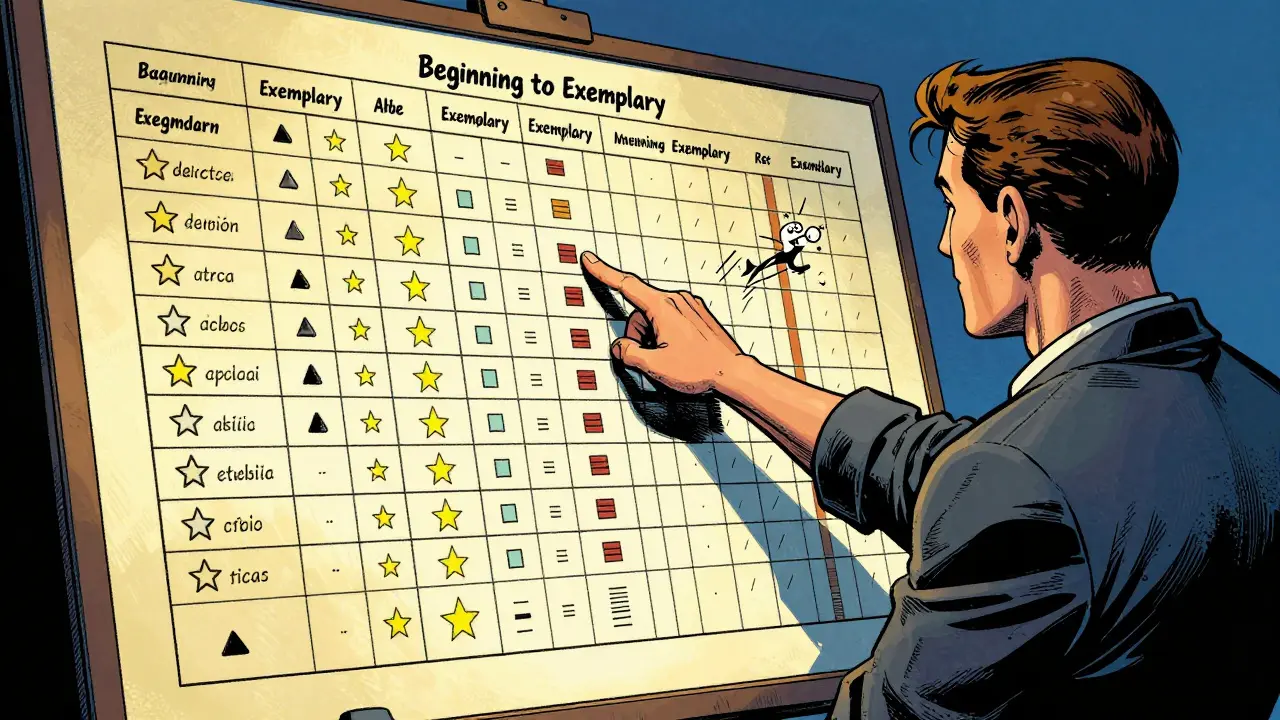
Rubrics are often the most dreaded part of assessment design. They require precise language to distinguish between "proficient" and "exemplary" performance. Ambiguity leads to grading inconsistencies and student confusion. Generative AI excels at creating structured, multi-level criteria.
To build a rubric, you provide the AI with the assignment description and the learning objectives. Then, you specify the performance levels (e.g., Beginning, Developing, Proficient, Exemplary). The AI generates detailed descriptors for each category. For instance, if you’re grading a research paper, the AI can define what "exemplary" source integration looks like versus "developing" integration.
This approach ensures consistency across all students. However, you must verify that the criteria actually measure the intended skills. AI might prioritize grammatical perfection over critical thinking if not prompted otherwise. Always adjust the weightings and descriptors to reflect your pedagogical priorities. If critical analysis is the goal, make sure the rubric emphasizes argumentation and evidence over sentence structure.
| Tool Type | Best For | Key Advantage | Limitation |
|---|---|---|---|
| General LLMs (ChatGPT, Gemini) | Braintorming, flexible drafting | Highly adaptable to any prompt | Requires precise prompting; no built-in educational structures |
| Specialized Platforms (Magic School, SchoolAI) | Standards-aligned lesson plans | Built-in templates for grades and standards | Less flexible for non-standard subjects or unique formats |
| Institutional Suites (Microsoft Copilot) | Integration with existing workflows | Seamless connection to Office 365 and school data | Steeper learning curve; requires training |
Navigating Risks: Accuracy, Bias, and Trust
We cannot discuss AI operations without addressing the risks. The phrase "hallucination" is common in tech circles, but in education, it’s called misinformation. AI models can confidently state false facts. They can also perpetuate biases present in their training data. When you use AI to generate a lesson plan about history or social studies, you must fact-check every claim.
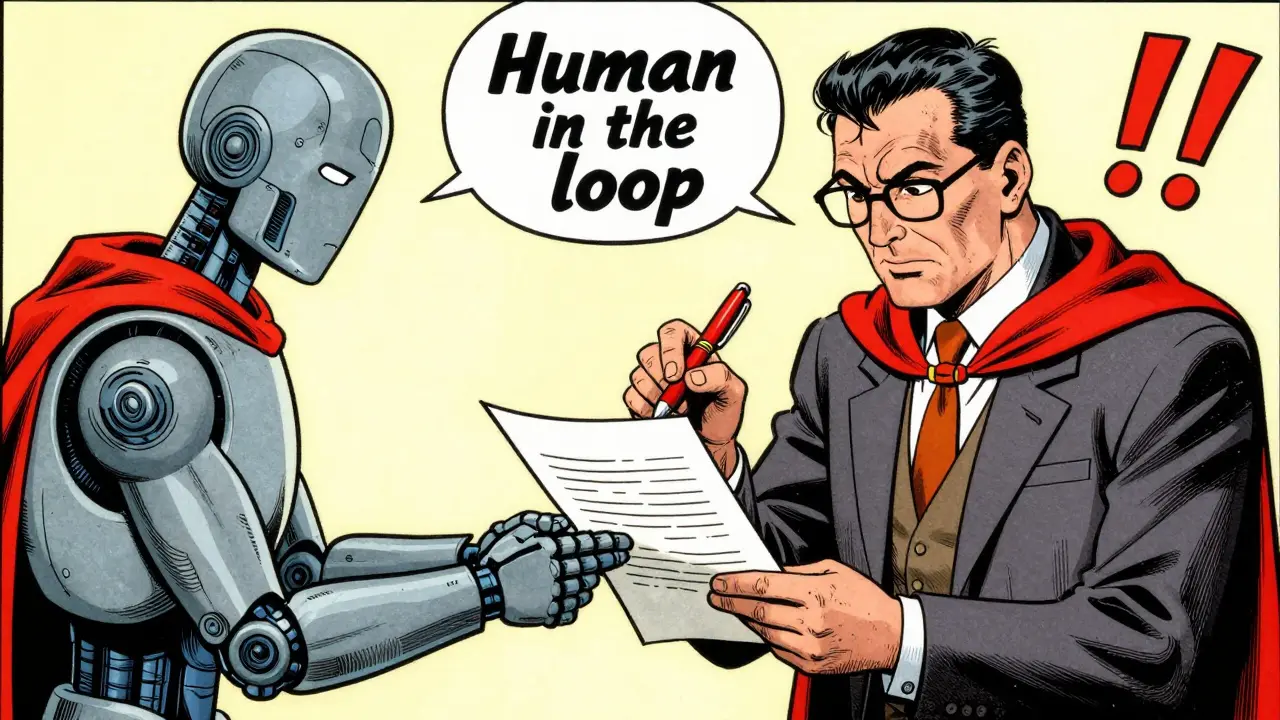
Furthermore, there is the issue of pedagogical alignment. Just because an activity sounds fun doesn’t mean it teaches the standard. The 2024 study of 310 AI-generated lesson plans found frequent mismatches between the stated standard and the actual cognitive demand of the activities. Some activities were too simple; others were irrelevant. This is why the "human in the loop" model is non-negotiable. You are responsible for the quality of instruction. AI is a tool, not a credential.
Ethical considerations also extend to student privacy. Never input personally identifiable information (PII) about students into public AI models. Use anonymized data or platforms that comply with FERPA and other privacy regulations. Institutional tools like Microsoft Copilot for Education are designed with these safeguards in mind, whereas free public chatbots are not.
Building Your AI Workflow: A Practical Checklist
Adopting generative AI doesn’t happen overnight. It requires a deliberate shift in how you approach planning. Here is a practical checklist to integrate AI into your daily operations effectively.
- Start small: Begin with low-stakes tasks like generating discussion questions or drafting email templates for parents.
- Master prompting: Learn to give context. Instead of "write a lesson plan," try "Write a 45-minute lesson plan for 8th-grade science on photosynthesis, aligned to NGSS standard LS1.1, including a hands-on lab activity and a formative assessment quiz."
- Verify everything: Treat AI output as a rough draft. Check facts, check tone, and check alignment with standards.
- Document your use: Keep records of how you use AI in your syllabus and assignments. Transparency builds trust with students and administrators.
- Seek training: Leverage resources like Microsoft Learn for Educators or university-led workshops. Professional development helps you avoid common pitfalls and discover advanced features.
The future of education operations is co-creative. AI handles the volume and structure; you provide the judgment, empathy, and expertise. By mastering these tools, you reclaim your time for what matters most: connecting with students and facilitating deep learning.
Is it safe to use free AI tools like ChatGPT for lesson planning?
It depends on your institution’s policy and the sensitivity of the data. Free public tools generally do not guarantee data privacy, so you should never input student names, grades, or other personally identifiable information. For general lesson ideas, they are useful, but specialized educational platforms often offer better alignment with standards and stronger privacy protections.
How do I prevent AI from generating biased content in my lessons?
You must actively review all AI-generated content for bias. AI models are trained on vast amounts of internet data, which can contain stereotypes or outdated perspectives. Look for diverse representations in examples and language. If you spot bias, edit the content immediately and consider providing feedback to the tool if possible. Always apply your professional judgment as the educator.
Can AI replace the need for teacher training in curriculum design?
No. AI can draft materials quickly, but it lacks the contextual understanding of your specific students and classroom environment. Teacher training remains essential for interpreting standards, adapting lessons for diverse learners, and making pedagogical decisions. AI is an assistant, not a replacement for professional expertise.
What is the best way to cite AI use in a syllabus?
Be explicit and specific. State whether AI is allowed, prohibited, or limited. If allowed, specify how students must cite it, such as including the tool name, version, date, and the exact prompt used. Refer to your institution’s academic integrity policy to ensure compliance. Clear guidelines prevent confusion and potential academic dishonesty issues.
How much time can I realistically save using AI for lesson planning?
Many teachers report saving several hours per week. While the initial setup and prompt refinement take time, generating a structured draft reduces the effort needed to start from scratch. Over time, as you refine your prompts and develop a library of reusable AI-generated components, the efficiency gains become significant, allowing you to focus more on differentiation and student interaction.


10 Comments
Francis Laquerre
I have been teaching history for fifteen years and I can tell you that the shift to using these tools is not just about speed but about survival in a system that demands constant innovation without providing adequate support. The idea of finishing lesson plans in twenty minutes sounds like a dream come true for anyone who has ever stayed up until midnight tweaking a rubric only to realize it was completely misaligned with the state standards we are forced to follow. It is absolutely dramatic how quickly the landscape changes when you stop fighting the technology and start treating it as a junior colleague who needs heavy supervision rather than a magic wand that solves all your problems instantly.
michael rome
It is imperative that educators recognize the distinct advantages of specialized platforms over general large language models when it comes to maintaining pedagogical integrity and ensuring that every single activity ties back to specific learning objectives with precision and care. While general tools offer flexibility, they lack the built-in educational structures that ensure consistency across different grade levels and subjects which is why I always recommend starting with platforms designed specifically for curriculum design before branching out to more experimental uses. You must remain the editor-in-chief at all times because the AI is merely a copywriter that does not understand the nuances of classroom dynamics or the specific needs of special education students unless explicitly guided by a human expert who knows what they are doing.
Saranya M.L.
The cognitive depth often lacks rigor without human intervention which is a critical point that many enthusiastic adopters fail to grasp when they blindly trust the output of these algorithms without applying their own professional judgment and expertise to verify the accuracy and alignment of the generated content with established educational frameworks and standards. It is essential to understand that while the volume of content produced is impressive, the quality of instruction depends entirely on the teacher's ability to refine and adapt the material to suit the unique context of their classroom environment and student population which requires a high level of pedagogical knowledge and experience that no machine can currently replicate or substitute effectively in any meaningful way.
om gman
oh please spare me the corporate speak about 'operational reality' as if teachers are some kind of factory workers who need to optimize their syllabus drafting time to meet some arbitrary quota set by administrators who have never stepped foot in a real classroom since the nineties. i use chatgpt to write my emails to parents and honestly half the time it sounds like a robot trying to sound human which is exactly what happens when you let these tools dictate your tone instead of letting your own personality shine through in a natural and authentic way that actually connects with people rather than alienating them with sterile bureaucratic language that means nothing to anyone involved in the process
Jeanne Abrahams
Here in South Africa we are still struggling with basic infrastructure in many schools so talking about generative AI feels like discussing jet engines for bicycles that most of us cannot even afford to maintain let alone operate properly in our daily lives. It is quite amusing to see how quickly the western world jumps on every new tech bandwagon while ignoring the fundamental issues of access and equity that prevent millions of students from benefiting from these so-called advancements in education technology which seem designed more for wealthy districts than for the majority of learners who simply need reliable electricity and textbooks before they can worry about AI-generated rubrics or lesson plans that nobody has time to read anyway.
Bineesh Mathew
One must ponder the existential implications of outsourcing our creative pedagogical souls to silicon minds that know nothing of the sacred bond between teacher and student which is reduced here to mere data points and efficiency metrics in a cold calculation of time saved versus value created in this digital purgatory we call modern education. The soul of teaching lies in the messy unpredictable moments of connection that no algorithm can predict or manufacture yet we are being sold a bill of goods that promises perfection through automation while stripping away the very humanity that makes learning possible in the first place leaving us hollow shells of our former selves staring into screens waiting for prompts to tell us how to feel about our jobs again
Oskar Falkenberg
i think its really important that we dont forget that these tools are just helpers and not replacements for the actual hard work of thinking about what we want our students to learn and how best to teach it to them in a way that sticks and matters in their lives beyond just passing a test or getting a good grade on a paper that gets thrown away after grading. i have found that using ai to brainstorm ideas for hooks or activities is great but then i spend just as much time editing and refining those ideas to make sure they fit my class and my style which means im still doing the heavy lifting but maybe with a slightly better starting point than staring at a blank page which can be paralyzing sometimes especially when you are tired or overwhelmed with other responsibilities during the school day
Caitlin Donehue
I wonder if anyone has looked into how this affects the long-term retention of knowledge for students when lessons are designed by algorithms rather than humans who intuitively understand pacing and engagement cues from reading the room.
Stephanie Frank
let's be real here the whole point of this isn't to help teachers it's to prepare them for eventual replacement by cheaper automated systems that don't take lunch breaks or go on strike so enjoy your twenty minute lesson plans while they last because soon enough you'll be managing a dashboard instead of a classroom and wondering where all the human interaction went in this grand experiment of educational efficiency that prioritizes cost savings over student well-being and teacher job security in equal measure which is terrifying if you think about it for more than five seconds
Patrick Dorion
The philosophical underpinning of this shift is fascinating because it moves us from a model of creation ex nihilo to one of curation and refinement which fundamentally changes the role of the educator from author to architect of learning experiences that are scaffolded by technology but defined by human intent and values. I find that the most successful implementations involve a deep understanding of both the capabilities and limitations of the AI tools available as well as a clear vision of what constitutes effective pedagogy in your specific context which allows you to leverage the speed of generation without sacrificing the depth of thought that is essential for meaningful learning outcomes in any subject area regardless of grade level or complexity of content being taught.