For years, the tech industry operated on a simple, dangerous mantra: build it fast, fix it later. In the world of Generative AI is a class of artificial intelligence models capable of creating new content such as text, images, and audio, this approach has become a liability. The cost of inaction-measured in legal exposure, reputational damage, and human harm-now far exceeds the investment required for proactive safety measures.
This is where Safety by Design is an evolving industry framework that embeds protective mechanisms directly into the architecture of AI systems from the earliest stages of development. Developed by Thorn, a technology nonprofit, in collaboration with giants like Google, OpenAI, Meta, and Stability AI, this framework rejects the idea of bolt-on filters. Instead, it demands that child protection and content safety considerations be embedded into every decision point of the model’s lifecycle.
Why Reactive Fixes Fail in Generative AI
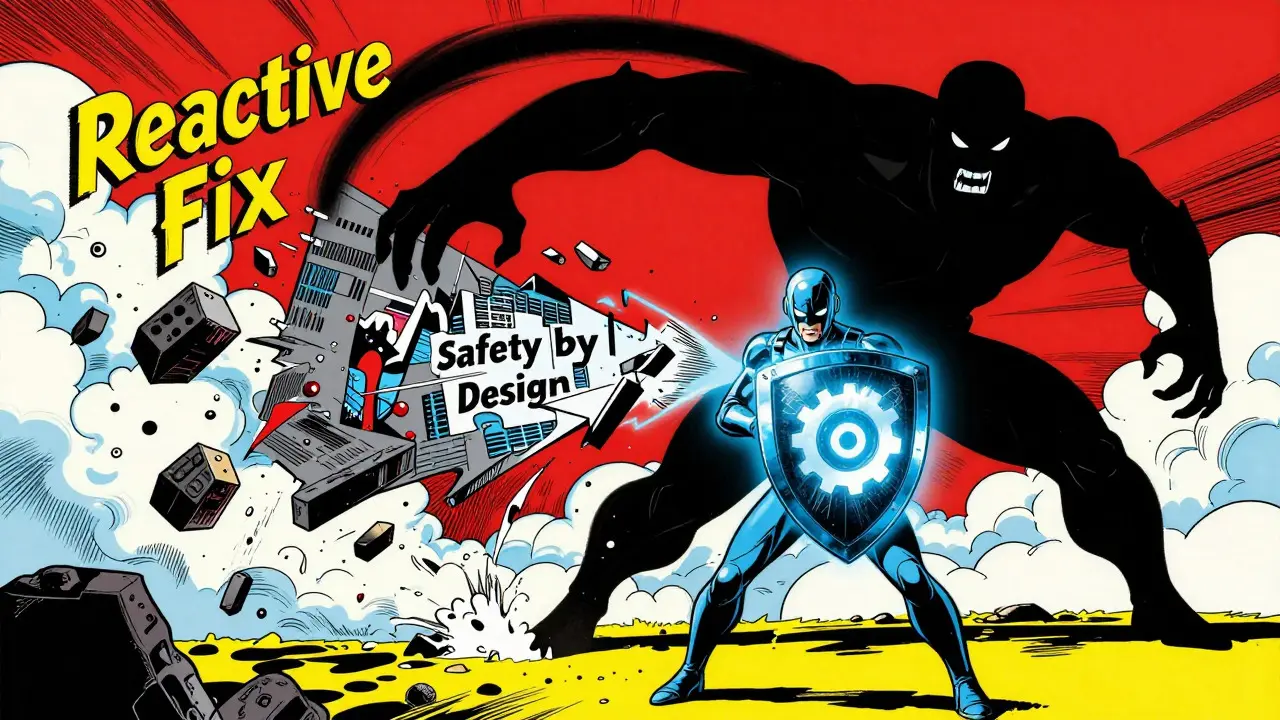
Traditional content moderation is reactive. You wait for bad content to appear, then you detect it and remove it. With generative AI, this strategy is always one step behind. Bad actors are already exploiting these tools to create realistic deepfake nudes, generate child sexual abuse material (CSAM), and scale harassment with alarming ease.
The core problem is that generative models can produce harmful content at scale and speed that human moderators cannot match. If developers do not stress-test their models for these capabilities during development, malicious users will find those vulnerabilities regardless. Safety by Design shifts the focus from detection after the fact to prevention before the output is even generated. This architectural approach provides stronger protection and reduces the ongoing operational burden of content moderation compared to reactive systems.
The Three Stages of Safety by Design Implementation
Implementing this framework requires a fundamental shift in development culture. It is not a compliance checkbox added at the end; it is integrated into three critical stages: development, deployment, and maintenance.
1. Development: Cleaning the Source
The first line of defense is the training data. If a model learns from dirty data, it will produce dirty outputs. During the development stage, companies must:
- Remove CSAM from datasets: Use purpose-built detection solutions to scrub child sexual abuse material and child sexual exploitation material (CSEM) from training sets.
- Implement model biases: Train the model to inherently resist generating exploitative content.
- Conduct red teaming: Run comprehensive safety testing specifically focused on child safety scenarios. This involves trying to break the model’s safeguards to understand its capability to produce abusive content.
This phase emphasizes responsibly sourcing training datasets. By making it significantly more difficult for downstream bad actors to fine-tune models for harmful content, you mitigate the potential for innocuous prompts to inadvertently trigger harmful outputs.
2. Deployment: Real-Time Protection
Once the model goes live, the focus shifts to real-time monitoring. Deployment-stage protections include:
- Input monitoring: Scanning user prompts for attempts to generate harmful content before the model processes them.
- Output scanning: Implementing filters to catch any CSAM or harmful content that slips through.
- Provenance tracking: Using watermarking and provenance systems to authenticate content and track its origin.
- User agreements: Explicitly requiring child safety compliance in terms of service.
Prevention messaging and deterrence notices can also redirect users away from harmful requests, acting as a psychological barrier alongside technical ones.
3. Maintenance: Ongoing Vigilance
Safety is not a one-time event. The maintenance stage ensures that safety mechanisms evolve as new threats and attack vectors emerge. As generative AI capabilities expand, so do the methods used to exploit them. Continuous updates to safety protocols are essential to keep pace with these changes.

Industry Standards and Collaboration
Safety by Design is not just a theoretical concept; it is being formalized into industry standards. Thorn has worked closely with NIST is the National Institute of Standards and Technology, a U.S. agency that develops standards and technology to promote innovation and industrial competitiveness to ensure that comprehensive industry standards reflect these principles. Additionally, efforts are underway to establish an IEEE recommended practice that builds off Safety by Design mitigations, incorporating the perspective of the global scientific community.
This collaborative approach extends beyond private sector partnerships. It includes work with standardization bodies to reduce risks related to synthetic media. The goal is to create a unified framework that all major players can adopt, ensuring consistency across the ecosystem.
| Feature | Traditional Approach | Safety by Design |
|---|---|---|
| Timing | Post-deployment (Reactive) | Pre-development (Proactive) |
| Data Handling | Minimal screening | Rigorous CSAM/CSEM removal |
| Testing | General performance tests | Specific red-teaming for safety |
| Protection Mechanism | Bolt-on filters | Embedded architectural safeguards |
| Operational Burden | High (constant moderation) | Lower (prevention-focused) |
Beyond Child Safety: Broader AI Risks
While preventing child sexual abuse material is a primary driver, Safety by Design applies to broader AI risks. McKinsey emphasizes that implementing generative AI with both speed and safety requires organizations to have a deep understanding of ethics and "responsibility by design." This includes addressing hallucinations, bias, and misinformation.
IBM’s research on secure-by-design approaches indicates that nearly 72% of organizations using these protocols report significant improvements in governance, risk, and compliance (GRC). By automating governance work that previously required human intervention, AI-driven policy engines can detect anomalies and trigger corrective workflows without waiting for manual escalation. This concept, known as Machine Learning Security Operations (MLSecOps), extends DevSecOps principles to machine learning workflows, addressing AI-specific vulnerabilities as systems become increasingly autonomous.

Challenges in Adoption
Despite the clear benefits, adoption faces hurdles. Many companies still view safety as a cost center rather than a competitive advantage. There is also a lack of standardized metrics for measuring safety effectiveness. While frameworks exist, quantifying the impact of safety measures remains difficult. Furthermore, the rapid pace of AI development often outstrips the ability of safety teams to keep up, leading to shortcuts in the design process.
Leadership buy-in is crucial. Safety cannot be delegated solely to security teams; it must be integrated into every phase of development. Organizations must establish clear safety requirements from the earliest design phases and ensure that security and safety considerations are included throughout the entire lifecycle of AI development.
The Future of Safe AI Architecture
As generative AI becomes more accessible, the window for proactive intervention narrows. The normalization of misuse makes it harder to distinguish between benign and harmful use cases. Safety by Design offers a path forward by embedding protections into the very fabric of the technology. It transforms safety from a constraint into a foundational element of product architecture.
For organizations developing generative AI, this framework represents both a risk mitigation strategy and an ethical imperative. Building sustainable systems that can scale responsibly while maintaining public trust and regulatory compliance is no longer optional-it is essential for long-term viability.
What is Safety by Design in Generative AI?
Safety by Design is an industry framework that embeds protective mechanisms directly into the architecture of AI systems from the earliest stages of development. It moves beyond reactive fixes to proactively prevent harms such as child sexual abuse material (CSAM) generation by cleaning training data, implementing model biases against exploitation, and conducting rigorous safety testing.
Who developed the Safety by Design framework?
The framework was developed by Thorn, a technology nonprofit, in collaboration with leading AI companies including Google, OpenAI, Meta, and Stability AI. It also involves standardization bodies like NIST and IEEE to establish comprehensive industry standards.
How does Safety by Design differ from traditional content moderation?
Traditional content moderation is reactive, focusing on detecting and removing harmful content after it has been generated. Safety by Design is proactive, embedding protections into the model's training data and architecture to prevent harmful content from being generated in the first place.
What are the key stages of implementing Safety by Design?
The implementation covers three stages: Development (cleaning training data, red-teaming), Deployment (real-time input/output monitoring, provenance tracking), and Maintenance (ongoing updates to address new threats).
Why is removing CSAM from training data important?
If generative AI models are trained on data containing child sexual abuse material (CSAM), they can inadvertently reproduce or generate similar harmful content. Removing this material from training datasets is a critical first step in preventing the creation of AI-generated CSAM.
How do NIST and IEEE contribute to Safety by Design?
NIST and IEEE are working to formalize Safety by Design principles into comprehensive industry standards. This ensures that the framework reflects best practices from both the technological and scientific communities, promoting consistent adoption across the industry.
What is MLSecOps?
MLSecOps (Machine Learning Security Operations) extends DevSecOps principles to machine learning workflows. It addresses AI-specific vulnerabilities by integrating security and privacy practices into the entire product and service lifecycle, helping organizations improve governance, risk, and compliance.
Is Safety by Design only about child safety?
While preventing child sexual abuse material is a primary driver, Safety by Design also addresses broader AI risks such as hallucinations, bias, misinformation, and cyber resilience. It promotes a holistic approach to responsible AI development.