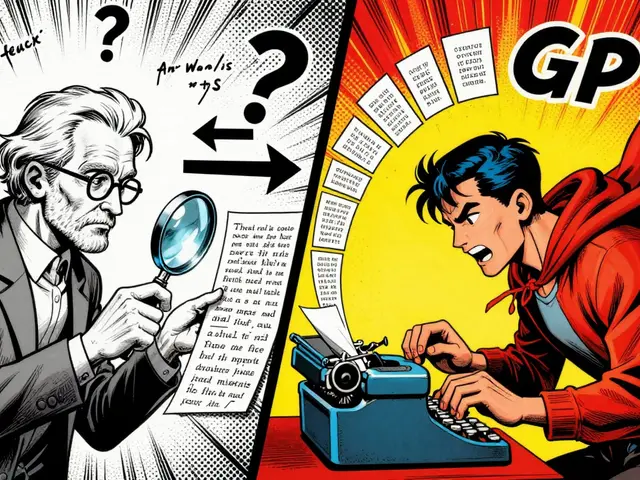
Imagine asking a medical assistant for advice on a rare condition, only to receive a confident, detailed explanation that is completely fabricated. This isn't science fiction; it is the daily reality of Large Language Models (LLMs) like ChatGPT and Claude when users misunderstand their fundamental nature. The core problem isn't just that these models make mistakes-it's that they make them with the fluency and confidence of an expert. Without proper user education, we risk building critical infrastructure on sand.
We need to shift our mindset from treating AI as an oracle to treating it as a probabilistic pattern-matching engine. This article breaks down exactly what users need to know about LLM limitations, why standard disclaimers fail, and how organizations can build effective training programs that prioritize safety and accuracy over blind automation.
The Core Limitations You Must Teach
To set expectations responsibly, you first have to understand where the technology breaks. Most users assume an LLM 'knows' things. In reality, it predicts the next likely word based on statistical patterns learned from vast amounts of text data. This architecture creates three specific failure modes that every user must recognize.
- Hallucinations: This is the most famous flaw. Because LLMs optimize for fluency rather than truth, they will often invent facts, citations, or code snippets that sound plausible but are false. A model might cite a real-looking court case that never happened because the linguistic structure matches legal writing perfectly.
- Context Window Constraints: LLMs have a limited memory span (the context window). If you feed them a 500-page document, they may 'forget' details from the middle sections or lose track of earlier instructions in a long conversation. They do not read; they process tokens within a fixed limit.
- Outdated Knowledge: Base models are trained on data up to a specific cutoff date. Unless augmented with live search tools (Retrieval-Augmented Generation), a model trained in 2023 cannot know about events, drug approvals, or regulations passed in 2024 or 2025.
Teaching these concepts requires moving beyond abstract warnings. Show users examples of hallucinated references. Demonstrate how changing a prompt slightly alters the output. Make the mechanics visible so the 'magic' disappears and the machine logic remains.
Bias and Fairness: The Hidden Risk
Beyond factual errors, LLMs inherit the biases present in their training data. This is not a bug; it is a feature of how they learn from human-generated content. If the internet contains more medical literature about Western populations than others, the model will reflect that imbalance.
Consider a concrete example from medical research. An LLM trained predominantly on Western cases of alcoholic cirrhosis may provide inaccurate diagnostic guidance for patients suffering from hepatitis B-induced cirrhosis, which is more common in other regions. The model isn't 'prejudiced' in a human sense; it is statistically biased toward the majority of its training data. For healthcare providers, lawyers, and HR managers, this means LLM outputs can inadvertently exacerbate health inequities or legal disparities if accepted without scrutiny.
User education must explicitly address algorithmic bias. Train users to ask: "Whose voice is missing here?" and "Does this recommendation apply to my specific demographic or context?" This critical lens is essential for responsible deployment.
| Failure Mode | What Users Think | The Reality |
|---|---|---|
| Hallucination | "It made a typo." | "It generated a plausible falsehood due to probabilistic sampling." |
| Bias | "It's being unfair on purpose." | "It reflects statistical imbalances in its training data." |
| Context Loss | "It didn't listen to me." | "The input exceeded its token limit, causing earlier data to drop off." |

Why Standard Disclaimers Fail
You've seen them everywhere: small print at the bottom of chat interfaces saying, "AI can make mistakes." These generic warnings suffer from disclaimer fatigue. After seeing the same message hundreds of times, users stop reading it entirely. It becomes background noise, much like cookie banners.
Effective education requires active engagement, not passive notification. Research suggests that users often fall into 'automation bias,' where they accept AI recommendations without question because the system appears authoritative. To combat this, organizations must implement interactive training. Instead of telling users "check your facts," show them how to check facts. Create exercises where users must verify an LLM's output against two independent primary sources. Reward the detection of errors, not just the generation of text.
Transparency also means explaining the parameters behind the scenes. For developers and power users, understanding settings like 'temperature' is crucial. A temperature of 0 makes outputs deterministic and safer for factual tasks, while higher values increase creativity-and the risk of hallucination. Explaining these knobs helps users realize they are controlling a probability distribution, not querying a database.

Domain-Specific Training Strategies
One size does not fit all. The risks of an LLM error vary wildly depending on the industry. Your training program should reflect these differences.
Healthcare and Law
In high-stakes fields, the cost of a hallucination is severe. Medical students and clinicians must be taught that LLMs are not diagnostic tools. They should cross-check any LLM-generated suggestion against established clinical guidelines (like those from the WHO) before considering it. Similarly, lawyers must verify every citation. The infamous 2023 case where a lawyer submitted fabricated court cases generated by an LLM resulted in sanctions serves as a powerful cautionary tale for legal training modules.
Education
In universities, the focus shifts to cognitive development. Rather than banning LLMs, instructors should design assignments that require critical thinking-the very skill LLMs lack. Ask students to critique an AI-generated essay, identifying logical gaps or factual errors. This turns the tool into a teaching aid for verification skills, preventing the erosion of independent writing and analysis capabilities.
Software Engineering
Developers use LLMs to write code, but they must understand that generated code can contain security vulnerabilities or inefficiencies. Training should emphasize code review practices. Treat AI-generated code as untrusted third-party contributions until thoroughly tested and audited.
Building a Culture of Verification
Ultimately, responsible AI use is a shared responsibility. Developers must build transparent interfaces that distinguish between retrieved source text and model-synthesized commentary. Organizations must create clear policies on acceptable use. But the final safeguard is the human user.
We need to foster a culture where questioning the AI is encouraged, not punished. When a team member catches an LLM error, celebrate that catch. It proves the verification process is working. By setting realistic expectations-that LLMs are powerful assistants, not autonomous experts-we unlock their potential while minimizing the risks of bias, hallucination, and overreliance.
What is the biggest misconception users have about LLMs?
The biggest misconception is that LLMs 'know' facts. In reality, they predict text based on statistical patterns. They do not have access to a truth database, which leads to confident but incorrect statements known as hallucinations.
How can I prevent my team from over-relying on AI outputs?
Implement mandatory verification steps. Require users to cross-check critical information with primary sources. Create training exercises that reward finding errors in AI-generated content, shifting the mindset from acceptance to scrutiny.
Why do LLMs exhibit bias?
LLMs learn from vast datasets of human-generated text, which contain historical and cultural biases. If certain groups or perspectives are underrepresented in the training data, the model's outputs will reflect those imbalances, potentially leading to unfair or inaccurate results for minority populations.
Are generic disclaimers enough to protect users?
No. Generic disclaimers often lead to 'disclaimer fatigue,' where users ignore warnings. Effective protection requires active, interactive education that demonstrates specific failure modes and teaches practical verification skills.
How should healthcare professionals use LLMs safely?
Healthcare professionals should treat LLM outputs as preliminary suggestions, not diagnoses. Always cross-reference AI-generated medical information with established clinical guidelines and peer-reviewed literature, especially for conditions prevalent in non-Western populations where training data may be scarce.