
Building an LLM agent that actually works in production is harder than it looks. You might think you just need to feed a large language model some tools and let it run wild. But in the real world, uncontrolled autonomy leads to hallucinations, security breaches, and unpredictable costs. The gap between a demo that wows your team and a system that handles customer data safely is bridged by deliberate design patterns for safe, reliable, and maintainable LLM agents.
By mid-2025, the industry shifted from "can we build an agent?" to "how do we keep it from breaking things?" Major players like Anthropic, Google, and Databricks published frameworks emphasizing that simplicity and security are not optional features-they are the foundation. This article breaks down the specific architectural patterns that help you balance AI capability with strict control, ensuring your agents remain useful without becoming liabilities.
The Spectrum of Agent Complexity
Not every problem needs a complex brain. In fact, over-engineering is the most common mistake developers make when starting with agentic systems. According to research from Vellum AI in early 2026, a single-agent LLM with strong prompts often achieves nearly the same performance as a complex multi-agent system for many tasks. Understanding where your use case sits on the complexity spectrum is the first step toward reliability.
There are three primary tiers of architecture you need to consider:
- Deterministic Chains: These are hard-coded workflows. The developer defines exactly which tools or models are called, in what order, and with which parameters. The LLM has no decision authority over tool selection. This offers high predictability but zero flexibility for novel inputs.
- Single-Agent Systems: Here, the LLM makes decisions about which tools to call based on the query. It adapts to unexpected inputs dynamically. This is often the "sweet spot" for enterprise use cases because it offers dynamic logic while remaining simpler to debug than multi-agent setups. It balances autonomy with manageability.
- Multi-Agent Architectures: Multiple specialized agents coordinate to handle complex domains. While powerful, these introduce significant coordination overhead, increased token usage, and higher latency.
Start with the simplest solution possible. As Anthropic advises, optimize single LLM calls with retrieval and in-context examples before building full agentic loops. Only increase complexity when the simpler pattern fails to meet accuracy or functional requirements.
Security-First Design Patterns
Security is no longer an afterthought; it is the core constraint. A study by cusy.io in June 2025 highlighted that 78% of security professionals view prompt injection as their top concern for agent deployment. Once an LLM ingests untrusted input, that input must be constrained so it cannot trigger consequential actions.
To mitigate this, implement these critical security patterns:
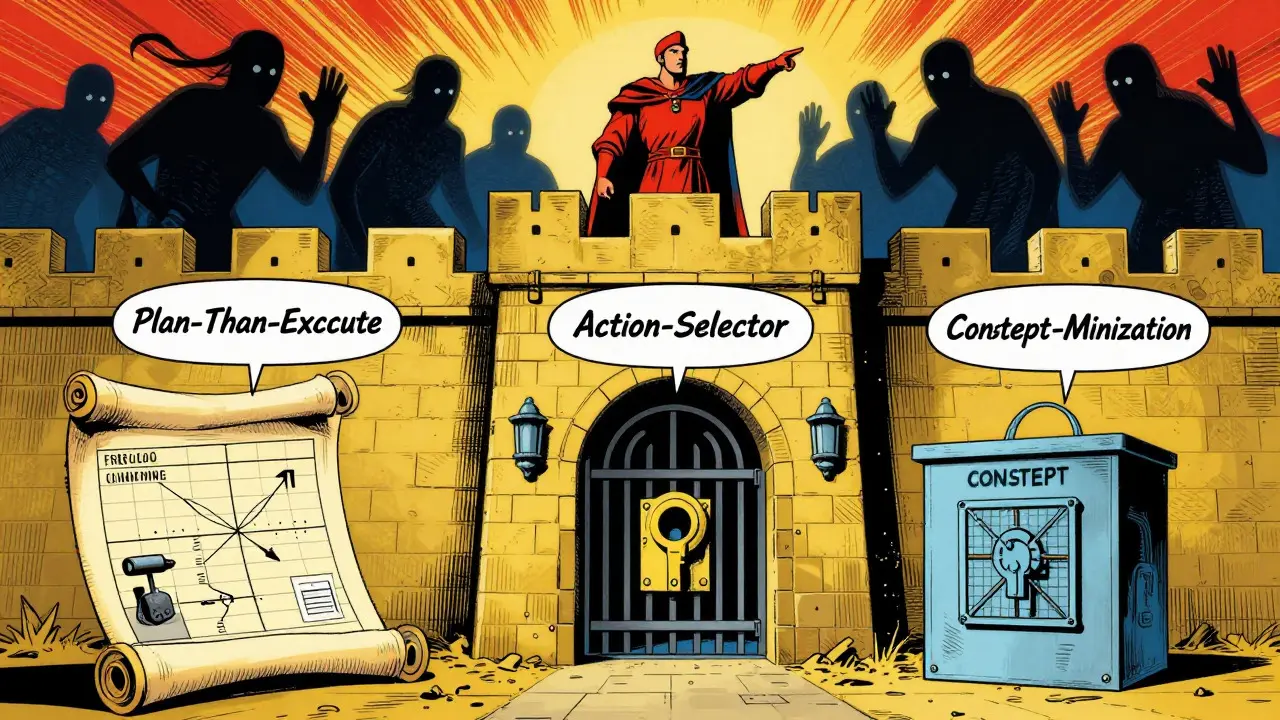
Plan-Then-Execute Pattern
This pattern separates the planning phase from the execution phase. The agent plans the tool calls in advance, before any contact with untrusted content occurs. By generating the plan first, you prevent malicious instructions hidden in user input from chaining together to execute harmful commands. This creates a sandboxed environment where the intent is validated before any action is taken.
Action-Selector Pattern
Rather than allowing an agent to solve arbitrary tasks, restrict its capabilities to a predefined set of actions. This represents a compromise between utility and security. If an agent can only perform specific, whitelisted operations, the blast radius of a potential attack is significantly reduced. Intentional constraints ensure the agent remains useful without gaining dangerous freedom.
Context-Minimization Pattern
Reduce the attack surface by processing untrusted data through a quarantined LLM. This secondary model converts raw inputs into strictly formatted interfaces before they reach the main agent. While this adds computational overhead, it effectively neutralizes injection attempts by stripping out executable context, leaving only structured data.
Reliability Through Reflection and Structure
Safety prevents harm, but reliability ensures value. Users lose trust quickly if an agent provides incorrect information or gets stuck in loops. Two key patterns address these issues directly.
The Reflect and Critique Pattern involves having the agent review its own outputs before finalizing them. In controlled testing environments documented by MongoDB, this self-correction mechanism reduced error rates by approximately 35%. The agent generates a response, then critiques it against a rubric or ground truth, refining the output until it meets quality standards. This mimics human editing processes and significantly boosts accuracy.
For complex workflows, the Sequential Pipeline Pattern, detailed in Google's Agent Development Kit (ADK), structures agent handoffs explicitly. Instead of a chaotic free-for-all, agents pass context in a defined sequence. This reduces ambiguity and makes debugging easier, as you can trace exactly where a failure occurred in the chain. Google’s December 2025 release emphasized that structured handoffs maintain context integrity better than loose multi-agent collaborations.
Maintainability: Logging, Versioning, and Simplicity
An agent that works today might break tomorrow due to model updates or changing data sources. Maintainability is about future-proofing your system. Databricks’ production guidance highlights two non-negotiable practices: version pinning and detailed logging.
Model providers update their models frequently. Without version pinning, your agent’s behavior can shift unexpectedly. Pinning ensures that the underlying model weights remain consistent during testing and production. Pair this with frequent regression tests to verify that your agent logic remains robust.
Logging is equally critical. Implement detailed tracing for each user request, agent plan, and tool call. Tools like MLflow Tracing allow you to replay interactions and identify where hallucinations or errors originated. When an agent fails, you need to know if it was a bad prompt, a faulty tool response, or a reasoning error. Clear logs turn mysterious failures into solvable bugs.
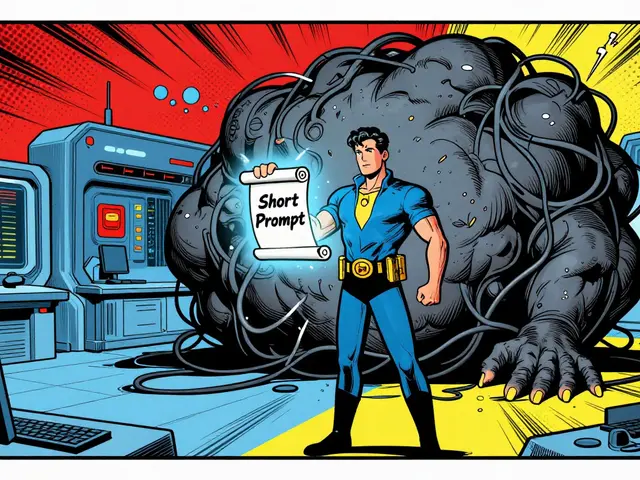
Finally, keep prompts clear and minimal. Contradictory instructions and distracting information increase the likelihood of hallucinations. As LlamaIndex advocates in their 2026 blog, "use structure where it helps, provide autonomy where it shines." Hybrid systems that combine deterministic workflow predictability with selective agent flexibility deliver the best results for enterprise applications.
| Pattern Type | Complexity | Best Use Case | Key Risk | Development Time |
|---|---|---|---|---|
| Deterministic Chain | Low | Regulated transactions, fixed workflows | Inflexibility with novel inputs | 1-3 days |
| Single-Agent System | Medium | General enterprise queries, dynamic tool use | Debugging complexity, hallucination risk | 1-2 weeks |
| Multi-Agent System | High | Complex domain specialization, parallel tasks | Coordination overhead, high latency/cost | 2-4 weeks |
Choosing the Right Pattern for Your Needs
Don't chase the latest trend. Match the pattern to the job. If you are building a financial transaction processor, a Deterministic Chain is safer and more reliable. If you are building a customer support bot that needs to search knowledge bases and book appointments, a Single-Agent System with the Reflect and Critique pattern is likely sufficient. Reserve Multi-Agent architectures for truly complex scenarios where specialized knowledge domains require distinct handling, such as legal document analysis combined with code generation.
Remember the trade-offs. Agentic systems often trade latency and cost for better task performance. Each additional LLM call increases token usage and response time. Ask yourself: does this extra complexity provide enough value to justify the added cost and delay? Often, the answer is no. Stick to the simplest architecture that solves the problem reliably.
What is the biggest security risk for LLM agents?
The biggest security risk is prompt injection, where malicious inputs manipulate the agent into performing unintended actions. Research indicates that once an LLM ingests untrusted input, it must be constrained to prevent consequential actions. Patterns like Plan-Then-Execute and Context-Minimization are essential to mitigate this risk by separating planning from execution and sanitizing inputs.
When should I use a multi-agent system instead of a single agent?
Use a multi-agent system only when tasks require specialized knowledge domains that a single model cannot handle effectively, or when parallel task execution is necessary. For most enterprise use cases, a single-agent system with strong prompts and tool calling is sufficient and easier to debug. Multi-agent systems introduce significant coordination overhead, higher costs, and increased latency.
How does the Reflect and Critique pattern improve reliability?
The Reflect and Critique pattern improves reliability by having the agent review its own outputs before finalizing them. This self-correction process allows the agent to identify errors, check against ground truths, and refine its response. Testing has shown this can reduce error rates by approximately 35%, making it a highly effective strategy for improving accuracy without increasing architectural complexity.
Why is version pinning important for LLM agents?
Version pinning is crucial because model providers frequently update their models, which can change behavior unexpectedly. Without pinning, your agent might work perfectly one day and fail the next due to subtle shifts in model weights. Pinning ensures consistent behavior during testing and production, allowing you to control when and how updates are integrated.
What is the Action-Selector Pattern?
The Action-Selector Pattern restricts an agent's capabilities to a predefined set of actions rather than allowing it to solve arbitrary tasks. This intentional constraint limits the blast radius of potential attacks or errors. By whitelisting specific operations, you ensure the agent remains useful within a safe boundary, balancing utility with security.




5 Comments
Saranya M.L.
The industry has finally stopped treating LLMs like magic black boxes and started applying actual software engineering rigor to them. It is refreshing to see frameworks from Anthropic and Google emphasizing that security is a constraint, not a feature you bolt on later. The distinction between deterministic chains and single-agent systems is critical because most developers over-engineer their solutions when a simple chain would suffice. We need to stop chasing the hype of multi-agent orchestration for tasks that do not require it.
om gman
oh wow another article telling us what we already know about basic security practices but dressed up in fancy AI terminology. i mean sure prompt injection is bad who knew? the real joke here is how much time people spend debating architecture patterns while ignoring the fact that their data pipelines are leaking everywhere anyway. but hey lets keep pretending that adding more agents solves the fundamental lack of competence in the underlying codebase
michael rome
I completely agree with the emphasis on starting simple. In my experience leading enterprise implementations, the biggest hurdle is not technical complexity but rather organizational patience. Teams want to build the most sophisticated multi-agent system possible immediately without validating if a single agent can handle the load. The Reflect and Critique pattern mentioned here is particularly valuable because it mimics human quality assurance processes which we are all familiar with. It provides a structured way to reduce error rates without necessarily increasing architectural overhead significantly.
Andrea Alonzo
What I found most compelling in this discussion is the nuanced approach to balancing autonomy with control, especially when considering the long-term maintainability of these systems. While many developers focus heavily on the initial deployment phase and the immediate functionality of the agent, there is often a significant oversight regarding the ongoing maintenance requirements that arise as models evolve and update frequently. The concept of version pinning is absolutely essential in this context because it ensures that your testing environment remains consistent with production, thereby preventing unexpected behavioral shifts that could compromise reliability. Furthermore, the integration of detailed logging mechanisms allows teams to trace specific failures back to their root causes whether they stem from poor prompt engineering or faulty tool responses. This level of transparency is crucial for building trust among stakeholders who may be skeptical about the robustness of AI-driven solutions in critical business operations.
Francis Laquerre
Security first always.