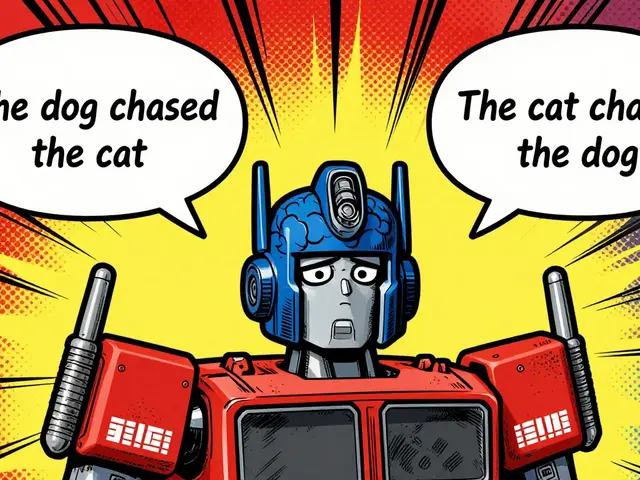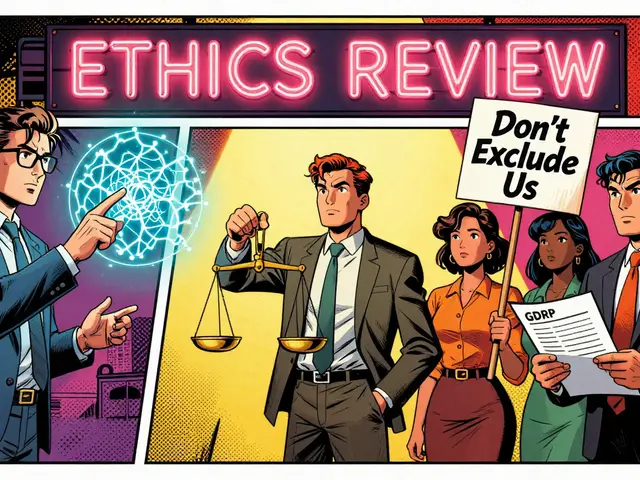
Generative AI models are powerful, but they lie. Not on purpose-just because they’re trained on massive amounts of text and don’t truly understand what they’re saying. This is called hallucination: when an AI confidently generates something that sounds right but is completely wrong. A medical chatbot might invent a non-existent drug dosage. A legal assistant could cite a fake court case. A financial report might list revenue numbers that never existed. Single models are bad at catching their own mistakes. That’s why smart teams are now using multiple models to check each other.
How Ensembling Catches Lies Before They Go Live
Ensembling isn’t just running one AI model and hoping for the best. It’s running three, five, or even more models on the same question-and then comparing their answers. Think of it like having three doctors review the same X-ray. If two say there’s a tumor and one says it’s just a shadow, you investigate further. With AI, you do the same: if two out of five models agree on a fact, it’s far more likely to be true.
This method cuts hallucination rates dramatically. Research from the University of South Florida in April 2024 showed that majority voting across three LLMs achieved 78.72% accuracy on standardized tests. Compare that to single models, which often hover between 65% and 78% accuracy. The difference isn’t small-it’s the gap between “maybe safe” and “actually reliable.”
How does it work? Each model generates a response independently. Then, a simple rule kicks in: majority vote. If three out of five models say the capital of Australia is Canberra, you go with that. If they split 2-2-1, you flag it for human review. Some systems go further with weighted scoring-giving more trust to models that historically perform better on medical or legal queries. Others use a meta-learner: a small AI trained just to judge which answers are most likely correct based on past performance.
Real-World Results: Where It Matters Most
This isn’t theory. Companies are using ensembling right now-and seeing real results.
JPMorgan Chase cut financial reporting errors by 31.2% after deploying a three-model ensemble. That meant fewer regulatory fines, fewer investor misunderstandings, and more trust in automated documents. In healthcare, LeewayHertz found a 28.7% drop in factual errors when using ensembles for patient Q&A systems. One hospital reported that a single hallucination about a drug interaction had nearly caused a dangerous mistake-until they switched to cross-checking models.
But here’s the catch: it doesn’t work everywhere. Reddit user u/StartupCTO tried ensembling for marketing copy. Their error rate dropped 18%, but cloud costs jumped 200%. Was it worth it? No. Why? Because if you’re generating product descriptions or social media posts, a minor inaccuracy doesn’t break anything. But if you’re writing a contract, diagnosing symptoms, or summarizing court rulings? A 1% error can cost millions.
That’s why adoption is clustered where the stakes are highest: financial services (42% of implementations), healthcare (29%), and legal tech (18%). Gartner reports that 68% of Fortune 500 companies now use some form of ensembling for critical tasks-up from just 22% in 2024. Why? Because regulators are watching. The EU AI Act, which took effect in September 2025, requires “systematic validation” for high-risk AI systems. Ensembling is now the easiest way to prove you’re doing that.

The Hidden Cost: Speed, Power, and Complexity
There’s no free lunch. Running five large language models at once isn’t cheap.
H2O.ai’s benchmarks show that a three-model ensemble with 7B-parameter LLMs needs 48GB of GPU memory and slows response time by 2.7x. Where a single model takes 1.2 seconds, the ensemble takes 3.4 seconds. For customer service bots, that’s a dealbreaker. Users won’t wait three seconds for a reply to “What are your hours?”
And the cost doesn’t stop at speed. Monthly cloud bills for enterprise ensembles can jump by $200,000 or more. JPMorgan’s system added $227,000 to its monthly AWS bill. That’s why many companies start small: one high-stakes use case, like document review or risk analysis, and scale only if the ROI justifies it.
Debugging is another headache. If one model gives a wrong answer, you can trace it back. But with five models? One might be overfit to Wikipedia. Another might have been trained on outdated data. A third might have a bias toward formal language. Figuring out which one is wrong-and why-takes serious ML expertise. As one engineer on Reddit put it: “Debugging a single model is hard. Debugging five that argue with each other? That’s a full-time job.”
How to Set Up an Ensemble (Step by Step)
If you’re serious about reducing hallucinations, here’s how to build a working ensemble:
- Pick 3-5 diverse models. Don’t use five versions of the same model. Mix Llama-3, Mistral, and a proprietary model trained on your data. Diversity matters-models trained differently will make different mistakes.
- Set up cross-validation. Use group k-fold validation to prevent data leakage. If your data includes documents from the same company, keep them all in the same fold. Otherwise, your system will learn to recognize patterns instead of facts.
- Design a reconciliation system. Majority voting works for most cases. For higher stakes, use weighted scoring: assign higher confidence to models that have historically performed better on your specific tasks.
- Monitor and log everything. Track which model gave which answer. Flag disagreements. Log when humans override the system. This data trains your next version.
- Start with checkpointing. Instead of training each model from scratch, start from a common base and fine-tune each one on a different data split. Galileo AI found this cuts validation time by 22%.
Tools like AWS SageMaker and Galileo AI’s Validation Suite now automate much of this. But if you’re building from scratch, expect 8-12 weeks of dedicated work for a skilled ML engineer. GitHub repositories like LLM-Ensemble-Framework (with over 1,800 stars) offer code templates-but they assume you already know PyTorch and distributed computing.

What’s Next? Faster, Smarter, Greener
The field is evolving fast. AWS’s December 2025 update, “Adaptive Ensemble Routing,” now picks only the most relevant models for each query. A simple question like “What’s the weather?” might only use one lightweight model. A complex legal query triggers all five. This cuts costs by 38% without sacrificing accuracy.
Galileo AI’s January 2026 release, “LLM Cross-Validation Studio,” automates group k-fold validation for generative models-something most open-source tools still don’t do well. And researchers are already working on hardware. Dr. Elena Rodriguez forecasts that by late 2027, specialized chips will reduce the performance penalty of ensembling to under 30%, while keeping 90% of the error-reduction gains.
Long-term? Gartner predicts that by 2028, ensemble validation will be as standard for critical AI as HTTPS is for websites. You won’t even think about deploying a high-stakes generative model without it.
Frequently Asked Questions
Can ensembling eliminate hallucinations completely?
No. Ensembling reduces hallucinations by 15-35%, bringing error rates down from 22-35% in single models to 8-15%. But it doesn’t remove them entirely. Some errors are systemic-like models trained on the same flawed dataset. Human review is still needed for high-stakes outputs.
Is ensembling worth it for small businesses?
Only if your use case has serious consequences. If you’re generating customer support replies or social media posts, the cost outweighs the benefit. But if you’re drafting contracts, medical summaries, or financial disclosures-even a small business should consider it. Start with one model pair and monitor results before scaling.
How many models should I use?
Three to five is the sweet spot. MIT’s Dr. James Wilson found that adding more than five models gives less than 1.5% extra accuracy-but doubles the cost. Three models give you strong error reduction. Five gives you near-maximum safety. More than that? Diminishing returns.
Does ensembling work with all types of AI models?
Best with large language models (LLMs) like Llama-3, Mistral, or GPT variants. It’s less effective with image generators or speech models because their outputs aren’t easily compared using text-based voting. For those, you need different validation methods-like human-in-the-loop review or confidence scoring.
Can I use open-source models for ensembling?
Absolutely. Many successful ensembles use Llama-3, Mistral, and Phi-3-all open-source. The key is diversity: combining models trained on different data, with different architectures. You don’t need expensive proprietary models to get strong results. Just make sure they’re fine-tuned on your domain data.
What’s the difference between ensembling and fine-tuning?
Fine-tuning adjusts one model to be better at a specific task. It typically reduces errors by only 5-12%. Ensembling uses multiple models and compares outputs. It cuts errors by 15-35%. Fine-tuning improves a single voice. Ensembling lets many voices check each other.
Are there tools to help me set this up?
Yes. AWS SageMaker, Galileo AI’s Validation Suite, and H2O.ai’s Driverless AI all offer built-in ensemble tools. For open-source, check out GitHub repositories like LLM-Ensemble-Framework. But be warned: even with tools, you need someone who understands model behavior, validation techniques, and infrastructure scaling.