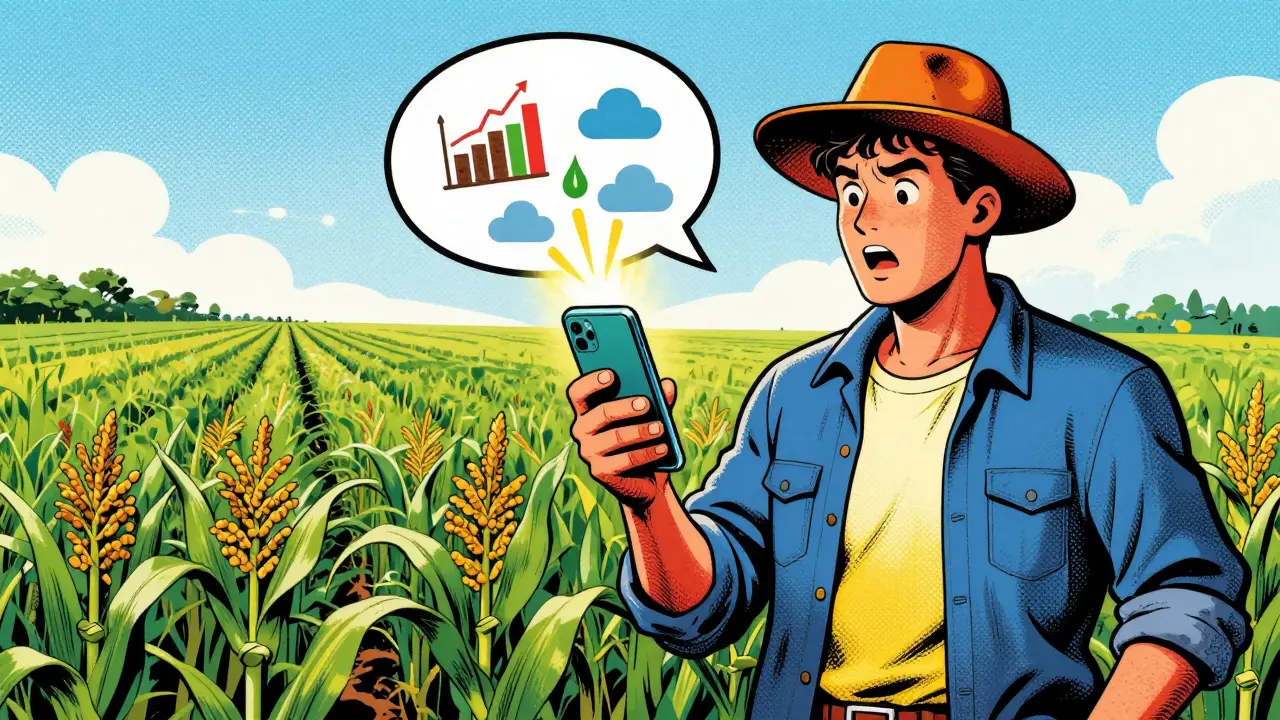
It is June 2026, and the way we farm is changing faster than most people realize. For years, artificial intelligence in agriculture was hidden behind complex dashboards and confusing data streams. Today, generative AI is stepping out from under the hood to become a direct partner for farmers. It is no longer just about predicting yields; it is about having a conversation with your technology. From generating detailed crop reports instantly to simplifying dense equipment manuals and forecasting market trends, this technology is reshaping daily operations on farms of all sizes.
The shift happening right now marks a critical transition. We are moving away from experimental pilots toward field-ready applications that deliver measurable return on investment (ROI). This isn't science fiction anymore. It is practical tools helping agronomists, farm managers, and smallholder producers make smarter decisions, faster. Whether you run a massive commercial operation or a small family farm, understanding how these tools work-and where they fit into your workflow-is essential for staying competitive.
From Data Dashboards to Conversational Agronomy
In the past, if you wanted insights from your farm’s data, you waited for a weekly report or struggled through a rigid software interface. Now, large language models (LLMs) act as conversational agronomy assistants. Imagine asking your system, "Why did corn yield drop in Section 4?" and getting a clear, plain-language explanation that compares soil moisture data, recent weather patterns, and fertilizer application rates. The AI doesn’t just show you a chart; it explains the story behind the numbers.
This change matters because decision support needs to happen at the moment of need. When a pest outbreak threatens a crop, you don’t have time to parse raw analytics. You need immediate guidance. Generative AI provides that by synthesizing information from multiple sources-weather forecasts, historical yield data, and agronomic best practices-into actionable advice. It helps prioritize field issues and suggests the next best steps, reducing the mental load on farm managers.
How does generative AI differ from traditional agricultural software?
Traditional software usually presents static data or requires manual analysis. Generative AI acts as an interactive assistant that can explain recommendations, compare scenarios, and provide context-specific advice in natural language, making complex data accessible without needing a data science degree.
Revolutionizing Crop Reports and Advisory Services
Crop reporting has always been a tedious part of farming. It involves gathering scattered data points and formatting them for stakeholders, lenders, or compliance agencies. Generative AI automates this process significantly. By integrating with farm management software, AI can draft comprehensive crop reports in minutes. These reports include yield summaries, input usage, sustainability metrics, and risk assessments, all tailored to the specific audience reading them.
For small-scale producers, especially in developing regions, this technology bridges a massive gap. The International Food Policy Research Institute (IFPRI) leads the Generative AI for Agriculture (GAIA) project, which focuses on enhancing advisory services for these farmers. Through platforms like Farmer.Chat, developed by Digital Green, smallholders in Kenya and India access reliable, localized agricultural advice via chatbots. These systems use retrieval-augmented generation (RAG) to pull accurate information from trusted sources like CGIAR research and CABI materials, ensuring the advice is both scientifically sound and contextually relevant.
The GAIA project’s Phase II (2025-2027) aims to expand this further by integrating real-time data sources and multimodal models. This means future advisories won’t just be text-based; they will incorporate images of crop health, satellite imagery, and predictive analytics. Farmers can upload a photo of a diseased leaf, and the AI identifies the issue, suggests treatment options, and checks local pesticide regulations-all in one interaction.
Simplifying Equipment Manuals and Technical Documentation
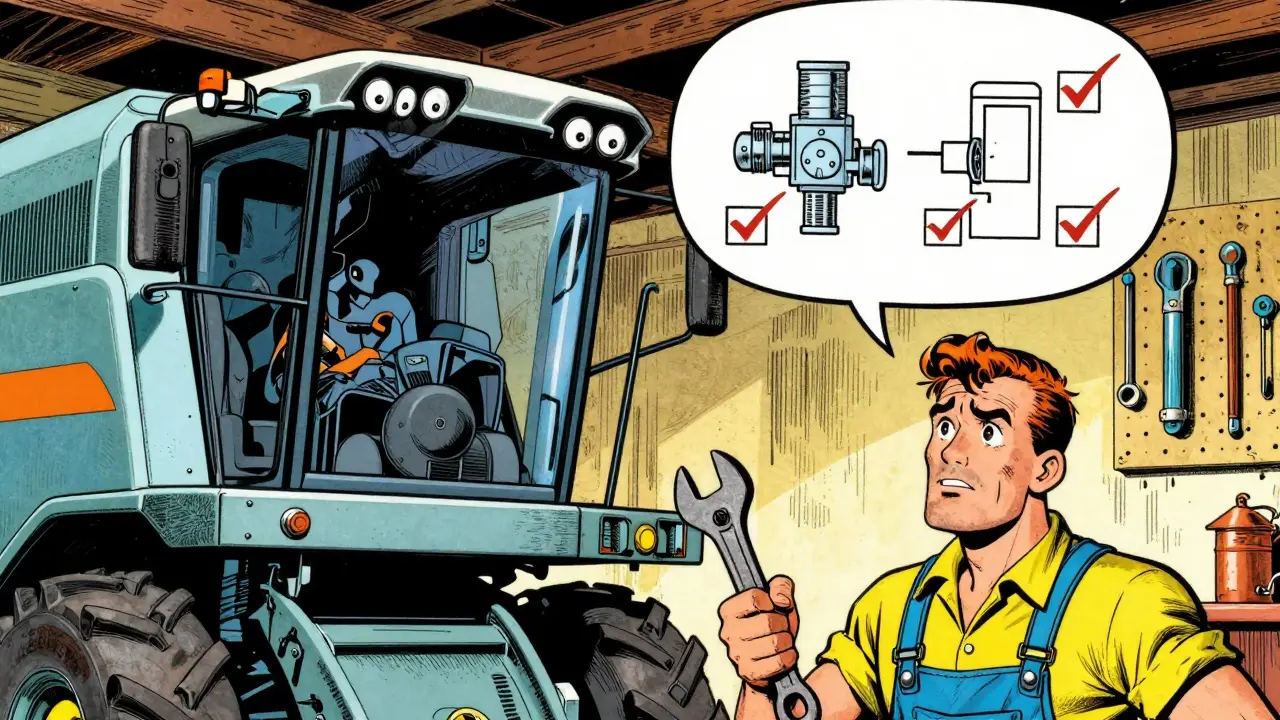
Modern farm equipment is incredibly sophisticated, but the manuals that come with them are often dense, technical, and difficult to navigate during urgent repairs. Generative AI is transforming how we interact with these documents. Instead of flipping through hundreds of pages to find a torque specification or error code resolution, operators can ask the AI directly. "What does error code E-42 mean on my combine harvester?" becomes a simple query with an instant, precise answer.
This application relies on multimodal AI capabilities that can process text, diagrams, and even video instructions. As physical AI becomes more prevalent, with autonomous tractors and robotic harvesters entering fields, the need for intuitive human-machine interfaces grows. AI-enhanced manuals translate complex engineering specifications into farmer-friendly guidance. They can also dynamically adjust recommendations based on specific farm conditions. For example, if you are operating heavy machinery in wet soil conditions, the AI might highlight safety warnings and operational adjustments specific to those circumstances.
Original Equipment Manufacturers (OEMs) are beginning to recognize this value. Building deep partnerships between tech developers and manufacturers ensures that these AI solutions are robust and serviceable. The goal is not just to digitize manuals but to create intelligent support systems that reduce downtime and improve operator confidence.
Market Outlooks and Predictive Analytics
Farming is not just about growing crops; it is about selling them. Understanding market dynamics is crucial for profitability. Generative AI enhances market outlooks by analyzing vast amounts of data-from global supply chain disruptions and commodity prices to consumer trends and geopolitical events. It synthesizes this information to provide clear, forward-looking insights.
Unlike traditional market reports that may lag behind current events, AI-driven outlooks can update in near real-time. This allows farmers and agricultural retailers to make informed decisions about planting choices, storage strategies, and sales timing. For instance, if AI detects a trend indicating increased demand for sustainable grains in European markets, it can alert producers who have the capacity to meet those standards.
The USDA has incorporated AI advancement into its fiscal year 2025-2026 strategy, expanding the use of predictive analytics to enhance production and predict changes in crop yields. This institutional commitment reflects a broader shift toward AI-enabled management at the federal policy level. By leveraging machine learning to understand animal disease outbreaks or mitigate drought impacts, agencies can allocate resources more proactively, benefiting the entire agricultural ecosystem.
| Feature | Traditional Approach | AI-Enhanced Approach (2026) |
|---|---|---|
| Crop Reporting | Manual data entry, static formats | Automated drafting, customizable narratives |
| Equipment Support | Paper/manual PDFs, slow lookup | Conversational search, contextual tips |
| Market Insights | Lagged reports, general trends | Real-time synthesis, predictive modeling |
| Advisory Access | Human extension agents (limited reach) | 24/7 AI chatbots, localized knowledge |
Physical AI and Automation on the Field
Beyond software, generative AI intersects with physical AI-intelligence systems embedded in steel, rubber, and hydraulic field equipment. Agtonomy CEO Tim Bucher argues that 2026 must mark agriculture's physical AI tipping point, scaling autonomy from demonstrations into food infrastructure. This means robots and autonomous vehicles are not just prototypes; they are managing production acres.
The most successful model for 2026 is human-in-the-loop automation. Machines handle repetitive, labor-intensive tasks like weeding or spraying, while humans retain control over critical decisions. This approach addresses labor shortages and improves efficiency without completely removing the farmer from the equation. Generative AI supports this by optimizing task allocation and providing operators with clear pathways for new rural tech careers. Autonomy becomes a magnet for younger talent rather than a threat to employment.
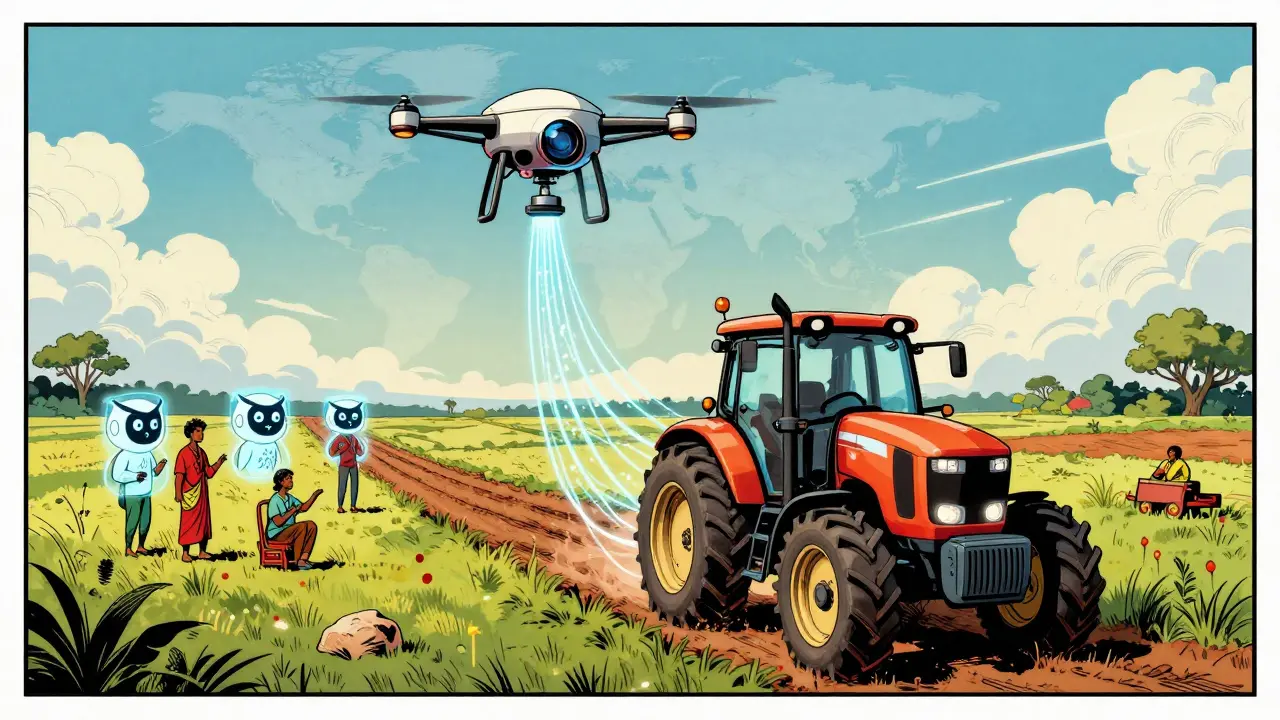
Interoperability is key here. For physical AI to work seamlessly, different machines and software platforms need to communicate. Open APIs and integrated workflows allow data to move across vendor ecosystems. A drone scouting the field can share data directly with an autonomous sprayer, which then adjusts its application rate based on the AI’s interpretation of crop health. This connected intelligence requires connected infrastructure, a barrier that is slowly lowering thanks to improved rural connectivity initiatives.
Challenges: Ethics, Bias, and Reliability
With great power comes great responsibility. The deployment of generative AI in agriculture raises important questions about ethics, bias, and reliability. If an AI gives incorrect advice on pesticide usage, the consequences can be severe. Therefore, grounding AI systems in verified, dynamic agricultural knowledge is non-negotiable.
The GAIA project addresses these concerns by developing a GenAI ethics toolkit. This framework ensures that AI-generated guidance is gender-sensitive, culturally appropriate, and free from harmful biases. It establishes governance standards for managing agricultural data used to train these systems. The FAIR Process Framework and associated Data Management and Access Plan (DMAP) produced by the project set benchmarks for transparency and accountability.
Another challenge is the digital divide. Larger operations and service-led businesses are leading adoption because they can absorb the costs and complexity. Smaller farms prioritize simplicity and proven value. To ensure equitable access, technology providers must design tools that integrate smoothly into existing workflows without adding operational burden. Offline-capable technology and low-bandwidth solutions are essential for reaching farmers in areas with poor internet connectivity.
Adoption Trends and Future Outlook
Market adoption patterns reveal uneven growth. In 2026, larger commercial farms and agribusinesses are the early adopters, driven by clear ROI and the need to optimize margins. They use AI to streamline reporting, reduce manual work, and support variable-rate applications. However, as the technology matures and proves its value, it will trickle down to smaller operations.
Agricultural retailers are transitioning from input suppliers to trusted technology partners. They help farmers navigate the complex landscape of agtech, offering bundled solutions that combine hardware, software, and AI services. This shift creates a more supportive ecosystem where farmers receive ongoing education and assistance.
Looking ahead, the convergence of improved rural connectivity, multimodal AI capabilities, and standardized data governance frameworks creates ideal conditions for rapid scaling. We expect to see more breakthrough applications where AI agents work across multiple systems, providing holistic views of farm operations. The focus will remain on practicality: tools that save time, reduce stress, and increase profitability.
As we move through the rest of 2026 and beyond, the question is no longer whether generative AI will transform agriculture, but how quickly farmers can adapt to leverage its full potential. Those who embrace these tools as collaborative partners will find themselves better equipped to face the challenges of climate change, labor shortages, and volatile markets.
Is generative AI safe for smallholder farmers?
Yes, provided the systems are properly grounded in verified data. Projects like GAIA focus on creating ethical, reliable AI tools specifically designed for smallholders, ensuring advice is context-specific and safe. However, users should always verify critical recommendations with local experts.
Do I need high-speed internet to use AI in agriculture?
Not necessarily. While cloud-based AI benefits from good connectivity, many modern agtech solutions are designed to be offline-capable or function with low bandwidth. Edge computing allows some AI processing to happen directly on devices in the field.
How does AI help with equipment maintenance?
AI simplifies access to technical documentation. Instead of searching through long manuals, you can ask voice or text queries to get instant answers about error codes, maintenance schedules, and repair procedures, reducing downtime.
What is the role of the USDA in AI adoption?
The USDA integrates AI into its strategic planning to enhance production, improve food safety, and predict crop yields. By using predictive analytics and machine learning, the agency aims to proactively manage risks like droughts and pest outbreaks.
Will AI replace farm workers?
Rather than replacing workers, AI and automation aim to augment human capabilities. Physical AI handles repetitive tasks, allowing humans to focus on critical decision-making and oversight. This "human-in-the-loop" model also creates new opportunities for tech-savvy roles in rural areas.