Imagine a classroom where the teacher doesn’t spend hours grading papers or drafting lesson plans from scratch. Instead, they focus on mentoring students who are already receiving instant, personalized feedback on their work. This isn’t a distant sci-fi dream; it’s happening right now. By mid-2026, 86% of education organizations have adopted generative AI tools, making it the industry with the highest adoption rate for this technology. We are no longer asking if AI belongs in schools. The question is how we use it to redesign curriculum, transform assessment, and revolutionize tutoring without losing the human connection that makes learning meaningful.
The shift is profound. Generative AI uses sophisticated neural networks to recognize patterns and generate outputs that mirror human creativity. In education, this means moving beyond static textbooks to dynamic, adaptive learning experiences. But with great power comes great responsibility. How do we ensure these tools enhance rather than replace the educator’s role? Let’s break down exactly how generative AI is reshaping the three pillars of education: curriculum design, assessment, and tutoring.
Reimagining Curriculum Design with AI
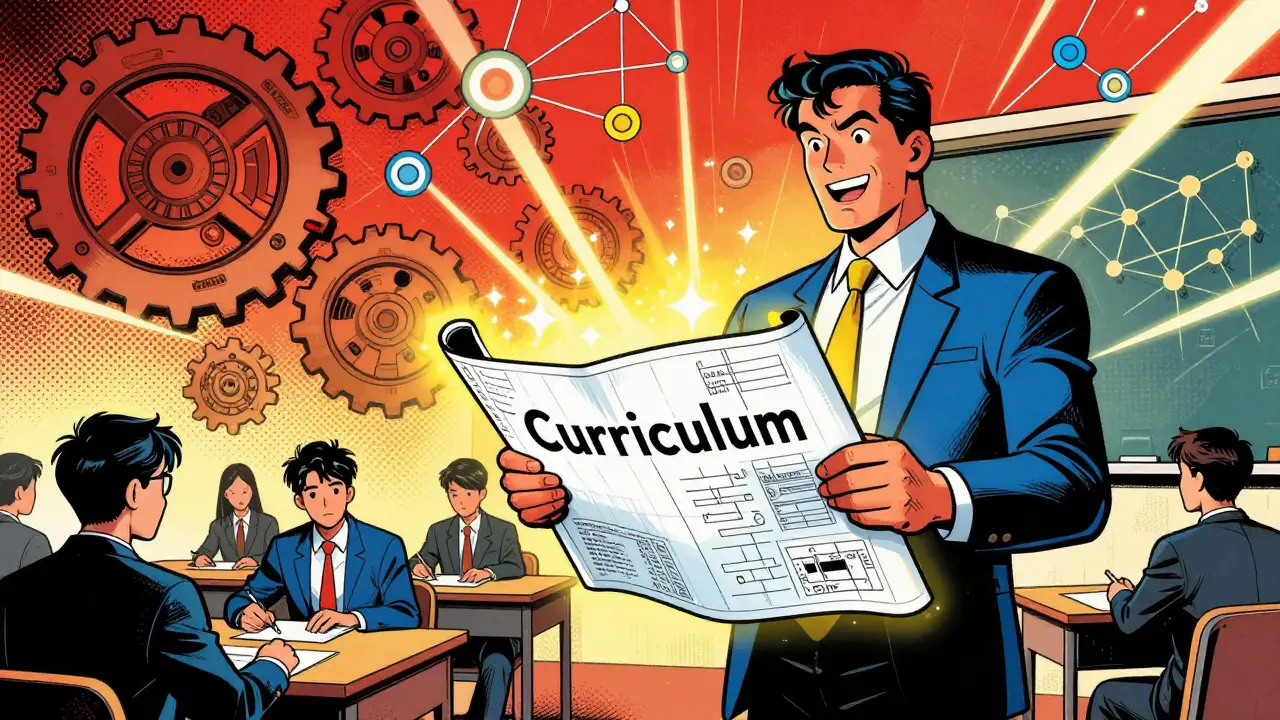
Curriculum design has traditionally been one of the most time-consuming tasks for educators. Writing standards-aligned lesson plans, creating engaging materials, and differentiating content for diverse learners often eats into preparation time meant for student interaction. Enter AI Curriculum Generators, which can create complete curricula-including texts, images, quizzes, and course outlines-from simple text prompts.
Platforms like Magic School offer over 80 AI Teacher Tools that generate standards-aligned lesson plans and academic content instantly. These aren’t just generic templates. Advanced systems incorporate trainable AI models that learn from an institution’s existing knowledge base and learner data. For example, a teacher in Asheville might input local historical context, and the AI adapts the lesson plan to include relevant regional examples, ensuring cultural relevance and engagement.
However, technology alone isn’t enough. Research from Washington State highlights the "human-AI-human" model, emphasizing that generative AI engagement should always start with human inquiry and end with human reflection. The AI drafts the material, but the teacher refines it, ensuring pedagogical soundness and emotional intelligence. This approach positions the human at both the beginning and end of the learning design process, preventing the "black box" effect where teachers blindly trust algorithmic outputs.
Administrative burdens also decrease significantly. Teachers use chatbots like ChatGPT and Gemini to draft Individualized Education Programs (IEPs) and institutional policies. What used to take days now takes minutes, freeing up valuable time for high-leverage activities like fostering meaningful discussions and providing individualized support.
Transforming Assessment: From Grading to Insight
Assessment is another area where generative AI delivers immediate value. Traditionally, creating varied test questions and providing timely feedback was labor-intensive. Now, teachers extensively use AI to generate diagnostic reports, align quizzes, and create formative assessments. According to recent statistics, 59% of students agree that the way they're assessed is changing due to generative AI.
Modern assessment platforms feature Adaptive Question Generation, which creates questions that adapt to different learning styles and abilities. If a student struggles with a concept, the AI adjusts the difficulty level or changes the format-perhaps switching from multiple-choice to visual aids-to help them grasp the material. Real-Time Feedback Systems provide immediate performance insights, allowing students to correct misunderstandings before they become entrenched.
Consider the impact on grading. Self-grading quizzes and flashcards deliver instant, constructive feedback. This not only streamlines the teacher’s workload but also empowers students to take ownership of their learning. When feedback is immediate, it becomes a tool for growth rather than just a final judgment. Teachers can then use the data generated by these AI systems to guide data-driven instruction, identifying class-wide trends and individual knowledge gaps.
Yet, caution is necessary. As only 7% of schools worldwide have formal AI guidance as of February 2026, many institutions are still figuring out ethical boundaries. Educators must critically evaluate AI-generated assessments for bias and accuracy. The goal isn’t to automate evaluation entirely but to use AI as a co-pilot that supports differentiated instruction and scaffolding.
Personalized Tutoring: The Rise of AI-Powered Tutors
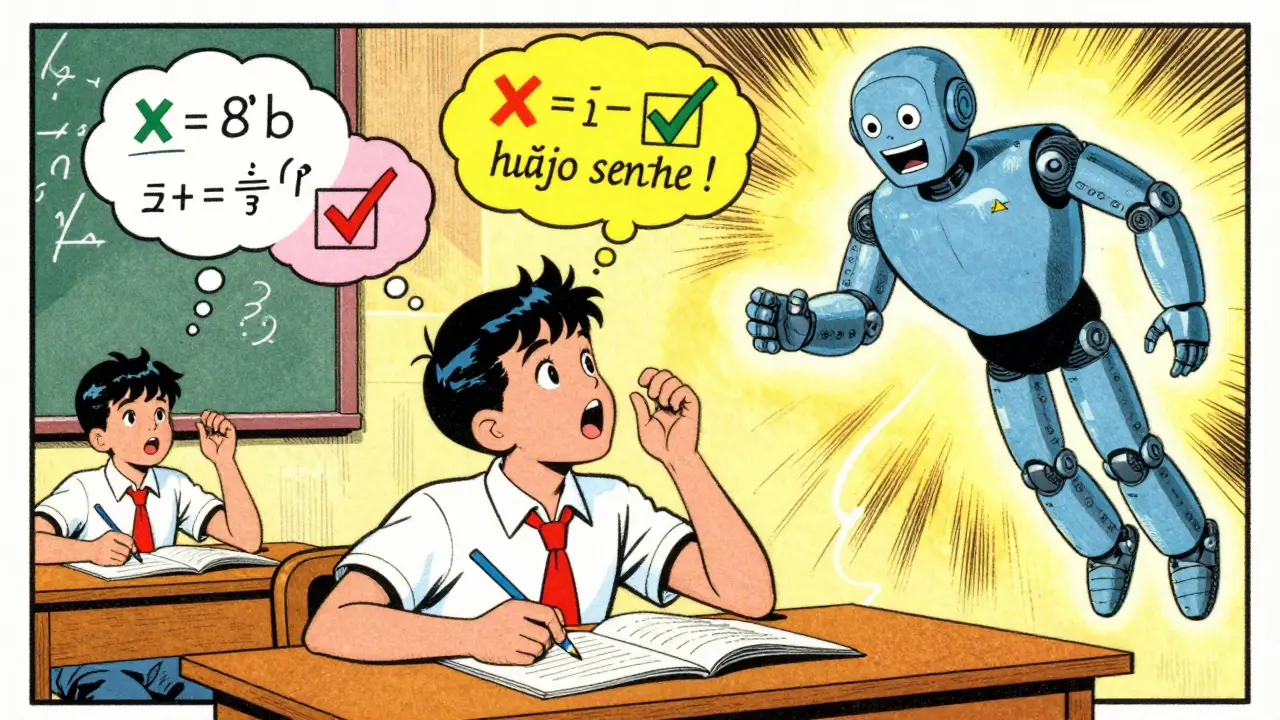
If curriculum and assessment are the backbone of education, tutoring is its heartbeat. AI-Powered Tutors represent the most impactful student-facing application of generative AI. Unlike traditional tutoring, which is often limited by availability and cost, AI tutors are available 24/7, providing consistent, personalized support.
Platforms like Langua provide Personalized Learning Paths where AI creates customized curricula based on individual goals and progress. For language learners, this includes Intelligent Conversation Practice for realistic speaking exercises and Adaptive Assessment with continuous evaluation. The technology identifies weak areas and provides targeted practice opportunities, optimizing review schedules based on memory science and individual patterns through Intelligent Spaced Repetition.
The results speak for themselves. An AIPRM report found a 62% increase in test scores among U.S. students using AI-powered instruction systems. This improvement stems from the AI’s ability to identify and address knowledge gaps before they develop into larger challenges. As Rajen Sheth, CEO of Kyron Learning, notes, "Instead of being confined to set moments, instruction can respond as learning happens, guiding students through their thinking and helping them build understanding in real time."
Interactive Role-Playing via AI Chatbots enables realistic learning scenarios, such as practicing job interviews or debating historical events. This gamification element increases motivation and engagement, turning passive study sessions into active, immersive experiences.
Enhancing Engagement with Interactive Tools
Beyond core curriculum and tutoring, generative AI enhances overall classroom engagement through interactive presentation tools. Platforms like Sendsteps.ai enable educators to transform passive lessons into interactive learning experiences through AI polls, quizzes, and live engagement features. These tools boost retention by allowing students to participate actively rather than passively receiving information.
Similarly, Deck.Toys transforms traditional lessons into engaging, interactive experiences through Visual Learning Pathways. Students navigate through "decks" that unlock new activities based on completion and performance. Built-in Gamification Elements increase motivation, while Analytics Dashboards track progress across learning pathways. This multimedia integration-combining videos, images, audio, and interactive elements-caters to diverse learning preferences, ensuring no student is left behind.
For creative projects, Canva for Education offers Magic Design AI, educational templates, and collaboration features. It empowers educators and students to create professional, inclusive designs while building digital literacy. With free access for verified educators, it lowers the barrier to entry for high-quality visual communication in the classroom.
| Platform | Primary Use Case | Key Features | Pricing Model |
|---|---|---|---|
| Magic School | Curriculum & Lesson Planning | 80+ AI Tools, Standards-Aligned Content | Freemium |
| Langua | Language Tutoring | Personalized Paths, Conversation Practice | Subscription |
| Sendsteps.ai | Interactive Presentations | Live Polls, Quizzes, Analytics | Free Trial + Paid Plans |
| Canva for Education | Visual Design & Collaboration | Magic Design AI, Templates | Free for Verified Educators |

Navigating Challenges and Ethical Considerations
While the benefits are clear, implementing generative AI in education requires careful navigation of ethical and practical challenges. The OECD Digital Education Outlook 2026 emphasizes moving beyond simply managing AI use to critically examining its purpose. Key questions include whether AI should merely improve efficiency or fundamentally redefine teaching and learning.
Teacher training is crucial. Districts are launching "AI Champions" programs to build foundational AI literacy, develop practical skills for classroom application, and train educators to critically evaluate AI tools. Without proper training, there’s a risk of over-reliance on AI, potentially diminishing critical thinking skills in both teachers and students.
Data privacy is another concern. As AI systems collect vast amounts of student data to personalize learning, institutions must ensure robust security measures are in place. Transparency about how data is used and stored is essential for maintaining trust with parents and communities.
Furthermore, equity remains a pressing issue. While platforms like Canva for Education offer free access, others require subscriptions. Schools must strive to provide equal access to AI tools to prevent widening the digital divide. Bridging this gap requires strategic investment and policy advocacy at both local and national levels.
Future Directions: Student Agency and Lifelong Learning
Looking ahead, the future of generative AI in education points toward greater student agency. Students could move at their own pace, using AI to map out and achieve individualized learning objectives. This shift supports competency-based education (CBE), where mastery of skills matters more than time spent in class.
AI literacy and ethics education will become increasingly important. Students need to understand how these tools work, their limitations, and the ethical implications of their use. By integrating AI literacy into the curriculum, we prepare students not just to use AI, but to think critically about its role in society.
As Aurora Institute’s analysis suggests, AI is already functioning as a co-pilot for teachers. The next step is empowering students as lifelong learners who can leverage AI to explore new instruction modalities and pursue personal interests. The ongoing development of purpose-built educational AI tools will determine the effectiveness of implementation, ensuring that AI serves as a catalyst for genuine learning outcomes rather than just automation.
How does generative AI improve curriculum design?
Generative AI improves curriculum design by rapidly generating standards-aligned lesson plans, quizzes, and course outlines from simple prompts. Tools like Magic School allow teachers to create diverse materials quickly, incorporating trainable models that adapt to specific institutional needs. This saves time and allows educators to focus on refining content for pedagogical effectiveness rather than starting from scratch.
What are the risks of using AI for student assessment?
Risks include potential bias in AI-generated questions, lack of contextual understanding, and over-reliance on automated grading. Without proper human oversight, assessments may fail to capture nuanced student understanding. Additionally, data privacy concerns arise when student performance data is processed by third-party AI systems. Educators must validate AI outputs and maintain ethical guidelines to mitigate these risks.
Can AI tutors replace human teachers?
No, AI tutors cannot replace human teachers. While AI excels at providing personalized practice, instant feedback, and adaptive learning paths, it lacks the emotional intelligence, empathy, and complex social guidance that human teachers provide. The "human-AI-human" model emphasizes that AI should support teachers, not replace them, allowing educators to focus on mentorship and deeper interpersonal connections.
Which AI tools are best for K-12 classrooms?
Popular tools for K-12 include Magic School for lesson planning, Sendsteps.ai for interactive presentations, and Canva for Education for visual design. Langua is excellent for language learning. Choice depends on specific needs: Magic School helps teachers save time, while Sendsteps.ai boosts student engagement during lessons. Many offer free tiers or trials, making them accessible for schools with limited budgets.
How can schools ensure equitable access to AI tools?
Schools can ensure equitable access by prioritizing free or low-cost platforms like Canva for Education, negotiating district-wide licenses for paid tools, and providing devices and internet access to all students. Training programs for teachers and families help bridge the digital literacy gap, ensuring that all students can benefit from AI-enhanced learning regardless of socioeconomic background.